
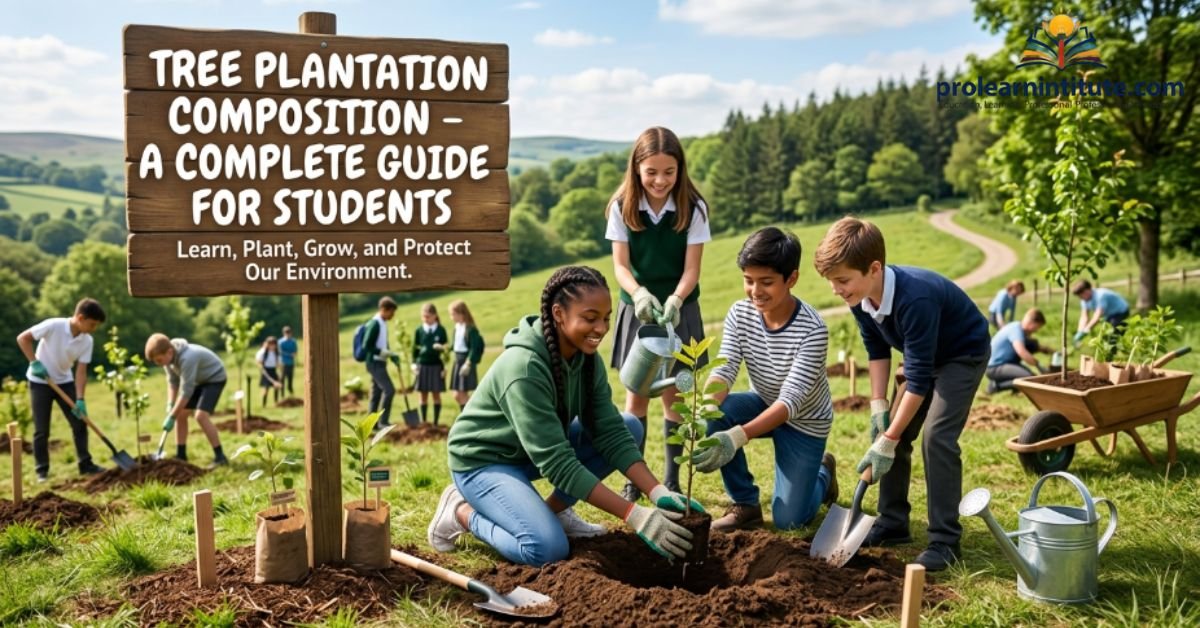
Introduction to Tree Plantation
Tree plantation means planting trees in a planned, organized, and systematic way to increase the green cover of our planet. In today’s rapidly changing world, where pollution, deforestation, and climate change have become alarming threats, planting trees has become more important than ever before. Trees are not just plants — they are the lungs of our Earth. They breathe in harmful gases and breathe out the life-giving oxygen that every living being depends upon.
Since the beginning of human civilization, trees have played a central role in our survival. Ancient people lived in forests, ate fruits from trees, used wood for shelter, and relied on herbs for medicine. Even today, in the modern age of science and technology, our dependence on trees has not decreased — in fact, it has increased more than ever. Yet, sadly, we are cutting down forests at an alarming rate to build cities, factories, and roads. This destruction of nature is creating serious imbalances in our ecosystem. Tree plantation is the most powerful and natural solution to restore what we have lost.
Importance of Tree Plantation
The importance of tree plantation cannot be overstated. Trees are the foundation of life on Earth. They maintain the balance of nature, provide fresh oxygen, absorb harmful carbon dioxide, control temperature, and support millions of species of animals, birds, and insects.
Without enough trees, the concentration of carbon dioxide in the atmosphere increases rapidly. This leads to the greenhouse effect, which causes global warming. As temperatures rise, glaciers melt, sea levels rise, and extreme weather events like floods, droughts, and storms become more frequent. Planting trees is one of the most effective and affordable ways to fight global warming and climate change.
Trees also play a vital role in maintaining soil health. Their roots hold the soil firmly in place, preventing erosion caused by wind and rain. In areas where trees have been cut down, the land quickly becomes dry, infertile, and desert-like. By planting trees, we can restore the fertility of the land and prevent desertification.
Role of Trees in the Ecosystem
Trees are an essential part of the ecosystem. They support biodiversity by providing food, shelter, and habitat to countless species of wildlife. Birds build their nests in trees. Animals like squirrels, monkeys, and insects depend on trees for survival. When forests are destroyed, entire ecosystems collapse, and many species become extinct.
Trees also play a key role in the water cycle. They absorb water from the soil through their roots and release it into the atmosphere through a process called transpiration. This moisture forms clouds and eventually falls back as rain. In areas with dense forests, rainfall is regular and adequate. In areas where forests have been cleared, rainfall decreases and droughts become common.
Furthermore, trees act as natural air purifiers. They absorb not only carbon dioxide but also other harmful pollutants like sulfur dioxide, nitrogen dioxide, and dust particles. This makes the air cleaner, fresher, and healthier for all living beings.
Benefits of Tree Plantation
The benefits of planting trees are numerous and wide-ranging. They can be divided into environmental, social, and economic benefits.
Environmental Benefits: Trees improve air quality by absorbing pollutants and releasing oxygen. They reduce the impact of climate change by storing carbon. They prevent soil erosion and maintain soil fertility. They support biodiversity and protect wildlife habitats. They regulate temperature and reduce the urban heat island effect in cities.
Social Benefits: Trees provide shade and make outdoor spaces more comfortable. They reduce stress and improve mental health. Studies have shown that people who live near trees and green spaces are healthier and happier. Trees also reduce noise pollution by acting as natural sound barriers. In villages and rural areas, trees provide firewood, fruits, and medicinal herbs that directly support the daily lives of millions of people.
Economic Benefits: Trees have enormous economic value. They provide timber for construction and furniture. They produce fruits, nuts, and seeds that are sold in markets. Many industries—such as paper, rubber, and pharmaceutical—depend entirely on forest resources. Trees also support tourism by creating beautiful natural landscapes that attract visitors from around the world.
Causes of Deforestation and Why Tree Plantation is Urgent
Despite knowing the importance of trees, humans continue to destroy forests at a frightening pace. Every year, millions of hectares of forest are cleared for agriculture, urbanization, mining, and industrialization. This large-scale deforestation has devastating consequences for the environment and for human life.
The main causes of deforestation include rapid population growth, increasing demand for agricultural land, illegal logging, construction of roads and dams, and industrial expansion. Forest fires, both natural and man-made, also destroy millions of trees every year.
The consequences of deforestation are severe. It leads to loss of biodiversity, increased greenhouse gas emissions, soil erosion, irregular rainfall, flooding, and desertification. It also threatens the livelihoods of millions of people — especially indigenous communities — who depend on forests for their survival.
This is why tree plantation has become an urgent global priority. We cannot afford to wait any longer. Every tree we plant today is an investment in the future of our planet.
How Tree Plantation Helps the Environment
Planting more trees has a direct and powerful positive impact on the environment. Here is how:
Fighting Climate Change: Trees absorb carbon dioxide — the main greenhouse gas — and store it in their trunks, branches, and roots. A single mature tree can absorb up to 22 kg of carbon dioxide per year. By planting billions of trees around the world, we can significantly reduce the concentration of greenhouse gases in the atmosphere and slow down global warming.
Improving Air Quality: Trees filter the air by absorbing harmful gases and dust particles. In heavily polluted cities, trees planted along roads and in parks can make a significant difference in air quality. They also release oxygen, making the air fresher and healthier.
Conserving Water: Trees help maintain the water cycle by absorbing rainwater and slowly releasing it into the ground. This recharges underground water reserves and prevents flooding. Tree-covered watersheds provide clean water to rivers and streams.
Preventing Soil Erosion: The roots of trees bind the soil and prevent it from being washed away by rain or blown away by wind. This is especially important in hilly and mountainous areas where soil erosion can cause landslides and floods.
Supporting Wildlife: Trees provide food and shelter to a vast range of wildlife. By planting trees, we can restore lost habitats and help endangered species recover.
Steps for Tree Plantation
Planting a tree is a simple but meaningful act. Here are the steps to do it correctly:
Step 1 – Choose the Right Species: Always select a tree species that is native to your local climate and region. Native trees are better adapted to local conditions and are more likely to survive and thrive. They also provide better support to local wildlife.
Step 2 – Select the Right Location: Choose a location that receives adequate sunlight and has enough space for the tree to grow. Avoid planting near power lines, underground pipes, or buildings.
Step 3 – Prepare the Soil: Loosen the soil thoroughly and remove weeds and stones. Add organic compost or fertilizer to enrich the soil with nutrients. The soil should be well-draining to prevent waterlogging.
Step 4—Plant the Sapling Correctly: Dig a hole that is twice as wide and as deep as the root ball of the sapling. Place the sapling in the center of the hole and fill it with soil, pressing gently to remove air pockets. Make sure the root collar is at ground level.
Step 5 – Water Regularly: Water the newly planted tree immediately after planting. For the first few weeks, water it regularly to help the roots establish. Avoid overwatering as it can cause root rot.
Step 6 – Protect the Young Tree: Protect the sapling from animals, harsh weather, and insects. Use a tree guard or fencing if necessary. Apply mulch around the base of the tree to retain moisture and prevent weed growth.
Step 7 – Monitor and Maintain: Check the tree regularly for signs of disease or pest attack. Prune dead or damaged branches to encourage healthy growth.
Tree Plantation Campaigns and Initiatives
Governments, schools, NGOs, and communities around the world are running various tree plantation campaigns to address the growing environmental crisis.
School Programs: Many schools organize annual tree plantation days where students plant trees on the school grounds or nearby parks. These activities teach students the value of nature and inspire lifelong habits of environmental responsibility.
Government Initiatives: Governments in many countries have launched large-scale afforestation programs. In Pakistan, the Billion Tree Tsunami project was a landmark initiative that aimed to plant billions of trees to restore degraded forests. Similarly, India’s National Green Mission, China’s Great Green Wall, and Ethiopia’s Green Legacy Initiative are examples of government-led efforts to increase green cover.
International Campaigns: Organizations like the United Nations Environment Programme (UNEP) have launched global campaigns such as the Trillion Tree Campaign to mobilize people around the world to plant trees. These campaigns use social media, public events, and community participation to spread awareness and inspire action.
Community Plantation Drives: Local communities play a vital role in tree plantation. Neighborhood plantation drives, where residents come together to plant trees in public spaces, parks, and along roads, create a sense of shared responsibility for the environment.
The Role of Youth in Tree Plantation
Young people have a special responsibility in the fight against climate change and deforestation. The future of our planet depends on the choices and actions of today’s youth. Students and young people can play a powerful role by participating in tree plantation drives, raising awareness about the importance of trees, and encouraging their families and communities to plant and protect trees.
Young people are also more likely to embrace new ideas and technologies that can help in tree plantation and forest conservation. They can use social media to spread the message, organize community events, and advocate for stronger environmental policies.
Conclusion
Tree plantation is one of the most powerful and meaningful steps we can take to protect our planet. Every tree we plant is a gift — a gift of clean air, pure water, fertile soil, cool shade, and a healthy environment for the generations that come after us.
The challenges facing our planet — climate change, pollution, deforestation, and loss of biodiversity — are enormous. But so is our ability to respond to these challenges. By coming together as individuals, communities, and nations, and by making tree plantation a priority, we can restore the balance of nature and create a greener, healthier, and more beautiful world.
Let us all take a pledge today to plant at least one tree in our lifetime, to protect the trees around us, and to inspire others to do the same. Small actions taken by millions of people can create a massive and lasting change in the world. The time to act is now.
Frequently Asked Questions
What is the importance of tree plantation for students to write about in an essay?
Tree plantation is important for students to write about because it raises environmental awareness, teaches responsibility, and highlights how planting trees helps combat climate change, prevent soil erosion, and improve air quality.
How do I start an essay on tree plantation in English for school?
Begin your essay with a compelling introduction that defines tree plantation and states its global importance, followed by body paragraphs covering benefits, methods, and a strong concluding call to action.
What are the main benefits of tree plantation that I should include in my essay?
Your essay should cover benefits like oxygen production, carbon dioxide absorption, prevention of soil erosion, wildlife habitat creation, reduction of air pollution, and the role trees play in maintaining the water cycle.
How long should a tree plantation essay be for students in English?
For school-level students, a tree plantation essay is typically between 300 and 500 words for short assignments, while longer academic essays may range from 600 to 1000 words with an introduction, body, and conclusion.
What points should I cover in a tree plantation essay for Class 5 to Class 10 students?
Cover key points such as the definition of tree plantation, why trees are essential for life, the effects of deforestation, how students can participate in planting drives, and the role of government and communities in afforestation.
Why is tree plantation called a solution to global warming in student essays?
Trees absorb carbon dioxide, one of the main greenhouse gases causing global warming, and release oxygen in return, making large-scale tree plantation one of the most natural and effective solutions to reducing global temperatures.
What is a good conclusion for an essay on tree plantation in English?
A strong conclusion should restate the importance of trees, urge readers to take personal action by planting at least one tree, and emphasize that a greener planet depends on the collective efforts of every individual and community.
Can you give me a short paragraph on tree plantation for students?
Tree plantation is the process of planting trees in large numbers to restore forests and green cover. It helps purify air, conserve water, prevent floods, and provide shelter to animals, making it one of the most powerful ways to protect our environment.
What is the role of students in tree plantation campaigns?
Students can actively participate in school plantation drives, spread awareness among peers and family, adopt saplings, join NGO-led green campaigns, and use social media to inspire others to plant trees in their communities.
How do I write a tree plantation essay in simple English for primary school students?
Use simple sentences and easy vocabulary. Start by explaining what a tree is and why it matters, then describe how planting trees helps the environment, and end by encouraging young readers to plant a tree and care for it daily.

I’m Jordan Smith, a content writer with 4 years of experience and AI content expertise, creating clear, engaging, and easy-to-understand educational content.