
What is Load Shedding?
Load shedding is the planned or unplanned interruption of electricity supply to different areas for a fixed period of time. When electricity demand exceeds the available supply, power companies cut power to certain areas in rotation. This is different from a sudden power failure — load shedding is usually scheduled in advance.
In simple words, when the electricity goes off for hours at a time, that is called load shedding.
Causes of Load Shedding
Load shedding does not happen without reason. Several serious problems combine to create this crisis:
Shortage of Fuel — Power plants need gas, coal, and oil to run. When fuel supplies run low, plants cannot generate enough electricity.
Aging Infrastructure — Many power stations in Pakistan are old and broken. They cannot produce electricity at full capacity, which widens the gap between supply and demand.
Overpopulation — Pakistan’s population is growing rapidly. More people mean more homes, more factories, and far greater electricity demand—demand that the power system simply cannot keep up with.
Mismanagement and Corruption — Poor governance, electricity theft, and unpaid bills create a “circular debt” crisis in the energy sector. Billions of rupees are lost every year, leaving no money to improve the system.
Outdated Transmission Lines — Old wires and damaged transformers cause huge energy losses before electricity even reaches homes and businesses.
Effects of Load Shedding
The consequences touch every part of daily life:
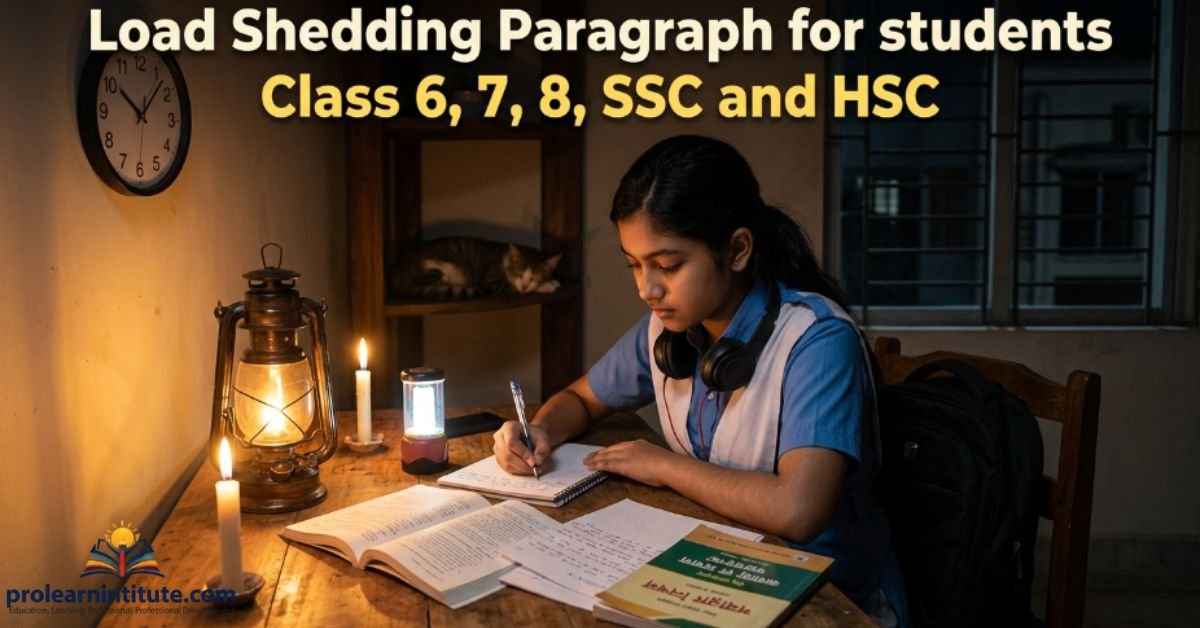
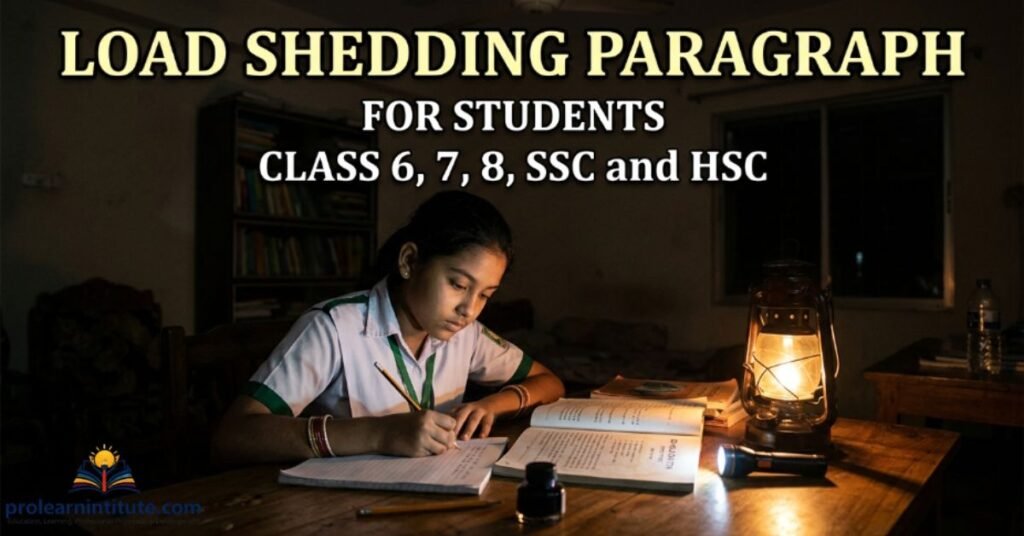
On Students — Children cannot study at night without light. Online classes are missed. Exam preparation suffers. The overall quality of education in the country declines.
On Businesses and Industry — Factories stop production when power cuts happen. Workers lose daily wages. Small businesses struggle to survive, and many are forced to shut down permanently. Pakistan loses billions of rupees every year in industrial losses alone.
On Daily Life—Cooking, sleeping, and basic household tasks become difficult. In summer, hours without fans or air conditioning become unbearable. The elderly and sick are put at serious risk during long outages.
On Healthcare—Hospitals rely on electricity for life-saving equipment. Power cuts put patients in danger and place enormous pressure on medical staff.
Paragraphs for Every Class Level
Class 6
Load shedding means when electricity goes off for some time. It happens because there is not enough electricity for everyone. During load shedding, we cannot watch TV, use fans, or study at night. It is a big problem in our daily lives. We should save electricity so that load shedding becomes less frequent.
Class 7
Load shedding is the cutting of the electricity supply for a fixed number of hours. It happens because our country does not produce enough electricity for all its people. Students face difficulty in studying, and people feel very uncomfortable in hot weather. We should try to save electricity and avoid wasting it in our homes and schools.
Class 8
Load shedding is a major problem in Pakistan caused by electricity shortages, overpopulation, and mismanagement. It badly affects students who cannot study at night and workers who lose income when factories stop working. The government should build new power plants and promote solar energy to reduce this problem. Every citizen should also play their role by using electricity wisely and avoiding all unnecessary waste.
SSC
Load shedding refers to the deliberate shutdown of electricity in different areas to manage the overall power supply. In Pakistan, this problem has persisted for many decades and is driven by increasing demand, fuel shortages, and poor infrastructure. Students lose valuable study hours, industries face massive financial losses, and hospitals struggle to provide proper care. In rural areas, people endure power cuts of up to 18 hours a day. The solution lies in building new power plants, repairing existing ones, and encouraging wider use of solar panels. If the government acts decisively and citizens cooperate, this crisis can be significantly reduced.
HSC
Load shedding is one of the most persistent and damaging crises facing Pakistan’s economy and society. It stems from a combination of structural failures—insufficient power generation, over-reliance on fossil fuels, a crippling circular debt in the energy sector, and an outdated transmission network. The consequences are far-reaching: industrial output declines, unemployment rises, students lose irreplaceable learning opportunities, and the healthcare system operates under extreme pressure. Pakistan loses billions of rupees annually due to load-shedding-related industrial shutdowns. Addressing this crisis demands a multi-dimensional strategy: investing in renewable energy such as solar and wind power, resolving the circular debt, strengthening governance in the energy sector, and promoting a culture of responsible electricity use among citizens. Without a bold and sustained national energy policy, load shedding will continue to obstruct Pakistan’s development and hold millions back from reaching their potential.
Solutions
| Solution | How It Helps |
| Solar Energy | Reduces dependence on the national grid |
| Wind Power | Clean, renewable, and increasingly affordable |
| Energy Conservation | Lowers overall demand on the system |
| New Power Plants | Increases total electricity generation capacity |
| Smart Meters | Prevents theft and reduces line losses |
| Strong Government Policy | Ensures proper planning and budget allocation |
Energy Conservation is the simplest step every person can take right now—turning off lights, fans, and appliances when not in use makes a real difference at the national level.
Renewable Energy — Solar panels and wind turbines can generate clean electricity without relying on the national grid. If more homes, schools, and offices adopt these alternatives, pressure on the system drops significantly.
Government Action — New power plants must be built, electricity theft must be stopped, and circular debt must be resolved. Honest, competent management of the energy sector is non-negotiable.
Conclusion
Load shedding is a serious national crisis, but it is not unsolvable. It demands urgent action from both the government and every citizen. If Pakistan invests in renewable energy, fixes its energy governance, and builds a culture of responsible electricity use, a future without load shedding is entirely within reach.
The first step starts with awareness — and that is exactly what you now have.
Frequently Asked Questions
1. What is a simple load shedding paragraph for Class 6 students in easy English?
Load shedding means the planned cutting of the electricity supply for a certain period of time. It happens when power production is less than the demand, causing electricity to be turned off in different areas one by one.
2. How can I write a short load shedding paragraph for Class 7 or Class 8 in Bangladesh?
For Class 7 or 8, write a 5 to 7-sentence paragraph covering the definition, causes like fuel shortage and low power production, and effects such as disruption in studies and daily life. Keep the language simple and the sentences short for easy understanding.
3. What are the main causes of load shedding that I should mention in my paragraph for SSC?
The main causes of load shedding include insufficient power generation, aging infrastructure, high electricity demand, shortage of fuel like gas and coal, illegal connections, and system loss. For an SSC-level paragraph, mention at least three to four of these causes with brief explanations.
4. How do I write a load shedding paragraph for HSC with advanced vocabulary and proper structure?
For HSC, structure your paragraph with a topic sentence, supporting points about socioeconomic impacts, and a strong concluding sentence. Use advanced words like “intermittent power outages,” “infrastructural inadequacy,” and “economic impediment” to make your writing stand out.
5. What are the effects of load shedding on students that I can include in my paragraph?
Students suffer greatly due to load shedding because they cannot study at night, online classes get interrupted, and preparation for exams becomes difficult. You can also mention increased eye strain from candlelight reading and the overall disruption to the learning environment.
6. How long should a load-shedding paragraph be for a Class 9 or Class 10 exam answer?
For Class 9 or Class 10, a load shedding paragraph should ideally be between 150 and 200 words, covering the definition, causes, effects, and possible solutions in a well-organized and flowing manner.
7. What is the best way to end a load shedding paragraph to impress my teacher?
End your paragraph with a solution-focused or forward-looking sentence, such as calling for investment in renewable energy, better grid management, or public awareness. A strong conclusion shows critical thinking and always impresses teachers at every level, from Class 6 to HSC.
8. Can you give me a voice-friendly definition of load shedding for a school paragraph?
Load shedding is the deliberate shutdown of electric power in parts of the power distribution system, done to prevent the failure of the entire system when electricity demand exceeds supply. In simple words, it means the electricity goes off for a scheduled or unscheduled period of time.
9. What solutions to load shedding should I write about in my HSC-level paragraph?
In an HSC paragraph, mention solutions like developing solar and renewable energy sources, upgrading the national power grid, reducing system loss, encouraging energy conservation, and increasing foreign investment in the power sector. These points show awareness and analytical thinking appropriate for higher-level writing.
10. How is writing a load shedding paragraph different for Class 6 compared to the HSC level?
For Class 6, the paragraph should use simple words, short sentences, and basic ideas like definitions and daily effects. For HSC, the paragraph must include complex sentence structures, economic and social analysis, advanced vocabulary, and a well-argued conclusion that reflects mature academic writing skills.

I’m Jordan Smith, a content writer with 4 years of experience and AI content expertise, creating clear, engaging, and easy-to-understand educational content.