
Introduction
We live in a time where students spend most of their day sitting in classrooms, at study desks, and in front of screens. This lifestyle is slowly damaging our health in ways we do not even notice.
Physical exercise is the simple but powerful solution. It means moving your body with purpose — through walking, running, playing sports, or any activity that gets your heart beating faster.
Exercise is not just for athletes. It is for every person who wants to live a healthy, happy, and productive life. A student who exercises regularly is stronger, sharper, calmer, and more confident than one who does not.
The Timeless Proverb Behind Physical Exercise

No composition on physical exercise is complete without mentioning the age-old wisdom behind it: “A sound mind lives in a sound body.” This simple proverb captures a truth that modern science has only confirmed further — that physical health and mental sharpness are deeply connected, not separate things. When the body is weak, tired, or unwell, the mind cannot function at its best either.
This is exactly why exercise matters so much for students specifically. A student preparing for exams needs a calm, focused mind, and that focus is much harder to achieve when the body is neglected. According to guidelines published by the World Health Organization, children and adolescents should get an average of 60 minutes of moderate-to-vigorous physical activity every day to support both physical and cognitive development. This recommendation reflects the same idea the old proverb expressed centuries ago — the body and mind grow strong together, not separately.
(Source: WHO Guidelines on Physical Activity and Sedentary Behaviour)
What is Physical Exercise?
Physical exercise means any planned, repeated movement of the body that improves health and fitness.
It does not have to be complicated or expensive. A morning walk, a game of cricket, or a few minutes of stretching before school — all of these count.
Health experts recommend at least 30 to 60 minutes of physical activity every day. Unfortunately, with mobile phones and television, most students are not even getting half of that.
Benefits of Physical Exercise
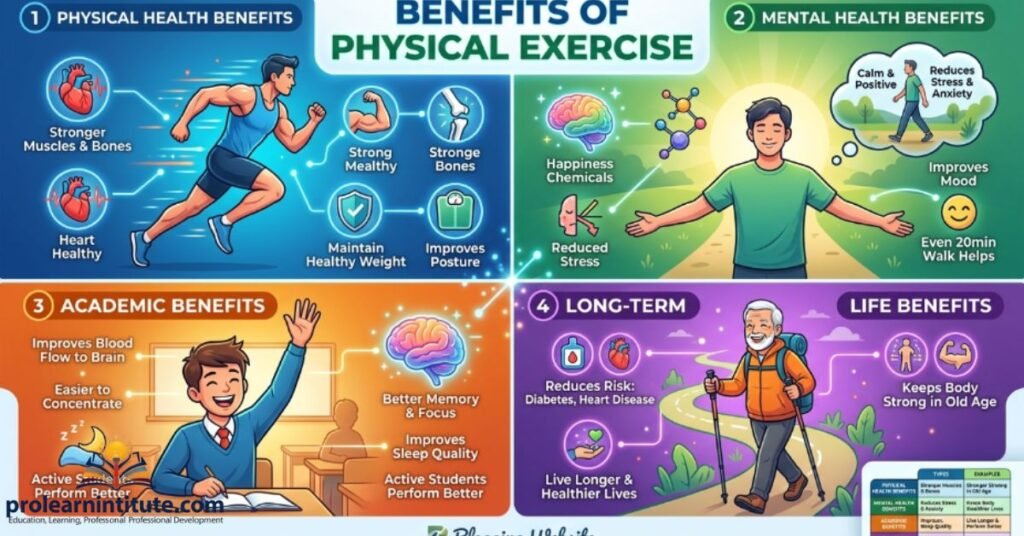
Physical Health Benefits
- Makes muscles and bones stronger
- Keeps the heart healthy and improves blood circulation
- Boosts immunity — so you fall sick less often
- Helps maintain a healthy body weight
- Improves posture and prevents back pain from long sitting
Mental Health Benefits
- Releases endorphins — natural “happiness chemicals” in the brain
- Reduces stress, anxiety, and feelings of sadness
- Improves mood and keeps you calm and positive
- Even a 20-minute walk can make a stressful day feel much better
Academic Benefits
- Improves blood flow to the brain — better memory and focus
- Students who exercise find it easier to concentrate in class
- Improves sleep quality, which is essential for learning
- Active students perform better academically than inactive ones
Long-Term Life Benefits
- Reduces risk of diabetes, heart disease, and obesity
- Keeps the body strong and active well into old age
- Active people live longer and healthier lives
Benefits Summary Table
| Benefit Type | Examples |
| Physical Health | Strong muscles, a healthy heart, and better immunity |
| Mental Health | Less stress, better mood, positive thinking |
| Academic | Better focus, sharper memory, higher energy |
| Long-Term | Disease prevention, longer and healthier life |
Types of Physical Exercise
Aerobic Exercise—running, jogging, cycling, swimming, and outdoor sports. Great for heart health and stamina.
Strength Training—push-ups, pull-ups, and bodyweight exercises. Builds muscle without needing a gym.
Flexibility Exercise—stretching and yoga. Improves posture and reduces muscle tension.
Sports and Games—cricket, football, badminton, and basketball. Fun, effective, and teaches teamwork too.
Simple Daily Activities—walking to school, taking stairs, playing outside during recess. These small things add up greatly.
Making Exercise Part of a Modern, Busy Lifestyle

Many students today live in busy cities where finding time and space for physical activity feels harder than ever. Between school, tuition, and time lost in daily commutes — like sitting in a traffic jam on the way to school — it can seem like there’s no room left for exercise. But the truth is that small, consistent choices matter more than perfect conditions: walking part of the way instead of taking transport, using stairs, or playing outdoors for even 20 minutes adds up significantly over time.
A balanced student life also means making room for activities beyond just studying and exercising — attending an event like a local book fair or spending time on hobbies alongside physical activity creates the kind of well-rounded routine that keeps both the body and mind refreshed. The goal isn’t a perfect gym schedule — it’s building movement into daily life naturally, wherever it fits.
Importance in Student Life
A student’s life is full of pressure — exams, assignments, and expectations. This pressure, if not managed, leads to stress and burnout.
Exercise gives students a natural outlet for stress. It refreshes the mind after long study hours and builds confidence to face challenges.
Exercise also builds discipline and consistency — qualities that are just as important in studies as they are in sports. Team sports teach cooperation. Individual exercise builds self-motivation. These are lessons no textbook can teach.
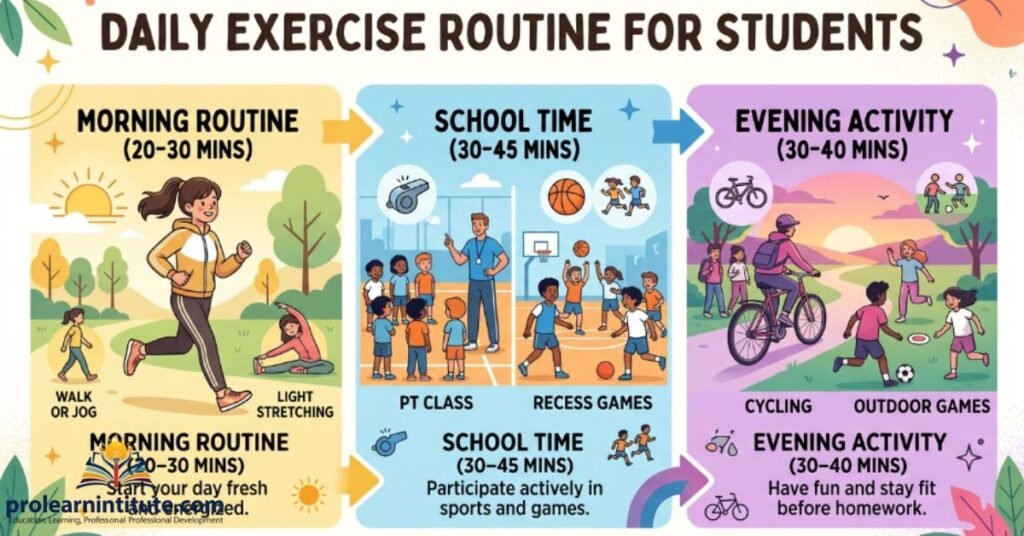
Daily Exercise Routine for Students
| Time | Activity | Duration |
| Morning | Walk, jogging, or light stretching | 20–30 minutes |
| School Time | PT class, recess games, sports period | 30–45 minutes |
| Evening | Outdoor games, cycling, or simple workouts | 30–40 minutes |
The key is making exercise a fixed daily habit—just like eating or sleeping.
Exercise and Mental Health
Mental health problems like anxiety and stress are increasing among students every year.
Exercise is one of the best natural remedies. It reduces the stress hormone cortisol and increases serotonin and dopamine—chemicals that improve mood and emotional balance.
A student who exercises regularly feels more confident, emotionally stable, and better prepared to handle the difficulties of student life.
Common Excuses and Solutions

“I don’t have time”—20 to 30 minutes is enough. Wake up slightly earlier or reduce screen time.
“I am too tired”—Exercise actually removes tiredness. A short walk gives more energy than resting on a couch.
“I don’t have equipment”—No equipment is needed. Walking, running, and bodyweight exercises are completely free.
“I will start tomorrow”—tomorrow never comes. Start today with just 10 minutes.
Precautions to Take While Exercising
Exercise is beneficial only when done correctly, and a few simple precautions make a big difference in staying safe and getting real results. Never exercise immediately after a meal — wait at least one to two hours, since a full stomach makes intense movement uncomfortable and can affect digestion. Avoid exercising directly under strong afternoon sun; early morning or late afternoon are the safest and most effective times, as most compositions on this topic wisely point out.
It’s also important not to overdo it. Exercising until complete exhaustion or ignoring pain can cause more harm than good, so students should build up intensity gradually rather than pushing too hard on the first day. Staying hydrated, wearing comfortable clothing, and warming up with light stretches before any activity are small habits that prevent injury. Just as a well-planned daily routine matters for physical exercise, balancing study time with other structured activities — such as preparing for a debating club — teaches the same discipline of not overloading yourself in any single area of student life.
Sample Compositions
100 Words
Physical exercise means moving the body to stay fit and healthy. Students who exercise daily have stronger bodies and sharper minds. It reduces stress and improves concentration in studies. Simple activities like walking, running, and playing outdoor games are great forms of exercise. Exercise strengthens the heart and boosts immunity. It builds discipline and good habits from a young age. Every student should spend at least 30 minutes each day on physical activity. A healthy body leads to a healthy mind, and a healthy mind leads to success in life.
150 Words
Physical exercise means using your body in a planned way to stay healthy and strong. It is one of the most important habits a student can build. Regular exercise keeps the body fit, improves mood, and reduces stress caused by studies and daily pressure.
There are many types of exercise—running, cycling, swimming, playing sports, and yoga. Morning exercise gives fresh energy for the whole day.
Students who exercise daily show better performance in class because they can focus and think clearly. Exercise also builds discipline and teaches time management.
It protects the body from illness and keeps the mind calm and positive. Every student should make physical exercise a part of their daily routine for a healthy and happy life.
200 Words
Physical exercise is the regular movement of the body through planned activities such as walking, running, swimming, or playing sports. It plays a very important role in keeping both body and mind healthy.
For students, exercise is not just about fitness—it is about building a balanced and productive lifestyle. Regular exercise develops stronger muscles, a healthier heart, and a better immune system. The mind also becomes sharper and more focused.
One of the biggest benefits of exercise is stress relief. Students often feel anxious about exams and grades. Physical activity naturally releases that pressure and boosts confidence and motivation.
Exercise also improves blood flow to the brain, which directly helps memory and concentration. Studies show that active students perform better academically than those who do not exercise.
A good daily routine—morning walks, school physical activities, and evening games—can bring tremendous change in a student’s health and performance. Every student should treat physical exercise as a daily necessity, just like eating and sleeping. Start small, stay consistent, and the results will follow.
Conclusion
Physical exercise is not a choice — it is a necessity for every student who wants a healthy and successful life.
It keeps the body strong, the mind calm, and the spirit motivated. It improves studies, reduces stress, builds character, and prepares students for a better future.
Start small. Stay consistent. Even 30 minutes a day can completely change your health, your mood, and your life.
A healthy body is the foundation of everything great you will ever achieve.
Frequently Asked Questions
1. What are the most important benefits of physical exercise for your overall health?
Physical exercise improves heart health, boosts mental well-being, strengthens muscles and bones, and helps maintain a healthy weight—making it one of the most powerful habits for long-term wellness.
2. How does regular physical exercise help improve your mental health and reduce stress?
Exercise triggers the release of endorphins and serotonin in the brain, which naturally reduce stress, anxiety, and depression, leaving you feeling calmer and more focused after every workout.
3. Why is physical exercise considered essential for students and school-going children?
Regular physical activity sharpens concentration, improves memory, reduces exam stress, and promotes better sleep — all of which directly boost academic performance and classroom behavior in students.
4. How much physical exercise should a person do every day to stay healthy?
Health experts recommend at least 30 minutes of moderate-intensity exercise five days a week for adults, while children should aim for at least 60 minutes of active movement daily.
5. What types of physical exercises are best for losing weight and burning calories fast?
High-intensity interval training (HIIT), brisk walking, cycling, swimming, and jump rope are among the most effective exercises for burning calories quickly and supporting sustainable weight loss.
6. Can physical exercise help prevent serious diseases like diabetes and heart disease?
Yes — regular exercise lowers blood pressure, regulates blood sugar levels, reduces bad cholesterol, and strengthens the heart, significantly lowering the risk of type 2 diabetes, stroke, and cardiovascular disease.
7. What is the connection between physical exercise and a longer, healthier life?
Studies show that people who exercise regularly live longer because physical activity reduces chronic disease risk, maintains organ function, boosts immunity, and keeps the body biologically younger than its actual age.
8. How does physical exercise affect your brain function and ability to focus?
Exercise increases blood flow to the brain, promotes the growth of new brain cells, and enhances memory and focus—making it one of the most natural and effective ways to sharpen cognitive performance.
9. Is it better to exercise in the morning or evening for maximum health benefits?
Both times offer real benefits — morning exercise boosts metabolism and energy for the day, while evening workouts help release tension and improve sleep quality, so the best time is simply when you’ll stay consistent.
10. How can someone start a physical exercise routine if they have never worked out before?
Begin with simple activities like 20-minute daily walks, gradually adding stretching or bodyweight exercises—starting small, staying consistent, and slowly increasing intensity is the safest and most effective approach for beginners.

I’m Jordan Smith, a content writer with 4 years of experience and AI content expertise, creating clear, engaging, and easy-to-understand educational content.