
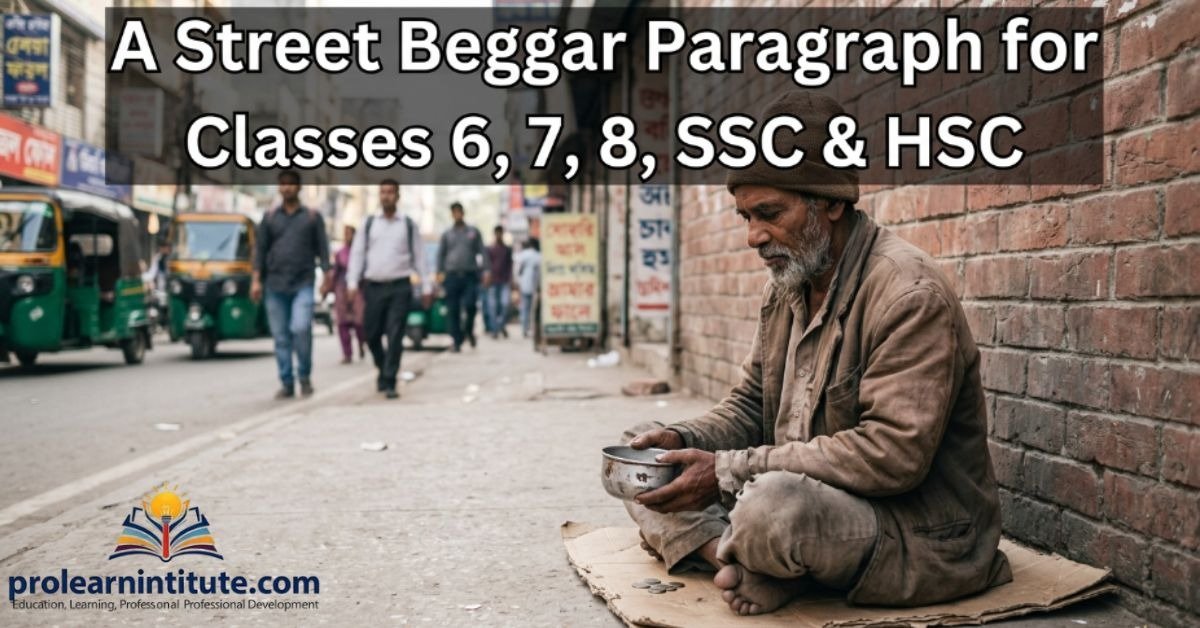
A street beggar is a common sight in many cities and villages, and students often need to write about this topic in their exams. This A Street Beggar Paragraph for Classes 6, 7, 8, SSC & HSC helps students understand the life, struggles, and challenges faced by beggars.
In this paragraph, students can learn how to describe a street beggar in simple and clear words. It explains their poor living conditions, reasons for begging, and the importance of kindness toward needy people.
Whether you are preparing for school exams or improving your writing skills, this guide provides an easy and well-structured paragraph. The A Street Beggar Paragraph for Classes 6, 7, 8, SSC & HSC is written in a way that is suitable for different academic levels.
see also: Idioms for Water: 60+ Phrases with Meanings & Examples
A Street Beggar Paragraph for Class 6
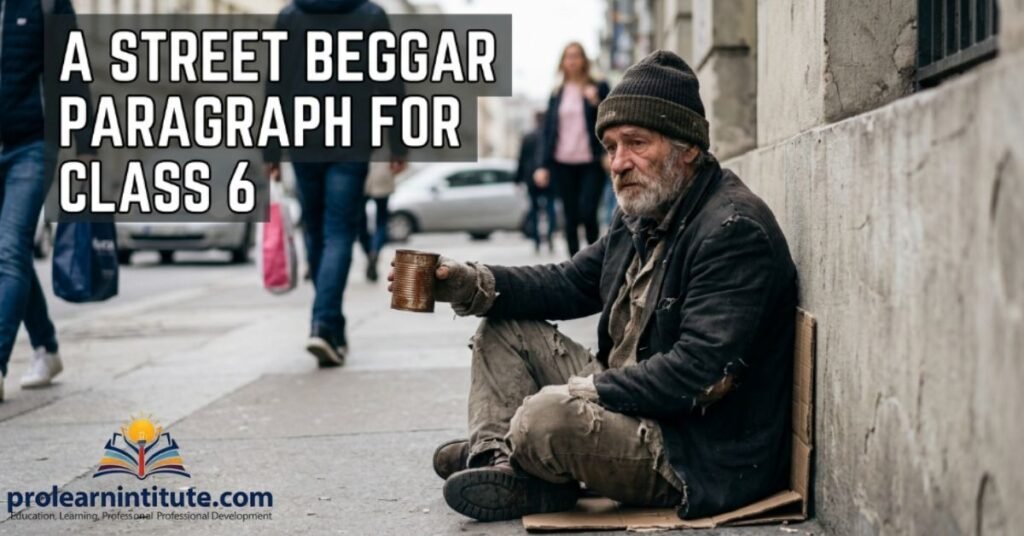
A street beggar is a poor person who asks for money or food from others. He does not have a home, job, or proper clothes to wear.
Street beggars are often seen near markets, bus stops, and religious places. They ask people for small amounts of money to survive each day.
Some beggars are old, some are children, and some are disabled. They beg because they have no other way to earn a living.
We should treat beggars with kindness and never make fun of them. Helping a poor person, even a little, is a good deed.
A Street Beggar Paragraph for Class 7
A street beggar is a person who lives in extreme poverty and depends on begging to survive. He wanders through streets, markets, and public places, asking for alms.
Most beggars do not have a permanent home, food, or clean clothes. Many of them sleep on footpaths, under bridges, or near shops at night.
There are different reasons behind begging, such as poverty, disability, old age, and lack of family support. Some children also beg because their parents cannot feed them.
Society often ignores beggars instead of helping them find a better life. Small acts of kindness, like giving food or clothes, can make a big difference in their lives.
A Street Beggar Paragraph for Class 8
A street beggar is one of the most helpless members of society who survives by asking others for money, food, or clothing. He has no fixed income, no shelter, and no proper support system.
Beggars can be seen at traffic signals, near mosques, temples, churches, and crowded markets. Their daily routine revolves around finding enough money or food to survive another day.
The causes of begging include poverty, unemployment, physical disability, mental illness, and family breakdown. In some unfortunate cases, begging is also forced upon children by organized begging groups.
The life of a beggar is extremely hard, filled with hunger, insults, and uncertainty. He often sleeps in the open, exposed to heat, cold, and rain.
As responsible citizens, we must show compassion towards beggars instead of judging them. Supporting government and NGO programs for the poor can help reduce begging in the long run.
A Street Beggar Paragraph for Class 9-10 (SSC)
A street beggar is an unfortunate member of society who is compelled to beg due to extreme poverty, unemployment, or physical disability. He roams around streets, bus stands, railway stations, and religious places in search of alms.
Beggars usually wear torn and dirty clothes, and their bodies often show signs of malnutrition and neglect. Many of them have no family to support them, while others are abandoned by relatives who cannot afford to take care of them.
The reasons behind begging are complex and interconnected. Poverty remains the biggest cause, but natural disasters, illiteracy, disability, and social neglect also push people towards this profession.
A beggar’s daily life is a constant struggle for survival. He must find food, water, and a safe place to sleep every single day, often facing rejection and humiliation from passersby.
Society tends to view beggars with contempt rather than sympathy, which only worsens their condition. It is our moral and social duty to treat them with dignity and support efforts that aim to rehabilitate them.
Government initiatives, NGOs, and individual charities can play a major role in reducing street begging. Providing shelter homes, food programs, and skill training can help beggars become self-reliant members of society.
A Street Beggar Paragraph for HSC
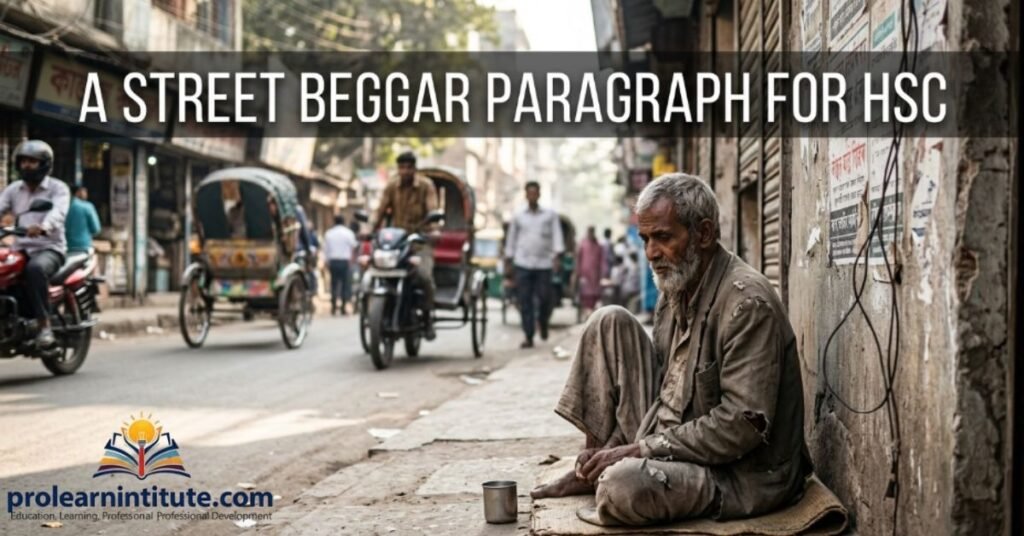
A street beggar represents one of the most tragic realities of a society struggling with poverty, unemployment, and social inequality. He is a person who has lost all means of earning a respectable livelihood and is forced to depend entirely on the charity of strangers.
The appearance of a typical street beggar reflects years of hardship. His clothes are torn and dirty, his body often bears the marks of malnutrition, and his eyes carry a look of hopelessness that comes from constant rejection and struggle.
Multiple factors contribute to the rise of street begging in society. Chronic poverty, lack of education, physical and mental disabilities, natural calamities, and the absence of social security systems all push vulnerable individuals towards this life.
In some disturbing cases, begging has become an organized practice where children and disabled individuals are exploited by criminal groups for profit. This adds another layer of complexity to an already serious social problem.
The daily existence of a beggar is marked by uncertainty, hunger, and social humiliation. He must constantly search for food and shelter while enduring the harsh judgment of a society that often views him as a burden rather than a human being in need.
Addressing the issue of street begging requires a combined effort from the government, non-governmental organizations, and ordinary citizens. Long-term solutions such as education, vocational training, and social welfare programs are far more effective than temporary charity.
As educated members of society, we must move beyond simple pity and work towards systemic change. Supporting policies that provide employment opportunities and social security can gradually reduce the number of people forced into begging.
Introduction to a Street Beggar
A street beggar is a person who survives by asking others for money, food, or clothing due to extreme poverty or helplessness. This figure is unfortunately common in almost every society around the world.
Understanding who a street beggar is and why he exists helps us become more compassionate human beings. It also encourages us to think about long-term solutions to poverty.
Appearance and Lifestyle of a Street Beggar
A street beggar can usually be recognized by his torn, dirty clothes and unkempt appearance. He often looks tired, weak, and malnourished due to a lack of proper food.
Most beggars do not have a permanent home and are forced to sleep in public places. Common spots include footpaths, bus stations, under bridges, and near shops or religious buildings.
Their lifestyle is unpredictable, changing daily based on where they can find shelter, food, or a small amount of money. This constant uncertainty makes their life extremely difficult.
Causes Behind Street Begging
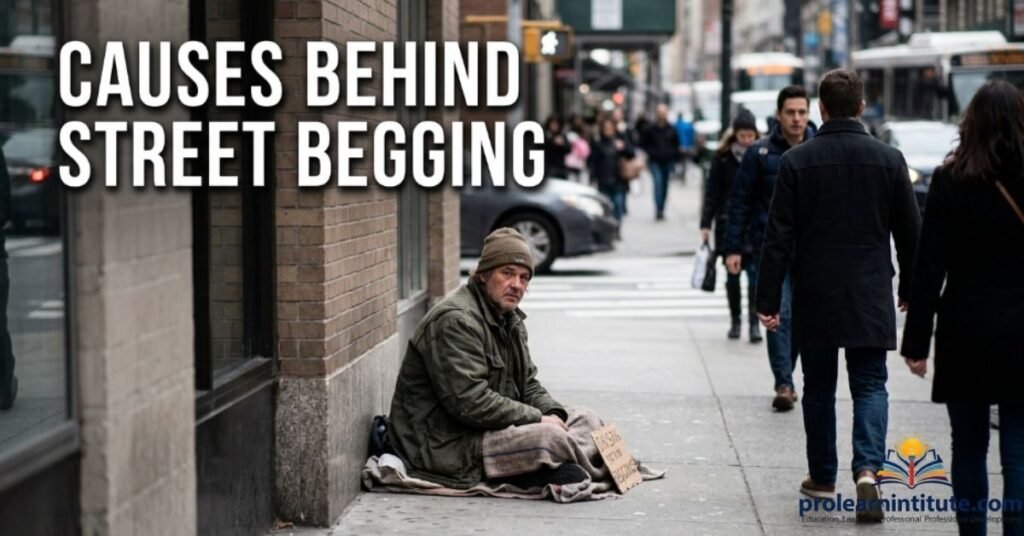
Poverty is the leading cause of street begging in most societies. When people cannot find work or earn enough to survive, begging becomes their only option.
Physical disability and old age also force many individuals into begging, especially when they have no family support. Mental illness is another factor that leaves people unable to hold steady jobs.
Some children beg due to family circumstances beyond their control.
- Extreme poverty and unemployment
- Physical or mental disability
- Lack of family or social support
- Natural disasters and displacement
- Exploitation by organized begging groups
Daily Life and Struggles of a Street Beggar
The daily life of a street beggar revolves around one goal: survival. He wakes up without knowing where his next meal will come from or where he will sleep that night.
Beggars often face rejection, insults, and even physical abuse from people who view them with suspicion or contempt. This constant humiliation adds emotional pain to their physical struggles.
Health problems are also common among beggars due to poor diet, exposure to weather, and lack of medical care. Many suffer from untreated illnesses for years.
Social Responsibility Towards Street Beggars
Every member of society has a moral responsibility to treat beggars with dignity rather than disgust. Judging them harshly only adds to their suffering without solving the root problem.
Communities and religious institutions can play an active role in supporting the poor through organized charity. Encouraging respectful treatment can gradually change public attitudes towards beggars.
How We Can Help Street Beggars
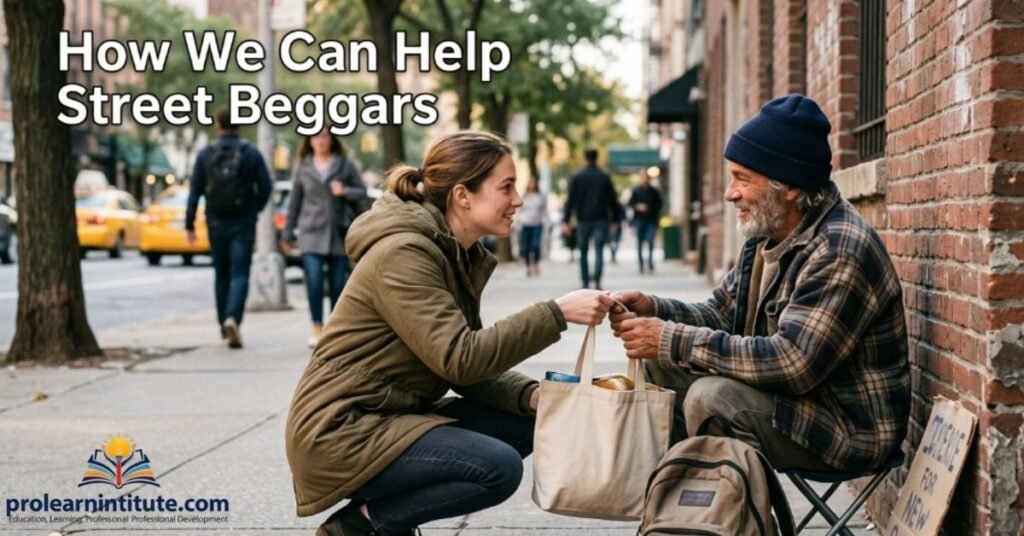
There are many practical ways individuals and communities can support street beggars beyond giving small amounts of cash. Long-term solutions are always more effective than temporary help.
- Donating food, clothes, or blankets regularly
- Supporting NGOs that provide shelter and rehabilitation
- Encouraging skill training programs for beggars
- Reporting cases of child exploitation in begging
- Promoting government welfare and employment schemes
Working together as a society can gradually reduce the number of people forced into begging.
Conclusion
At its core, this article about A Street Beggar Paragraph for Classes 6, 7, 8, SSC & HSC helps students understand the struggles of poor people and the importance of kindness and social responsibility. In simple terms, it provides an easy way to learn and write about this topic clearly.
Now you have a clear understanding of a street beggar’s life and the message behind this topic. The next step is yours—use this knowledge to improve your writing skills and develop empathy for others.
see also: A Friend in Need is a Friend Indeed Completing story for all classes | Complete Guide 2026
FAQs
How do you write a short paragraph on a street beggar for class 6?
A short paragraph on a street beggar for class 6 should describe him as a poor person without a home who asks for food or money to survive, written in 4-5 simple sentences.
What is a street beggar paragraph for SSC students?
For SSC, the paragraph should include the beggar’s appearance, causes of begging, daily struggles, and social responsibility in 6-7 well-developed sentences using formal language.
Why do people become street beggars?
People become street beggars mainly due to poverty, unemployment, disability, old age, and lack of family or social support systems.
What is the daily life of a street beggar like?
A street beggar’s daily life involves searching for food, shelter, and money while facing hunger, rejection, and difficult weather conditions.
How can we help street beggars in our society?
We can help street beggars by donating food and clothes, supporting NGOs, promoting skill training, and encouraging government welfare programs.
What is the main cause of begging in society?
The main cause of begging in society is extreme poverty combined with unemployment and a lack of social security support.
How should students write a street beggar paragraph for HSC?
HSC students should write a detailed, analytical paragraph covering causes, social attitudes, and long-term solutions using formal academic language.
What clothes does a typical street beggar wear?
A typical street beggar usually wears torn, dirty, and old clothes due to poverty and lack of access to proper clothing.
Are children forced into begging by other people?
Yes, in some cases, children are exploited and forced into begging by organized groups for financial gain, which is a serious social crime.
What is our moral duty towards street beggars?
Our moral duty towards street beggars is to treat them with respect and compassion while supporting long-term efforts to reduce poverty and homelessness.

I’m Jordan Smith, a content writer with 4 years of experience and AI content expertise, creating clear, engaging, and easy-to-understand educational content.