
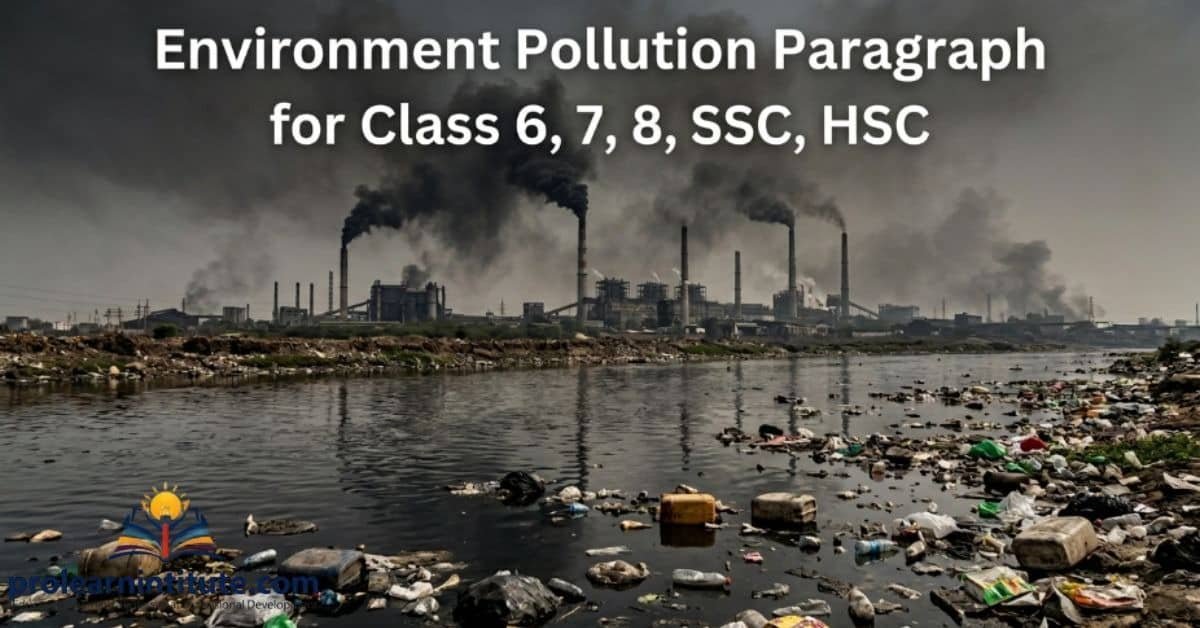
Environment Pollution Paragraph for Class 6, 7, 8, SSC, HSC is an important topic that helps students understand the harmful effects of pollution on nature and human life. It is also a common paragraph in school and board exams.
Learning about pollution makes students more aware of their responsibility to protect the environment. By understanding its causes and effects, they can develop good habits that keep the world cleaner and healthier.
In this guide, you will find an easy Environment Pollution Paragraph for Class 6, 7, 8, SSC, HSC written in simple English, along with useful ideas that can help you write better answers in your exams.
What is Environmental Pollution?

Environmental pollution means the mixing of harmful substances into our natural surroundings. It makes air, water, and land dirty and unsafe for living beings.
Pollution is caused by human activities like burning fuels, throwing garbage, and using chemicals. It is one of the biggest problems the world is facing today.
Causes of Environmental Pollution
Many human activities cause pollution every day without people even realizing it. Factories, vehicles, and farming are the biggest sources of harmful pollutants.
Common causes of environmental pollution:
- Smoke from factories and power plants pollutes the air
- Vehicles release harmful gases like carbon dioxide and carbon monoxide
- Farmers use pesticides and chemicals that mix into the soil and water
- Plastic and garbage dumped in rivers and oceans cause water pollution
- Cutting down trees reduces nature’s ability to clean the air
- Burning of coal, wood, and fossil fuels releases toxic gases
- Sewage and industrial waste are dumped into water bodies
Effects of Environmental Pollution on Human Life
Pollution has very serious effects on human health and daily life. People living in polluted areas suffer from many diseases and health problems.
| Effect | Details |
| Respiratory diseases | Air pollution causes asthma, bronchitis, and lung cancer |
| Waterborne diseases | Dirty water causes cholera, typhoid, and diarrhea |
| Skin problems | Chemical pollution causes rashes and skin infections |
| Mental health issues | Noise pollution causes stress, anxiety, and sleep loss |
| Food contamination | Soil pollution affects crops and enters the food chain |
| Global warming | Greenhouse gases raise Earth’s temperature dangerously |
Pollution also harms animals, birds, and marine life. Many species are dying because their natural habitats are being destroyed by pollution.
Types of Environmental Pollution

There are several types of environmental pollution, and each one is harmful in its own way. Understanding each type helps us take the right steps to stop it.
- Air Pollution — Caused by smoke, gases, and dust particles released into the atmosphere
- Water Pollution — Caused by dumping waste, chemicals, and sewage into rivers and oceans
- Soil Pollution — Caused by using too many pesticides, chemicals, and burying non-biodegradable waste
- Noise Pollution — Caused by loud vehicles, machines, and construction work
- Light Pollution — Caused by excessive artificial lighting that disturbs animals and humans
- Thermal Pollution — Caused when industries release hot water into rivers and oceans
- Plastic Pollution — One of the fastest growing threats to oceans and wildlife
Environment Pollution Paragraph for Class 6
Environmental pollution is a big problem in our world today. It happens when dirty and harmful things mix with our air, water, and land.
Factories and cars release smoke that makes the air dirty to breathe. People also throw garbage everywhere, which makes the soil and water dirty.
Pollution harms animals, plants, and humans. Fish die in polluted rivers, and birds get sick from dirty air.
We can help by planting trees, using less plastic, and not throwing garbage on the road. Every small action we take can make a big difference for our planet.
Environment Pollution Paragraph for Class 7, 8
Environmental pollution is the process by which harmful substances enter and damage the natural environment. It is mainly caused by human activities like industrialization, deforestation, and the use of chemicals.
Air pollution from vehicles and factories causes breathing problems and lung diseases. Water pollution from sewage and chemical waste makes rivers and oceans unsafe for drinking and swimming.
Soil pollution from pesticides and plastic waste destroys farmland and harms crops. Noise pollution from machines and traffic disturbs our daily life and mental health.
Students in classes 7 and 8 should understand that pollution affects every living thing on Earth. We must take responsibility and do our part to keep our surroundings clean and green.
How to Prevent Environmental Pollution

Prevention is the best solution to the pollution problem. Simple changes in our habits can reduce pollution levels significantly.
- Plant more trees to absorb carbon dioxide and purify the air
- Use public transport, bicycles, or walk instead of using private cars
- Avoid using single-use plastic bags, bottles, and straws
- Dispose of garbage properly and support recycling programs
- Use solar energy and wind power instead of burning fossil fuels
- Avoid burning waste, leaves, or garbage in open spaces
- Use organic farming methods instead of chemical pesticides
- Treat sewage and industrial waste before releasing it into water bodies
- Save water and electricity to reduce energy-related pollution
- Spread awareness in your community about the dangers of pollution
Importance of Keeping the Environment Clean
A clean environment is essential for a healthy and happy life. When our surroundings are clean, people stay healthier and live longer.
Clean air means fewer diseases and a better quality of life for everyone. Clean water means safe drinking, healthy crops, and thriving wildlife.
| Benefit | Why It Matters |
| Better health | A clean environment reduces diseases and hospital visits |
| Biodiversity | Clean habitats allow animals and plants to survive |
| Climate stability | Less pollution helps control global warming |
| Safe food | Clean soil and water produce safe and healthy food |
| Mental wellbeing | Green and clean surroundings reduce stress and anxiety |
A clean environment also attracts tourism and helps the economy grow. Countries with clean environments enjoy better living standards and a higher quality of life for their citizens.
Environment Pollution Paragraph for SSC
Environmental pollution has become one of the most critical challenges of the modern world. It refers to the introduction of harmful substances into the natural environment that cause damage to ecosystems and human health.
The major causes of pollution include rapid industrialization, uncontrolled deforestation, overuse of chemical fertilizers, and improper disposal of solid and liquid waste. The burning of fossil fuels releases large amounts of carbon dioxide and sulfur dioxide into the atmosphere, contributing to air pollution and acid rain.
Water bodies are severely affected by industrial effluents and municipal sewage, which destroy aquatic life. Soil degradation due to excessive use of pesticides reduces agricultural productivity and threatens food security.
The effects of pollution are far-reaching and long-lasting. Climate change, ozone layer depletion, rising sea levels, and increasing health crises are all direct results of unchecked environmental pollution.
Government intervention, technological solutions, and strong public awareness campaigns are urgently needed. Without immediate action, the consequences of pollution will become irreversible for future generations.
Environment Pollution Paragraph for HSC

Environmental pollution is a multidimensional crisis that poses an existential threat to the sustainability of life on Earth. It encompasses the contamination of air, water, soil, and the broader ecosystem through anthropogenic and natural processes, with human-induced pollution being the dominant driver in the modern era.
The Industrial Revolution and subsequent technological advancements have exponentially increased the release of toxic pollutants into the environment. Greenhouse gas emissions, particularly CO2 and methane, are accelerating global warming and triggering catastrophic climate events worldwide.
Water pollution from heavy metals, microplastics, and agricultural runoff has severely compromised aquatic ecosystems and human access to safe drinking water. According to global health data, millions of deaths annually are attributed to waterborne diseases caused by polluted water sources.
Soil contamination from persistent organic pollutants and heavy metals reduces agricultural productivity and bioaccumulates through the food chain. This poses a serious long-term threat to food security and public health on a global scale.
The social and economic costs of environmental pollution are staggering. Increased healthcare expenditure, reduced workforce productivity, and declining tourism revenues are measurable economic impacts of poor environmental management.
Addressing this crisis requires a comprehensive and coordinated global response. This includes transitioning to renewable energy sources, implementing circular economy principles, enforcing stringent environmental regulations, and fostering international cooperation under frameworks like the Paris Agreement and UN Sustainable Development Goals.
Government and Public Role in Controlling Pollution
Both the government and citizens have an equal responsibility to fight against pollution. Without cooperation from both sides, pollution cannot be controlled effectively.
Government responsibilities:
- Make strict environmental laws and enforce them properly
- Ban harmful chemicals, plastics, and industrial pollutants
- Invest in clean energy projects like solar and wind power
- Build proper waste management and sewage treatment systems
- Run national awareness campaigns about environmental protection
Public responsibilities:
- Follow environment-friendly habits in daily life
- Participate in community clean-up drives and tree plantation programs
- Report illegal dumping and industrial pollution to the authorities
- Support and vote for environment-friendly policies and leaders
- Educate children and family members about protecting nature
When government and public work together, real and lasting change becomes possible. Every citizen has the power to make a positive impact on the environment.
Simple Daily Habits to Reduce Pollution
You do not need to be an expert to help reduce pollution. Small daily habits practiced consistently can create a huge positive impact over time.
- Turn off lights, fans, and electronics when not in use
- Carry a reusable shopping bag instead of using plastic bags
- Use a refillable water bottle instead of buying plastic bottles
- Compost food waste instead of throwing it in the garbage
- Walk or cycle for short distances instead of using a vehicle
- Fix water leaks at home to save clean water
- Avoid using chemical sprays, air fresheners, and synthetic cleaners
- Buy local and seasonal foods to reduce transportation pollution
- Print less paper and use digital files whenever possible
- Join or organize a neighborhood cleanliness drive
These habits seem small, but together they create a powerful movement. When millions of people make these changes, the environment improves significantly.
Why Students Should Be Aware of Environmental Pollution

Students are the future of this world, and they must understand the importance of a clean environment. Awareness at a young age builds lifelong responsible habits and attitudes.
When students learn about pollution in school, they carry that knowledge home and share it with their families. This creates a ripple effect that spreads environmental awareness throughout the community.
- Students can participate in tree plantation drives and clean-up campaigns
- They can reduce paper waste by using both sides of every page
- They can convince their parents to use less plastic and save energy
- They can organize environmental clubs and awareness events in school
- They can use social media to spread positive messages about protecting nature
Educated and aware students become responsible citizens who make better choices. The future of our planet depends on how well today’s youth understands and responds to the pollution crisis.
Conclusion
In simple terms, this article explains the main ideas behind Environment Pollution Paragraph for Class 6, 7, 8, SSC, HSC and why it is such an important topic for students. At its core, it highlights how pollution affects our air, water, and land, and why we must understand its causes and effects clearly.
Now you have a clear understanding of how to approach this topic in exams and daily life. The next step is yours—try to apply this knowledge and think about small actions that can help protect the environment around you.
FAQs
What is environmental pollution in simple words for class 6 students?
Environmental pollution means making the air, water, and land dirty by adding harmful substances to them. It happens due to smoke from vehicles, garbage dumping, and factory waste.
What are the main causes of environmental pollution for class 7 and 8 students?
The main causes are smoke from factories and cars, dumping waste in rivers, using too many chemicals in farming, and cutting down trees. These activities release harmful substances into nature every day.
How does environmental pollution affect human health?
Pollution causes diseases like asthma, lung infections, cholera, and skin problems. Breathing dirty air and drinking polluted water are the most direct ways pollution harms the human body.
What are the different types of environmental pollution explained simply?
The main types are air pollution, water pollution, soil pollution, noise pollution, and plastic pollution. Each type harms a different part of the environment and affects human and animal life differently.
How can students help in reducing environmental pollution at home and school?
Students can reduce pollution by saving electricity, avoiding plastic, planting trees, and not throwing garbage on the road. They can also spread awareness among family and friends about clean environment habits.
What should be written in an environmental pollution paragraph for SSC exams?
An SSC pollution paragraph should include the definition, causes like industrialization and deforestation, effects on health and climate, and possible solutions. It should be written in clear and formal English with at least four to five well-structured sentences.
How is the environment pollution paragraph for HSC different from the class 8 level?
An HSC paragraph uses advanced vocabulary, covers global issues like climate change and ozone depletion, and mentions international frameworks. A class 8 paragraph uses simple language and focuses on basic causes and effects.
What role does the government play in controlling environmental pollution?
The government makes environmental laws, bans harmful chemicals, builds waste treatment plants, and promotes clean energy. Strong government action is essential to reduce industrial and urban pollution on a large scale.
Why is it important to keep the environment clean for our health and future?
A clean environment gives us fresh air, safe water, and healthy food — all essential for survival. It also protects wildlife, prevents climate change, and ensures a better quality of life for future generations.
What are some simple daily habits that can help reduce pollution in our surroundings?
Simple habits include turning off lights when not in use, using reusable bags, walking instead of driving, and composting food waste. These small actions, practiced daily, can significantly reduce personal pollution impact.

I’m Jordan Smith, a content writer with 4 years of experience and AI content expertise, creating clear, engaging, and easy-to-understand educational content.