
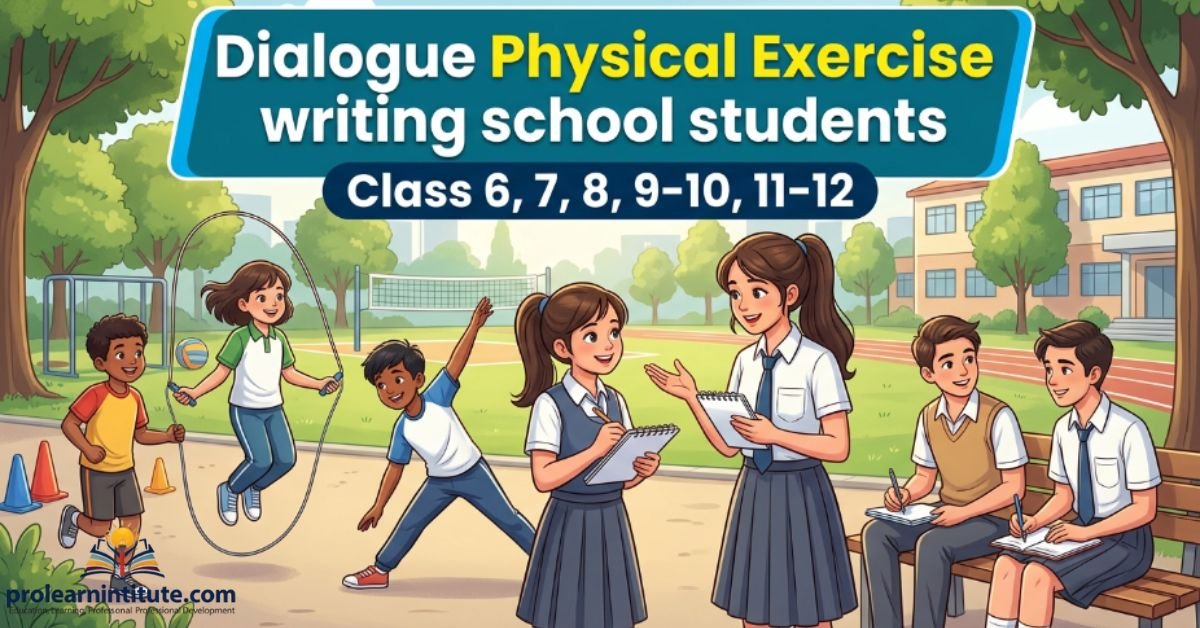
Physical exercise is one of the most important habits a student can build from a young age. This article helps students from Class 6 to Class 12 understand exercises and write dialogues on this topic easily.
Physical exercise dialogue writing is very common in school exams. This guide gives you simple examples, useful vocabulary, and exam-ready questions all in one place.
Introduction to Physical Exercise
What is physical exercise?
Physical exercise means any planned body movement that makes your muscles work and burns energy. It includes activities like walking, running, jumping, swimming, and playing sports.
Why is it important in daily life?
Exercise keeps your body active and your mind fresh every day. Without it, your body becomes lazy and weak over time. A small amount of daily exercise can make a big difference in your health.
Importance of Physical Exercise for Students
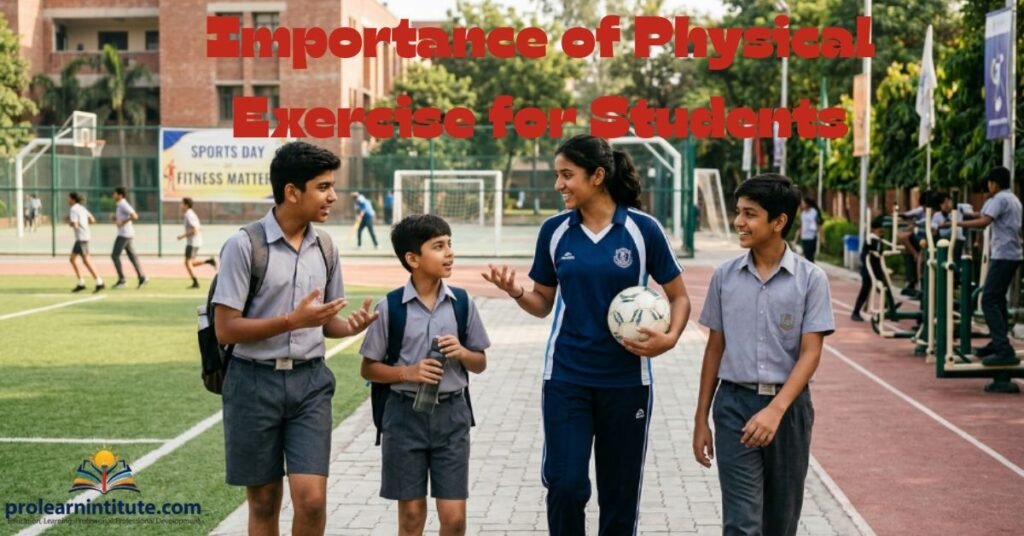
Physical health benefits
Regular exercise makes your bones strong and your muscles powerful. It improves your heart health and keeps your weight balanced. Students who exercise daily get sick less often than those who don’t.
Mental health benefits
Exercise releases happy hormones in your brain called endorphins. These hormones reduce stress, anxiety, and sadness. Even a short walk can make you feel calm and positive.
Impact on study performance
Students who exercise regularly have better memory and focus. Physical activity sends more oxygen to the brain, which helps in learning. Many studies show that active students perform better in exams.
Dialogue on Physical Exercise (Basic Level)
Dialogue for Class 6 Students
Simple conversation between two friends about daily exercise
Ali: Do you exercise every day, Bilal?
Bilal: Yes, I go for a morning walk with my father.
Ali: That sounds great! I should start too.
Bilal: Yes, it makes you feel fresh and happy all day.
Ali: I will join you from tomorrow morning, then.
Bilal: Perfect! It is always better to exercise with a friend.
Dialogue for Class 7 and 8 Students
Slightly detailed discussion, including school routine and sports activities
Sara: You look very active today. What is your secret?
Nadia: I have started playing badminton after school every day.
Sara: Does it not take away time from your studies?
Nadia: No, actually, it helps me focus better when I study after exercise.
Sara: Our school also has a sports period. I usually skip it.
Nadia: You should not skip it. It is really good for your body and mind.
Sara: You are right. I will take part from next week.
Nadia: Great! We can play together during the sports period.
Dialogue for Class 9 and 10 Students (SSC Level)
More mature conversation focusing on health awareness and discipline
Hamza: Ahmed, why do you wake up so early every morning?
Ahmed: I go for a jog. I have been doing it for six months now.
Hamza: Is it not hard to stay consistent with that routine?
Ahmed: It was difficult at first, but now it feels natural and enjoyable.
Hamza: I have been feeling tired and low on energy lately.
Ahmed: That is because you do not move your body enough. Exercise will fix that.
Hamza: I want to start, but I do not know where to begin.
Ahmed: Start with a 15-minute walk every morning. Keep it simple at first.
Hamza: That sounds manageable. I will try it starting tomorrow.
Ahmed: Remember, discipline is the key. Even small steps lead to big results.
Dialogue for Class 11 and 12 Students (HSC Level)
Advanced discussion including lifestyle, fitness goals, and academic pressure balance
Usman: Zain, how do you manage exercise with your board exam preparation?
Zain: I exercise for 30 minutes every morning before I start studying.
Usman: Does it not waste precious study time during exams?
Zain: Not at all. It actually improves my concentration for the next few hours.
Usman: I have been sitting at my desk for 10 to 12 hours a day, and I still feel unproductive.
Zain: That is because your brain gets tired without physical movement. You need short activity breaks.
Usman: What kind of exercise would you suggest for a busy student?
Zain: Morning jogging, stretching, or even a short home workout works perfectly fine.
Usman: What about diet and sleep? Do they matter too?
Zain: Yes, exercise, good sleep, and a healthy diet together create the best routine for success.
Usman: I think I need to completely change my daily lifestyle.
Zain: Start slow and stay consistent. That is the only real formula that works.
Real-Life Conversation Examples
Between friends in the school playground
Raza: Why are you not playing with us today?
Kamran: I hurt my leg yesterday, so I am resting.
Raza: Take care. Regular movement actually helps injuries heal faster, you know.
Kamran: Really? I thought rest was the only solution.
Raza: Light stretching is fine. Ask the school nurse for advice.
Between the teacher and the students in the classroom
Teacher: Class, who can tell me why exercise is important for students?
Student 1: Sir, it keeps us healthy and strong.
Student 2: It also helps us concentrate better in class, Sir.
Teacher: Very good. Exercise also reduces stress during exam time.
Student 3: Sir, do sports count as exercise?
Teacher: Absolutely. Any physical activity that moves your body counts as exercise.
Between parents and children at home
Mother: You have been sitting on your phone for three hours. Go outside and play.
Child: But Mom, I do not feel like going outside today.
Mother: Physical activity is not optional. It is necessary for your health.
Child: Okay, Mom, I will go for a short bike ride then.
Mother: That is a great idea. Even 20 minutes outside will make you feel better.
Child: You were right, Mom. I feel much more relaxed now.
Vocabulary Related to Physical Exercise
Exercise-related words and meanings
| Word | Meaning |
| Stamina | The ability to do hard work for a long time |
| Flexibility | How easily your body can bend and stretch |
| Endurance | Staying power during physical activity |
| Posture | The way you hold your body while standing or sitting |
| Cardiovascular | Related to the heart and blood circulation |
| Metabolism | How fast your body burns food for energy |
| Immunity | Your body’s natural power to fight diseases |
| Discipline | Doing the right thing regularly without being forced |
| Consistency | Doing something regularly without stopping |
| Warm-up | Light exercise done before the main workout |
Useful phrases for dialogues
- I make it a habit to exercise every day.
- Regular exercise keeps me energetic throughout the day.
- I feel more focused after my morning workout.
- Physical fitness is as important as academic success.
- Even small daily activities add up to great health.
- I prefer outdoor sports over sitting inside all day.
- Exercise has improved my mood and confidence.
- Staying active is the best investment in your future.
Benefits of Regular Physical Activity
Strong body and immunity
Exercise makes your muscles, bones, and joints stronger over time. It also improves your immune system, so you fall sick less frequently. A fit body can recover from illness much faster than an unfit one.
Better concentration in studies
Physical activity increases blood flow to the brain, improving memory and focus. Students who exercise find it easier to understand and remember lessons. Even a short activity break between study sessions helps a lot.
Stress reduction
Exercise lowers the level of stress hormones like cortisol in your body. It gives your mind a break from worries and school pressure. Many students feel much calmer and happier after a workout.
Common Questions in Exams
Short questions
- What is physical exercise?
- Name any three benefits of regular exercise.
- How does exercise improve mental health?
- What is the difference between aerobic and anaerobic exercise?
- Why should students exercise daily?
Dialogue writing questions
- Write a dialogue between two friends about the importance of morning exercise.
- Write a conversation between a teacher and a student about physical fitness.
- Write a dialogue between two students about their exercise routine.
- Write a conversation between a parent and child about healthy habits.
Importance-based questions
- Write a short note on the importance of physical exercise for students.
- How does regular exercise help in improving academic performance?
- Why is physical fitness necessary in student life?
- Discuss the role of sports in maintaining physical and mental health.
Activities for Students
Morning walk routine
- Wake up 30 minutes earlier than your usual time.
- Start with a 10 to 15-minute slow walk in fresh air.
- Gradually increase your walking time each week.
- Try to walk at the same time every day to build a habit.
- Bring a friend or family member to stay motivated.
School sports participation
- Always take part in school sports periods actively.
- Join any school team like cricket, football, or badminton.
- Participate in annual sports day events and competitions.
- Encourage your classmates to join sports activities too.
- Talk to your PE teacher about improving your fitness level.
Home-based simple exercises
- Do 10 jumping jacks every morning to warm up your body.
- Try simple stretches for your back, legs, and arms daily.
- Practice skipping rope for 5 minutes as a fun cardio exercise.
- Do basic yoga poses to improve flexibility and focus.
- Take short active breaks while studying to keep your energy up.
Conclusion
Physical exercise is not just a school subject—it is a life skill that every student must develop. Starting healthy habits early leads to a stronger, happier, and more successful life ahead.
Make exercise a daily part of your routine, and you will see positive changes in your body, mind, and studies. A healthy student is always better prepared to face challenges in school and beyond.
Frequently Asked Questions
1. What is the best way to write a dialogue about physical exercise for school students?
The best way is to use simple, conversational language between two characters—like two students or a teacher and student—discussing the benefits of exercise, healthy habits, and staying active. Keep sentences short and natural.
2. How do I start writing a dialogue on the importance of physical exercise for class 8 students?
Start with a greeting and a relatable situation, such as one student asking another why they look so energetic. This creates a natural opening that flows into a discussion about daily exercise and its health benefits.
3. Can you give me an example of a short dialogue between two friends about morning exercise for class 6?
Sure! Riya: “Hey Meera, you look so fresh today! What’s your secret?” Meera: “I started jogging every morning for 30 minutes. You should try it!” Riya: “Really? I’ll join you tomorrow!” This simple format works perfectly for Class 6 students.
4. What topics should students include when writing a dialogue about physical fitness for classes 9 to 12?
Students should include topics like the health benefits of regular exercise, the dangers of a sedentary lifestyle, types of workouts (yoga, running, sports), mental health improvements, and tips for building a daily fitness routine.
5. How long should a dialogue on physical exercise be for middle school students in classes 6 to 8?
A dialogue for middle school students should ideally be 10 to 15 exchanges long, covering a clear introduction, body discussion, and a positive conclusion—roughly 150 to 250 words to stay engaging without being overwhelming.
6. What are some natural phrases to use in a dialogue about exercise to make it sound conversational and realistic?
Use everyday phrases like “Have you noticed how much better you feel after a workout?”, “I’ve been skipping gym lately, and I feel so sluggish,” or “Even a 20-minute walk makes a huge difference.” These make dialogues sound authentic and relatable.
7. How can high school students in classes 10 to 12 write an advanced dialogue that covers both the physical and mental benefits of exercise?
Advanced students should structure the dialogue to move from physical benefits (weight management, stamina, strength) to mental health advantages (stress relief, better focus, improved sleep), using factual statements and persuasive reasoning between two well-developed characters.
8. What is the correct format for dialogue writing on physical exercise that follows school exam guidelines?
The correct format includes the characters’ names followed by a colon before each line of speech, proper punctuation, no use of quotation marks in the traditional dialogue format, a clear topic flow, and a meaningful conclusion, usually within 200–300 words for exams.
9. Why is physical exercise dialogue writing an important topic for students in the school curriculum?
It teaches students both creative writing skills and health awareness simultaneously. By crafting conversations about fitness, students learn to express ideas clearly, build persuasive language, and internalize the real-life importance of staying physically active.
10. How can a student write a dialogue between a doctor and a student about the importance of regular physical exercise for class 10 or 12 exams?
Set the scene in a clinic or health camp. The doctor should explain the risks of inactivity — like obesity, diabetes, and poor concentration — while encouraging a 45-minute daily exercise routine. The student’s responses should reflect curiosity and gradual motivation, ending with a commitment to adopt healthier habits.

I’m Jordan Smith, a content writer with 4 years of experience and AI content expertise, creating clear, engaging, and easy-to-understand educational content.