
Global warming paragraph for Class 6 to HSC is an important topic for students because it helps us understand how our planet is changing. It explains the rise in Earth’s temperature and its effects in a very simple way. This topic is often asked in exams, so learning it is very useful.
In this global warming paragraph for Class 6 to HSC, we also learn how human activities like pollution and cutting trees are making the problem worse. It helps students connect science with real-life issues. Understanding it early builds awareness about protecting the environment.
This topic also shows why we should take care of nature for a better future. Global warming affects the weather, animals, and even our daily lives. That’s why learning it in simple words, along with বাংলা অর্থসহ, makes it easier for students to understand and remember.
What Is Global Warming?

Global warming means the gradual rise in Earth’s average temperature over time. This warming is mainly caused by human activities that release harmful gases into the air.
These gases trap heat from the sun inside Earth’s atmosphere, just like a greenhouse traps heat inside. That is why this process is also called the greenhouse effect.
Key facts about global warming:
- Earth’s temperature has risen by about 1.1°C since the 1800s
- The last decade (2011–2020) was the hottest ever recorded
- Over 97% of climate scientists agree that humans are causing global warming
- CO₂ levels in the atmosphere are the highest in 800,000 years
- Global warming affects the weather, oceans, glaciers, and wildlife
see also:A Railway Station paragraph for Class 6,7,8,10, SSC students
Causes of Global Warming
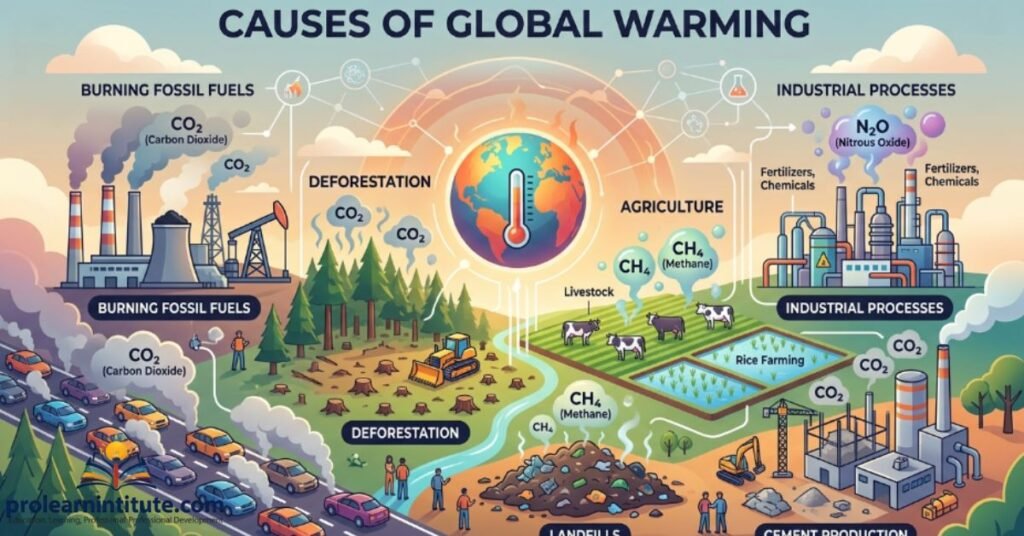
The main cause of global warming is the burning of fossil fuels like coal, oil, and natural gas. These fuels release carbon dioxide (CO₂) and other greenhouse gases into the atmosphere.
Human activities like deforestation, industrial production, and farming also add large amounts of harmful gases to the air every day.
| Cause | Greenhouse Gas Released | Main Source |
| Burning fossil fuels | Carbon dioxide (CO₂) | Cars, factories, power plants |
| Deforestation | CO₂ | Cutting down forests |
| Agriculture | Methane (CH₄) | Livestock, rice farming |
| Industrial processes | Nitrous oxide (N₂O) | Fertilizers, chemicals |
| Landfills | Methane (CH₄) | Decomposing waste |
| Cement production | CO₂ | Construction industry |
Major causes at a glance:
- Burning coal and oil for energy is the number one cause
- Cutting down forests removes trees that absorb CO₂
- Factory farming produces large amounts of methane gas
- Air travel and shipping release massive amounts of CO₂
- Plastic production and waste also add to greenhouse gases
Effects of Global Warming on the Environment
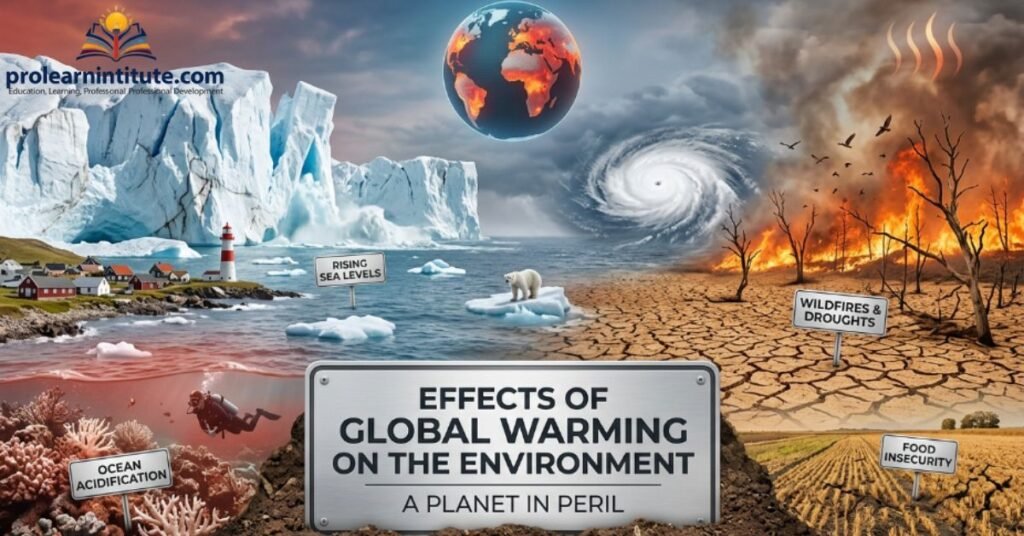
Global warming is already changing our planet in very serious ways. Rising temperatures are melting ice caps, raising sea levels, and making extreme weather events more common and more dangerous.
These changes affect not just the environment but also human health, food supply, and the economy around the world.
Major effects of global warming:
- Melting glaciers and ice caps are causing sea levels to rise
- More frequent floods, droughts, and hurricanes are destroying communities
- Coral reefs are dying because ocean water is becoming warmer and more acidic
- Many animal and plant species are losing their habitats and going extinct
- Crop failures are becoming common due to irregular rainfall and extreme heat
- Heat waves are causing thousands of deaths every year globally
- Wildfires are spreading faster and burning larger areas than before
- Arctic and Antarctic regions are warming twice as fast as the rest of the Earth
| Effect | Region Most Affected | Severity Level |
| Rising sea levels | Coastal and island nations | Very High |
| Melting glaciers | Arctic, Himalayas, Antarctica | Very High |
| Extreme heat waves | South Asia, the Middle East, and Africa | High |
| Stronger hurricanes | Caribbean, Southeast Asia | High |
| Coral bleaching | Pacific, Indian, Atlantic Oceans | Very High |
| Food insecurity | Sub-Saharan Africa, South Asia | High |
Global Warming and Bangladesh — A Local Perspective
Any complete global warming paragraph written by a student in Bangladesh should include how this crisis affects the country directly, since this is one of the most exam-relevant angles examiners look for. Bangladesh, as a low-lying deltaic nation, is considered one of the most climate-vulnerable countries in the world. Rising sea levels threaten to submerge large parts of the southern coastal districts in the coming decades, displacing millions of people and turning them into climate refugees.
Beyond sea-level rise, Bangladesh is already experiencing more frequent and intense cyclones, unpredictable monsoon patterns, and coastal erosion that destroys farmland and freshwater sources through saltwater intrusion. Agricultural production — the backbone of the rural economy — is increasingly threatened by irregular rainfall and extreme heat. Understanding this local dimension makes a global warming paragraph far stronger and more relevant, since it connects a global scientific issue to something students can see happening in their own country.
For readers curious about broader climate-related infrastructure challenges, the connection between rising temperatures and stressed public transport systems is also worth exploring in the Traffic Jam Paragraph, which touches on how urban emissions add to the same problem.
Importance of Controlling Global Warming

Controlling global warming is not just important — life on Earth must continue. If temperatures keep rising, the damage to our planet will become impossible to reverse.
Every country, every community, and every person has a role to play in slowing down global warming before it is too late.
Why controlling global warming matters:
- It protects millions of people living in low-lying coastal areas from flooding
- It helps preserve biodiversity and prevents the mass extinction of species
- It keeps food and water supplies safe and stable for growing populations
- It reduces the number of deadly natural disasters every year
- It protects the health of people, especially children and the elderly
- It saves governments and economies trillions of dollars in disaster recovery
- It ensures clean air and safe drinking water for future generations
- It supports global peace by reducing conflicts over limited natural resources
Global Warming Paragraph for Class 6, 7, 8
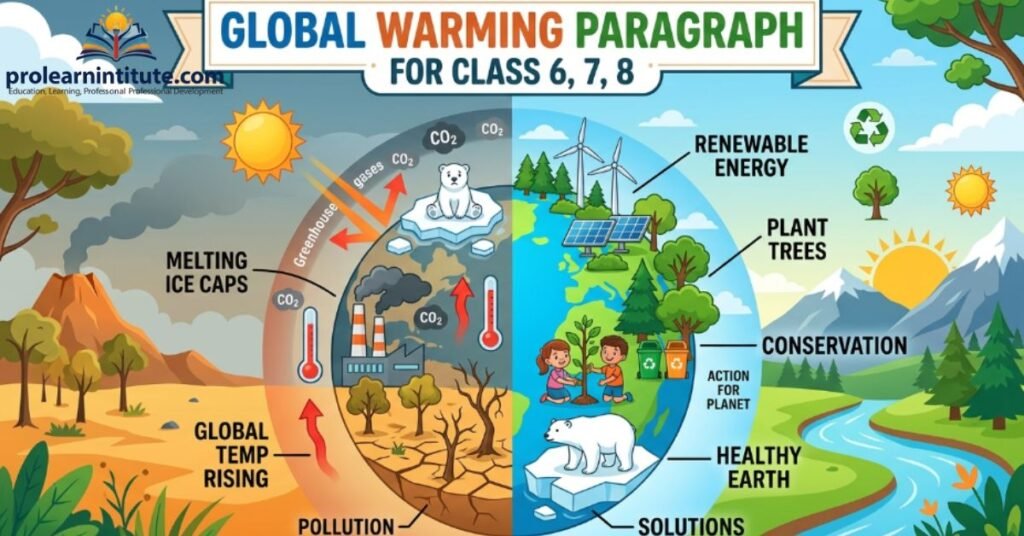
Global warming is the slow increase in the temperature of the Earth. It happens because of gases like carbon dioxide that get trapped in the air and hold heat from the sun. Human activities like burning fuel, cutting trees, and using factories are the main reasons for this problem.
When Earth gets warmer, the ice in cold places starts to melt. This makes the sea level rise and causes floods in many areas. Animals and plants also suffer because their homes and food sources change or disappear.
We can all help stop global warming by saving electricity, planting trees, using less plastic, and not wasting water. Even small actions by many people can make a big difference. Learning about global warming helps us become responsible citizens who care for the planet.
বাংলা অনুবাদ (Bangla Translation): বৈশ্বিক উষ্ণতা হলো পৃথিবীর তাপমাত্রা ধীরে ধীরে বৃদ্ধি পাওয়ার প্রক্রিয়া। কার্বন ডাইঅক্সাইডের মতো গ্যাসগুলো বাতাসে আটকে সূর্যের তাপ ধরে রাখে, যার ফলে পৃথিবী গরম হয়ে যায়। জ্বালানি পোড়ানো, গাছ কাটা এবং কারখানার ব্যবহার এই সমস্যার প্রধান কারণ। আমরা বিদ্যুৎ সাশ্রয়, গাছ লাগানো এবং প্লাস্টিক কম ব্যবহার করে এই সমস্যা কমাতে পারি।
see also:A Lion and a Mouse Completing Story for Class 6, 7, 8, SSC, & HSC students
Global Warming Paragraph for Class 9 10
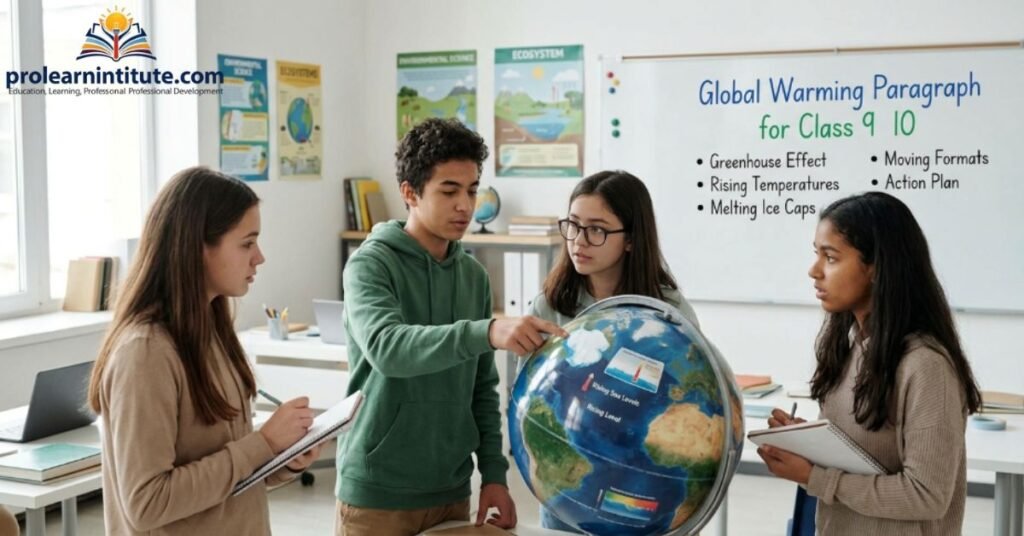
Global warming refers to the long-term rise in Earth’s average surface temperature due to human-induced greenhouse gas emissions. Since the Industrial Revolution, the concentration of CO₂ in the atmosphere has increased dramatically, leading to significant climate changes across the globe.
The effects of global warming are wide and serious. Polar ice caps are melting at alarming rates, sea levels are rising, and extreme weather events are becoming more frequent. Developing countries are especially vulnerable because they lack the resources to deal with these climate disasters.
Scientists say we must limit global temperature rise to 1.5°C above pre-industrial levels to avoid the worst effects of climate change. This requires a global shift to renewable energy, reforestation programs, and major changes in how industries and transportation systems operate. Countries must work together through agreements like the Paris Climate Accord to take meaningful action before the window of opportunity closes.
বাংলা অনুবাদ (Bangla Translation): বৈশ্বিক উষ্ণতা বলতে মানব-সৃষ্ট গ্রিনহাউস গ্যাস নির্গমনের কারণে পৃথিবীর গড় তাপমাত্রার দীর্ঘমেয়াদি বৃদ্ধিকে বোঝায়। শিল্প বিপ্লবের পর থেকে বায়ুমণ্ডলে CO₂-এর পরিমাণ উল্লেখযোগ্যভাবে বেড়েছে। মেরু অঞ্চলের বরফ গলছে, সমুদ্রের স্তর বাড়ছে এবং চরম আবহাওয়া ঘটনাগুলো আরও ঘন ঘন হচ্ছে। বিজ্ঞানীরা বলছেন, জলবায়ু পরিবর্তনের ভয়াবহ প্রভাব এড়াতে তাপমাত্রা বৃদ্ধি ১.৫°C-এর মধ্যে সীমিত রাখতে হবে।
Global Warming Paragraph for HSC

Global warming is a complex environmental phenomenon driven by the accumulation of greenhouse gases in Earth’s atmosphere, primarily as a result of anthropogenic activities. Since the onset of the Industrial Revolution in the 18th century, human societies have relied heavily on fossil fuels — coal, oil, and natural gas — for energy production, transportation, and manufacturing. This dependency has caused a dramatic surge in atmospheric CO₂ concentrations, rising from approximately 280 ppm in pre-industrial times to over 420 ppm today.
The consequences of unchecked global warming are far-reaching and deeply interconnected. Climatologists predict that if current emission trends continue, global average temperatures could rise by 3°C to 5°C by the end of this century. Such an increase would trigger catastrophic events, including the collapse of major ice sheets in Greenland and Antarctica, the inundation of low-lying coastal cities, widespread species extinction, and severe disruptions to global agricultural systems. Furthermore, the socioeconomic impacts would be disproportionately borne by developing nations that have contributed least to the problem.
Addressing global warming demands a multi-dimensional approach encompassing technological innovation, international cooperation, policy reform, and behavioral change. The transition to renewable energy sources such as solar, wind, and hydroelectric power must be accelerated at an unprecedented scale. Simultaneously, carbon capture and storage technologies, sustainable agriculture practices, and urban planning reforms are critical components of a comprehensive climate strategy. The scientific consensus is unequivocal — immediate, ambitious, and sustained global action is the only viable path to preserving a livable planet for present and future generations.
বাংলা অনুবাদ (Bangla Translation): বৈশ্বিক উষ্ণতা একটি জটিল পরিবেশগত ঘটনা যা মূলত মানবসৃষ্ট কার্যকলাপের ফলে বায়ুমণ্ডলে গ্রিনহাউস গ্যাসের সঞ্চয়ের কারণে ঘটে। শিল্প বিপ্লবের পর থেকে জীবাশ্ম জ্বালানির উপর মানবসমাজের নির্ভরতা বায়ুমণ্ডলীয় CO₂-এর মাত্রায় নাটকীয় বৃদ্ধি ঘটিয়েছে। অনিয়ন্ত্রিত বৈশ্বিক উষ্ণতার পরিণতি সুদূরপ্রসারী — বরফের চাদর গলে যাওয়া, সমুদ্রতীরবর্তী শহর প্লাবিত হওয়া এবং কৃষি ব্যবস্থার মারাত্মক ক্ষতি। নবায়নযোগ্য শক্তিতে রূপান্তর, আন্তর্জাতিক সহযোগিতা এবং নীতি সংস্কারের মাধ্যমে এই সমস্যার সমাধান করা অপরিহার্য।
Global Warming Paragraph Bangla
বৈশ্বিক উষ্ণতা বা গ্লোবাল ওয়ার্মিং হলো পৃথিবীর বায়ুমণ্ডল ও সমুদ্রপৃষ্ঠের গড় তাপমাত্রার ক্রমাগত বৃদ্ধির প্রক্রিয়া। শিল্প বিপ্লবের পর থেকে মানুষ যেভাবে জীবাশ্ম জ্বালানি ব্যবহার করছে, তার ফলে বায়ুমণ্ডলে কার্বন ডাইঅক্সাইড ও অন্যান্য গ্রিনহাউস গ্যাসের পরিমাণ দিন দিন বেড়ে চলেছে।
এই অতিরিক্ত গ্যাসগুলো সূর্যের তাপ বায়ুমণ্ডলে আটকে রাখে এবং পৃথিবীকে অতিরিক্ত গরম করে তোলে। এর ফলে মেরু অঞ্চলের বরফ গলে যাচ্ছে, সমুদ্রের জলস্তর বাড়ছে এবং বিভিন্ন প্রাকৃতিক দুর্যোগ ঘন ঘন দেখা দিচ্ছে।
বৈশ্বিক উষ্ণতা নিয়ন্ত্রণে আমাদের সবাইকে একসাথে কাজ করতে হবে। গাছ লাগানো, নবায়নযোগ্য শক্তির ব্যবহার বাড়ানো, এবং জীবাশ্ম জ্বালানির ব্যবহার কমানো এই সমস্যার সমাধানে গুরুত্বপূর্ণ ভূমিকা রাখতে পারে। ভবিষ্যৎ প্রজন্মের জন্য একটি সুন্দর ও বাসযোগ্য পৃথিবী রেখে যাওয়া আমাদের সকলের দায়িত্ব।
Global Warming Paragraph with Bangla Meaning
Global warming is the gradual increase in Earth’s temperature caused by greenhouse gases. These gases trap heat in the atmosphere and prevent it from escaping into space, making the planet warmer every year.
বাংলা অর্থ: বৈশ্বিক উষ্ণতা হলো গ্রিনহাউস গ্যাসের কারণে পৃথিবীর তাপমাত্রার ধীরে ধীরে বৃদ্ধি। এই গ্যাসগুলো বায়ুমণ্ডলে তাপ আটকে রাখে এবং তাকে মহাকাশে বের হতে দেয় না, যার ফলে প্রতি বছর গ্রহটি আরও উষ্ণ হয়ে ওঠে।
The main causes are burning fossil fuels, cutting down forests, and industrial pollution. All of these add harmful gases to the atmosphere every single day.
বাংলা অর্থ: প্রধান কারণগুলো হলো জীবাশ্ম জ্বালানি পোড়ানো, বন কাটা এবং শিল্প দূষণ। এই সবই প্রতিদিন বায়ুমণ্ডলে ক্ষতিকর গ্যাস যোগ করছে।
The effects include melting ice, rising seas, stronger storms, and threats to wildlife. These changes are already happening and will get worse if we do not act now.
বাংলা অর্থ: প্রভাবগুলির মধ্যে রয়েছে বরফ গলা, সমুদ্র বৃদ্ধি, শক্তিশালী ঝড় এবং বন্যপ্রাণীর প্রতি হুমকি। এই পরিবর্তনগুলো ইতিমধ্যেই ঘটছে এবং আমরা এখন না থামলে আরও খারাপ হবে।
To solve this problem, we must use clean energy, plant more trees, and reduce waste. Every person and every government must take this responsibility seriously.
বাংলা অর্থ: এই সমস্যা সমাধান করতে আমাদের পরিষ্কার শক্তি ব্যবহার করতে হবে, আরও গাছ লাগাতে হবে এবং বর্জ্য কমাতে হবে। প্রতিটি মানুষ এবং প্রতিটি সরকারকে এই দায়িত্ব গুরুত্বের সাথে নিতে হবে।
Global Warming Paragraph 150 Words

Global warming is the gradual rise in Earth’s temperature due to the buildup of greenhouse gases in the atmosphere. These gases, mainly carbon dioxide and methane, are released when humans burn fossil fuels, cut down forests, and run factories. They trap heat from the sun and stop it from leaving the atmosphere, making Earth hotter over time.
The effects of global warming are serious and already visible. Ice caps are melting, sea levels are rising, and extreme weather events like floods and droughts are happening more often. Animals and plants are losing their natural habitats, and many species face extinction.
To fight global warming, people must switch to clean energy like solar and wind power. Governments need to create strong environmental laws. Individuals can help by saving electricity, planting trees, and reducing waste. Everyone must act now to protect our planet for future generations.
Global Warming Paragraph 200 Words
Global warming is one of the most critical environmental challenges of the 21st century. It refers to the steady increase in Earth’s average surface temperature, primarily caused by human activities that release greenhouse gases into the atmosphere. Carbon dioxide, methane, and nitrous oxide are the main gases responsible for trapping heat and preventing it from escaping into space.
The major causes of global warming include the burning of fossil fuels for electricity and transportation, large-scale deforestation, industrial emissions, and intensive farming. Over the past century, these activities have raised global temperatures by more than 1°C, leading to alarming changes in our climate system.
The consequences are both widespread and devastating. Polar ice is melting at record speeds, causing sea levels to rise and threatening coastal cities worldwide. Extreme weather events, including hurricanes, wildfires, droughts, and floods, are becoming more intense and more frequent. Ecosystems are being disrupted, and thousands of species face the risk of extinction.
Solutions to global warming require urgent global cooperation. Countries must rapidly move to renewable energy sources, strengthen environmental regulations, and invest in sustainable technologies. Citizens can contribute by reducing energy consumption, using public transport, and supporting eco-friendly businesses. The time to act is now.
Easy Tips to Reduce Global Warming

Everyone can help reduce global warming through small but powerful daily habits. You do not need to be a scientist or a government leader — just making smarter choices every day adds up to a huge positive impact.
Simple and effective ways to fight global warming:
- Use less electricity by turning off lights and unplugging devices when not in use
- Switch to renewable energy like solar panels or green energy plans if available
- Use public transport, walk, or cycle instead of driving a personal car
- Plant trees in your yard, school, or community to absorb CO₂
- Eat less meat, especially beef, which produces large amounts of methane
- Reduce, reuse, and recycle to cut down on waste and factory production
- Buy energy-efficient appliances with good Energy Star ratings
- Avoid single-use plastics and carry reusable bags, bottles, and containers
- Support eco-friendly brands that use sustainable and ethical practices
- Spread awareness by talking to friends, family, and classmates about climate change
| Action | CO₂ Saved Per Year | Difficulty Level |
| Drive less / use public transport | Up to 2.4 tonnes | Easy |
| Switch to a plant-based diet | Up to 1.5 tonnes | Moderate |
| Install solar panels | Up to 1.5 tonnes | Moderate |
| Reduce air travel | Up to 1.8 tonnes | Easy |
| Recycle and reduce waste | Up to 0.5 tonnes | Very Easy |
| Plant trees | Varies | Very Easy |
Understanding Your Carbon Footprint
A key concept often missing from a basic global warming paragraph is the idea of a personal “carbon footprint” — the total amount of greenhouse gases produced directly or indirectly by an individual’s daily activities. Every time you use electricity generated from fossil fuels, travel by car, or buy products that required heavy manufacturing, you add to your carbon footprint.
Understanding this concept helps students see that mitigation — the effort to reduce or prevent greenhouse gas emissions — isn’t just a government responsibility but something achievable through daily personal choices too. Building climate resilience, meaning the ability of communities to adapt to and recover from climate-related challenges, starts with this kind of individual awareness. A well-written global warming paragraph at the HSC level often earns extra marks for connecting this personal responsibility angle with the larger anthropogenic emissions problem discussed earlier in this page. Students interested in stories that explore consequences of ignored warnings might also enjoy King Midas, a classic tale about the cost of not thinking beyond immediate desires — a theme that mirrors humanity’s slow response to climate warnings.
Why Students Should Learn About Global Warming

Students are the future leaders, scientists, engineers, and policy makers who will have to deal with the effects of global warming most directly. Learning about this issue now gives them the knowledge and motivation to make better choices throughout their lives.
Understanding global warming helps students in many important ways:
- It builds scientific literacy and helps students understand how Earth’s systems work
- It encourages critical thinking about news, data, and environmental claims
- It develops civic responsibility and the desire to protect the environment
- It opens doors to careers in renewable energy, environmental science, and green technology
- It teaches sustainable habits like saving energy and reducing waste from a young age
- It promotes global awareness and empathy for people affected by climate disasters
- It gives students the tools to advocate for climate policies in their communities
- It connects many school subjects — science, geography, economics, and social studies — in a real-world context
Schools that include climate education prepare students to face one of the biggest challenges of the modern world. A student who understands global warming today can become the climate solution leader of tomorrow.
Common Mistakes to Avoid When Writing a Global Warming Paragraph
Many students lose marks on their global warming paragraph not because they lack knowledge, but because of avoidable structural mistakes. A common error is jumping between causes, effects, and solutions without clear paragraph breaks — examiners expect a logical flow: definition, causes, effects, then solutions. Another frequent mistake is writing only in vague, general terms (“the world is getting hotter”) without including at least one or two specific facts or figures, which this page’s key facts section already helps you avoid.
Students should also avoid ending a global warming paragraph abruptly without a proper concluding thought that ties the topic back to personal or national responsibility. A strong closing line — connecting global warming to Bangladesh’s future or to the student’s own role in protecting the environment — consistently earns better marks than a generic ending. Just as an unfinished tale like The Pied Piper of Hamelin needs a clear resolution to feel complete, a global warming paragraph needs a clear, purposeful conclusion to leave a strong final impression on the examiner.
Conclusion
At its core, Global Warming Paragraph for Class 6 to HSC | বাংলা অর্থসহ explains how the Earth’s temperature is rising and how it affects our environment, weather, and daily life. In simple terms, it shows why global warming is a serious issue that everyone should understand and take seriously.
Now you have a clear understanding of what global warming is and why it matters in both exams and real life. The next step is yours—start adopting small eco-friendly habits and help protect our planet for the future.
FAQs
What is global warming in simple words for students?
Global warming is the gradual rise in Earth’s temperature caused by greenhouse gases like CO₂ that trap heat in the atmosphere. Human activities like burning fuel and cutting trees are the main causes.
How do I write a global warming paragraph for Class 6?
Write 3 short paragraphs explaining what global warming is, what causes it, and how we can stop it. Use simple words, mention greenhouse gases, melting ice, and tips like planting trees and saving electricity.
What are the main causes of global warming for school students?
The main causes are burning fossil fuels like coal and oil, cutting down forests, factory pollution, and farming activities. These release greenhouse gases that trap heat in Earth’s atmosphere.
What are the effects of global warming on the environment?
Global warming causes melting glaciers, rising sea levels, stronger storms, longer droughts, coral reef damage, and the extinction of many animal and plant species around the world.
How can we reduce global warming in our daily lives?
You can reduce global warming by saving electricity, using public transport, planting trees, eating less meat, recycling waste, avoiding plastic, and supporting clean energy sources like solar power.
What is the difference between global warming and climate change?
Global warming refers specifically to the rise in Earth’s temperature, while climate change covers all the broader effects of that warming, including changes in rainfall, storms, seasons, and sea levels.
What is a good global warming paragraph for Class 9 and 10?
For Class 9 and 10, write a detailed paragraph covering causes like fossil fuels and deforestation, effects like rising seas and extreme weather, and solutions like renewable energy and international agreements like the Paris Accord.
How do I write a global warming paragraph for HSC students?
HSC-level paragraphs should use academic language, include data like CO₂ levels and temperature rise statistics, discuss global policy responses, and analyze the socioeconomic impact on developing nations.
What does global warming mean in Bangla?
Global warming in Bangla is called “বৈশ্বিক উষ্ণতা” (Baishwik Ushhnota). It means the slow increase in Earth’s average temperature due to the buildup of greenhouse gases in the atmosphere.
Why is it important for students to learn about global warming?
Students need to learn about global warming because they are the future decision-makers who will face its worst effects. Understanding the issue helps them make eco-friendly choices, pursue green careers, and advocate for climate action in their communities.

I’m Jordan Smith, a content writer with 4 years of experience and AI content expertise, creating clear, engaging, and easy-to-understand educational content.