
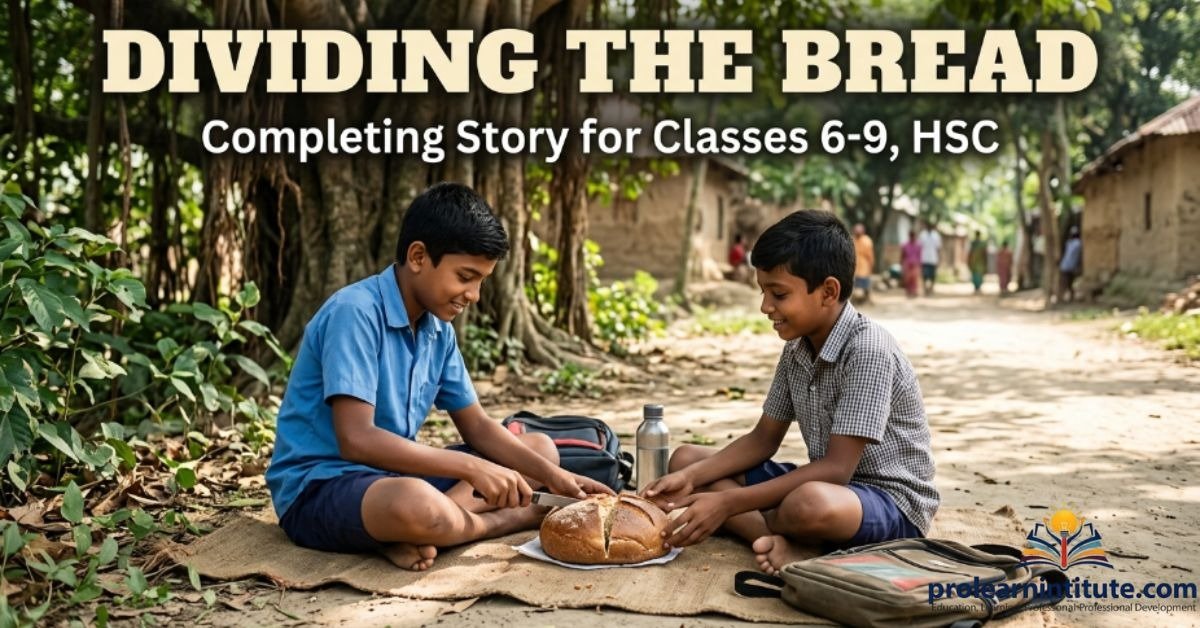
Dividing the Bread Completing Story for Class 6-9, HSC, is a simple and meaningful story that teaches an important life lesson about sharing and kindness. It is often included in school syllabi because of its clear message. Students from different classes can easily understand and relate to it.
This story shows how small acts of kindness can create a big impact in our daily lives. It helps students learn values like patience, fairness, and caring for others. The message is not only for exams but also for real-life situations.
For students preparing for exams, Dividing the Bread Completing Story for Class 6-9, HSC, is very helpful because it is easy to remember and write in their own words. It also builds strong moral understanding while improving writing skills.
see also: Application for Testimonial for Classes 6, 7, 8, SSC, and HSC
Dividing the Bread: Completing Story for Class 6
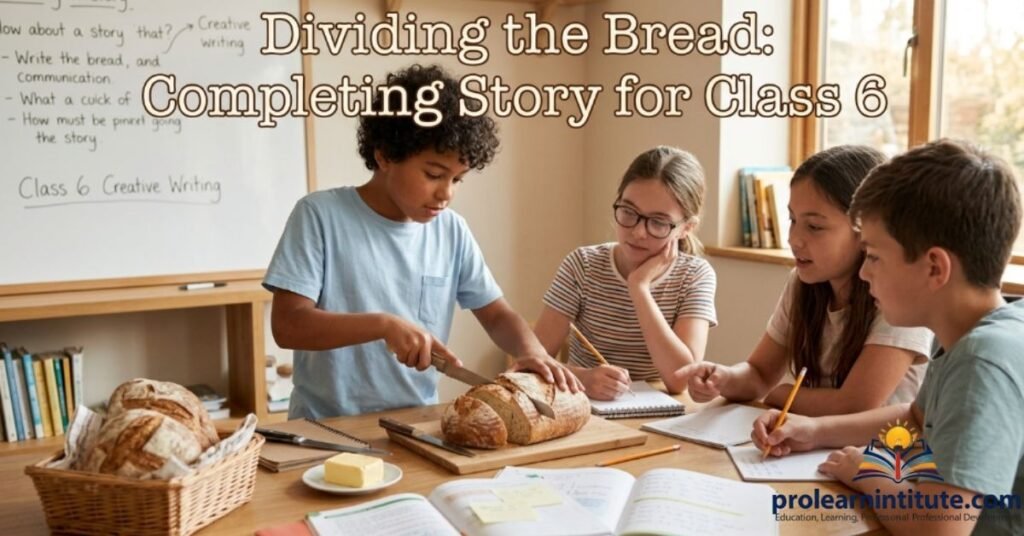
Two friends named Ali and Karim found a small piece of bread on their walk home. Both boys were very hungry after playing all day. They started arguing about who should get the bigger piece.
Ali said he saw the bread first, so he deserved more. Karim said he touched it first, so he deserved more. Their argument grew louder and louder near the village well.
An old man sitting nearby heard the noise. He asked the boys to explain their problem calmly. Both boys told him their side of the story.
The old man smiled and asked for the bread. He broke it into two equal pieces using a simple measure. He handed one piece to Ali and one to Karim.
Both boys felt embarrassed for fighting over something so small. They thanked the old man and shared a drink of water. From that day, they always shared their food fairly.
Dividing the Bread: Completing Story for Classes 7 and 8
Ali and Karim were classmates who often played cricket after school. One evening, they found a loaf of bread near a bakery cart. The vendor had accidentally dropped it while packing his goods.
Since no one claimed it, the two boys decided to keep it. But soon a disagreement started about how to divide it fairly. Ali argued that he was older and should get a larger share.
Karim disagreed and said age had nothing to do with fairness. The discussion turned into a heated debate near the market square. A shopkeeper watching them decided to step in and help.
He suggested a simple game to decide who cuts the bread. Whoever cuts it must let the other choose their piece first. This method forces the cutter to divide it as equally as possible.
Ali agreed to cut the bread using this rule. He cut it carefully into two halves. Karim picked his half happily, and Ali took the other without complaint.
This experience taught both boys an important lesson about fairness. They realized that selfish thinking often leads to unnecessary conflict. The shopkeeper’s simple trick became their favorite way to share things afterward.
Dividing the Bread: Completing Story for SSC
Ali and Karim were neighbors preparing for their board examinations together. One day, during a short study break, they found a single piece of bread left in the kitchen. Both had skipped lunch and were extremely hungry.
A disagreement arose immediately about who should get the larger portion. Ali claimed he had studied harder that day and deserved more energy. Karim argued that hunger does not depend on study hours.
Their conversation became tense, reflecting the pressure of exam season. Ali’s father overheard the argument from the next room. He walked in calmly and asked them to explain the situation.
He reminded them that competition should never destroy friendship. He suggested they divide the bread using a fair and logical method. One boy would cut the bread, and the other would choose the piece first.
This rule ensured neither boy could cheat the other during division. Ali cut the bread as evenly as his eyes could judge. Karim chose one piece, leaving the other for Ali.
Both boys ate together, feeling relieved that their friendship remained intact. Ali’s father explained that success in exams matters less than good values. Fairness and cooperation, he said, build stronger relationships than any grade.
The boys promised to support each other throughout their exam preparation. They understood that true success includes treating others with respect and honesty.
Dividing the Bread Completing Story for HSC
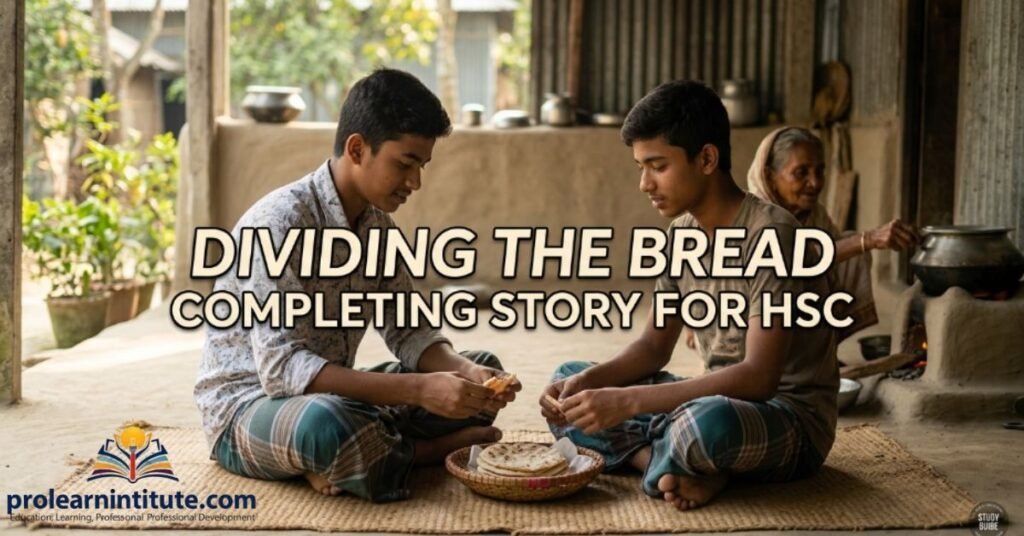
Ali and Karim were university students sharing a small apartment during their final semester. Late one night, after hours of research work, they realized only one piece of bread remained in the kitchen. Both had missed dinner due to their heavy workload.
A discussion began about how to divide the last piece of food. Ali suggested that since he had a morning exam, he needed more energy. Karim countered that his part-time job also demanded significant physical effort.
Their debate reflected the deeper stress that final-year students often experience. Neither boy wanted to seem selfish, yet both genuinely needed the food. The tension in the room grew as tiredness affected their patience.
Their roommate, a philosophy student, overheard the disagreement from his room. He walked in and proposed an old but effective solution used in negotiation studies. One person cuts the bread, while the other chooses their piece first.
This method eliminates the temptation to cut unevenly for personal benefit. Ali agreed to cut the bread using a ruler for accuracy. Karim examined both pieces and selected the one he preferred.
The roommate explained that this method is used in real-world conflict resolution. Fair division techniques appear in economics, law, and international diplomacy. Simple childhood lessons often apply to complex adult situations as well.
Ali and Karim realized their argument was more about stress than actual hunger. They agreed to manage their schedules better to avoid such situations. The incident became a memorable example of how honesty diffuses conflict.
Their philosophy roommate later used this story in a class presentation. He explained how fairness principles connect ancient wisdom with modern negotiation theory. The story became a small but meaningful part of his academic project.
Introduction to the Dividing the Bread Story
The Dividing the Bread story is a classic moral tale used in schools across South Asia. It teaches children the value of honesty when sharing limited resources. The story remains popular because its lesson applies to real-life situations.
Teachers often use this story to explain fairness in simple language. Students relate easily to the idea of sharing food with a friend. This makes the story both educational and enjoyable for young readers.
Moral of the Dividing the Bread Story
The story teaches that fairness matters more than personal gain. True friendship survives only when both people treat each other equally.
- Selfishness creates conflict, even over small things
- Fair methods can solve disagreements peacefully
- Honesty builds trust between friends
- Cooperation leads to better outcomes than competition
Summary of the Dividing the Bread Story
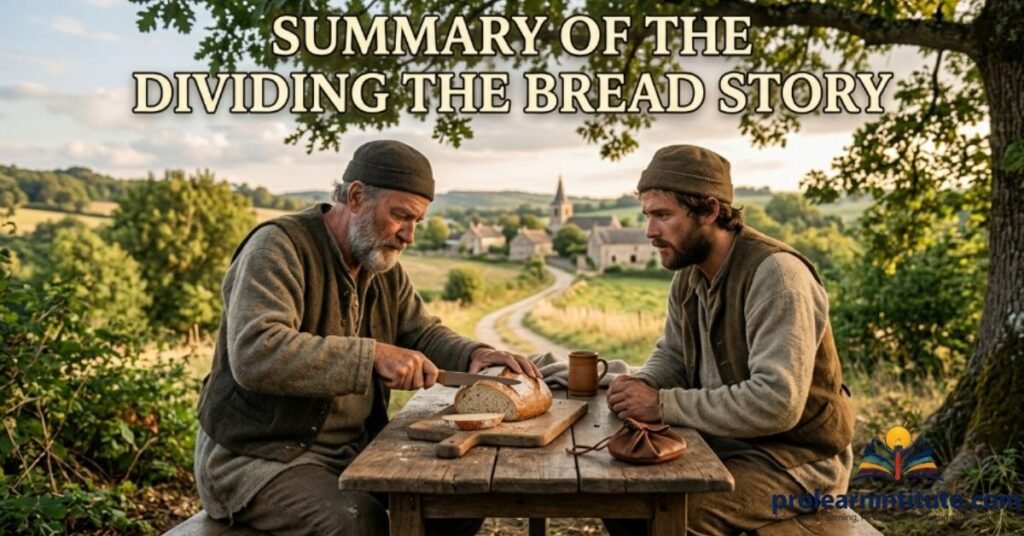
Two friends find or receive one piece of bread and begin arguing over how to divide it. Their disagreement grows until an older or wiser person intervenes.
The wise person suggests a fair method, usually letting one person cut the bread while the other chooses first. This solution stops any chance of cheating.
Both friends accept the fair division and realize their argument was unnecessary. They learn an important lesson about honesty, patience, and friendship.
Key Characters in the Dividing the Bread Story
| Character | Role in the Story |
| Ali | One of the two friends is arguing over the bread |
| Karim | The other friend involved in the disagreement |
| Wise Elder/Mediator | Suggests the fair method of dividing the bread |
Each character represents a common personality type found in real conflicts. Ali and Karim show how good friends can still disagree under pressure. The mediator represents wisdom, patience, and fair judgment.
Important Themes in the Dividing the Bread Story
- Fairness and equality in sharing resources
- The value of honest problem-solving
- Friendship survives small disagreements
- Wisdom guiding conflict resolution
- Simple solutions for complex emotional situations
These themes appear across many cultures and age groups. This is why the story remains relevant for students from Class 6 through HSC.
Step-by-Step Explanation of Dividing the Bread Story
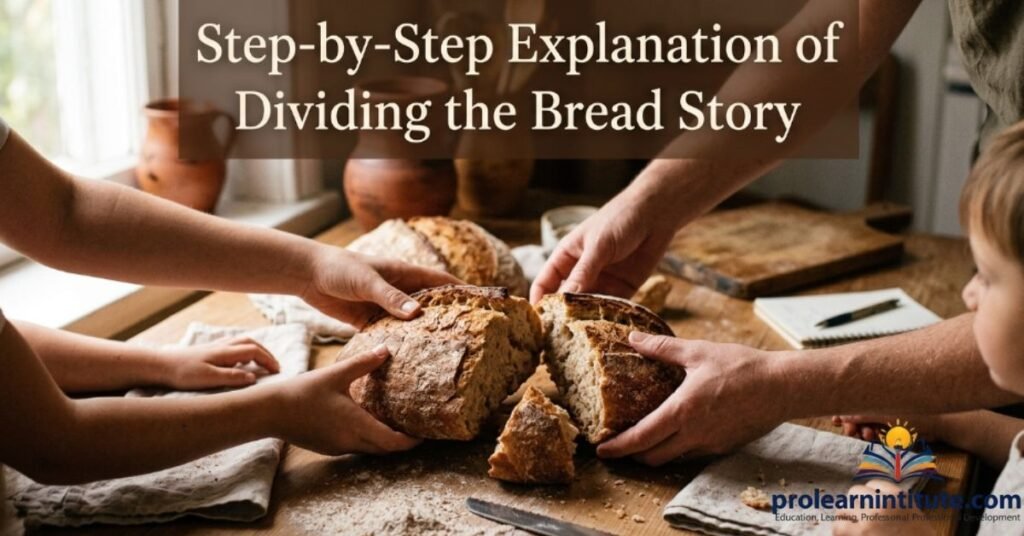
- Two friends discover or receive a single piece of bread
- Both feel hungry and want a bigger share
- An argument starts about how to divide it fairly
- A wiser person notices the conflict and steps in
- The mediator suggests a fair cutting-and-choosing method
- One friend cuts the bread as evenly as possible
- The other friend chooses their piece first
- Both accept their portions without further argument
- The friends reflect on their behavior and feel embarrassed
- They learn the value of fairness and honesty afterward
Conclusion
At its core, the story in Dividing the Bread Completing Story for Class 6-9, HSC, teaches us the value of honesty, fairness, and sharing with others. In simple terms, it shows how even small actions can reflect strong character and important life lessons. This makes the story meaningful for students at different academic levels.
Now you have a clear understanding of the message behind this story and why it matters in real life. The next step is yours—try to apply these values in your daily actions and think about how fairness and kindness can make a difference.
see also: International Mother Language Day Paragraph
FAQs
What is the moral of the Dividing the Bread story?
The story teaches that fairness and honesty are more important than personal gain, especially when sharing with friends.
How do Ali and Karim solve their argument in the story?
They use a fair method where one person cuts the bread, and the other chooses their piece first.
Why is the Dividing the Bread story taught in schools?
It teaches young students about honesty, patience, and peaceful conflict resolution in an easy-to-understand way.
What grade level is the Dividing the Bread story usually taught in?
It is commonly taught from Class 6 through HSC, with the complexity increasing at higher levels.
Who helps Ali and Karim in the story?
A wise elder or mediator steps in and suggests a fair way to divide the bread between the two friends.
What lesson can students learn from this story for real life?
Students learn that fair and honest solutions prevent conflicts and help maintain strong friendships.
Is the Dividing the Bread story based on a real event?
No, it is a moral teaching story used in textbooks to illustrate fairness, not a historical account.
What are the key themes in the Dividing the Bread story?
The main themes include fairness, honesty, friendship, and peaceful conflict resolution.
How does the story change between the Class 6 and HSC versions?
Lower-class versions use simple language and short conflicts, while HSC versions add deeper context like stress and real-world negotiation ideas.
Can teachers use this story for classroom discussions?
Yes, it works well for classroom discussions on sharing, fairness, and resolving disagreements peacefully.

I’m Jordan Smith, a content writer with 4 years of experience and AI content expertise, creating clear, engaging, and easy-to-understand educational content.