
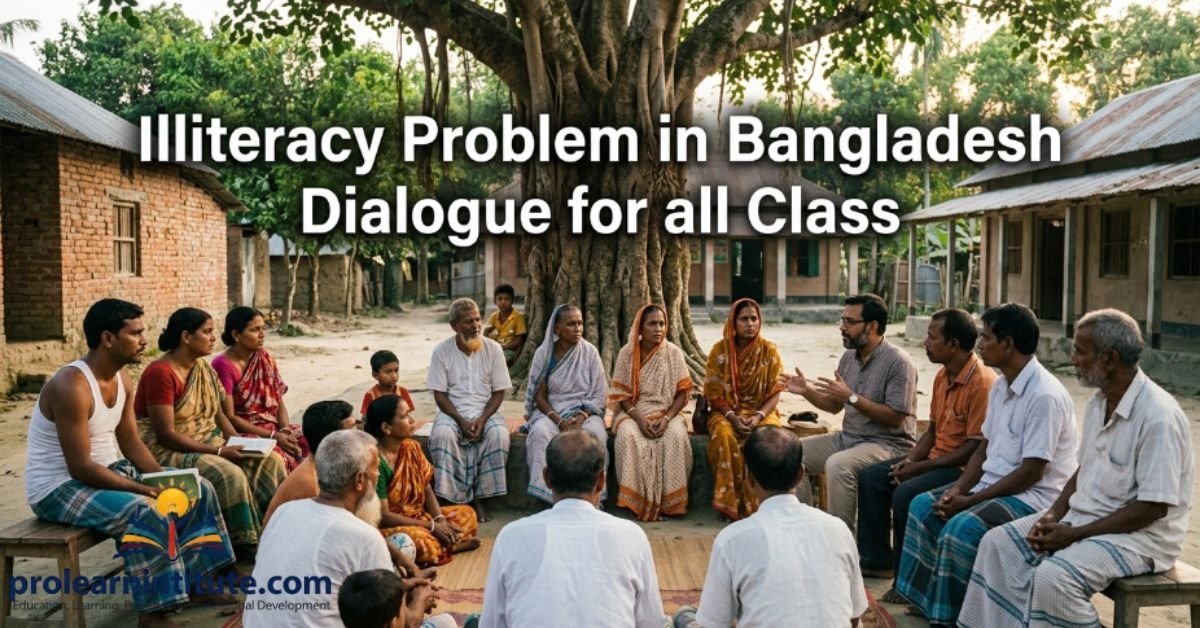
Illiteracy Problem in Bangladesh: Dialogue for all classes is an important topic that helps students understand the causes and effects of illiteracy in society. Through a simple dialogue format, learners can explore this issue easily and engagingly.
This topic explains how education can change lives and why every person should have access to basic learning opportunities. It also encourages students to think about solutions to reduce the illiteracy problem in Bangladesh.
A well-written dialogue can make this social issue easier to understand for students of different classes. It provides useful ideas about the importance of education and the steps needed to build a more educated nation.
see also: A Lion and a Mouse Completing Story for Class 6, 7, 8, SSC, & HSC students
Why the Illiteracy Problem in Bangladesh Is Still a Concern
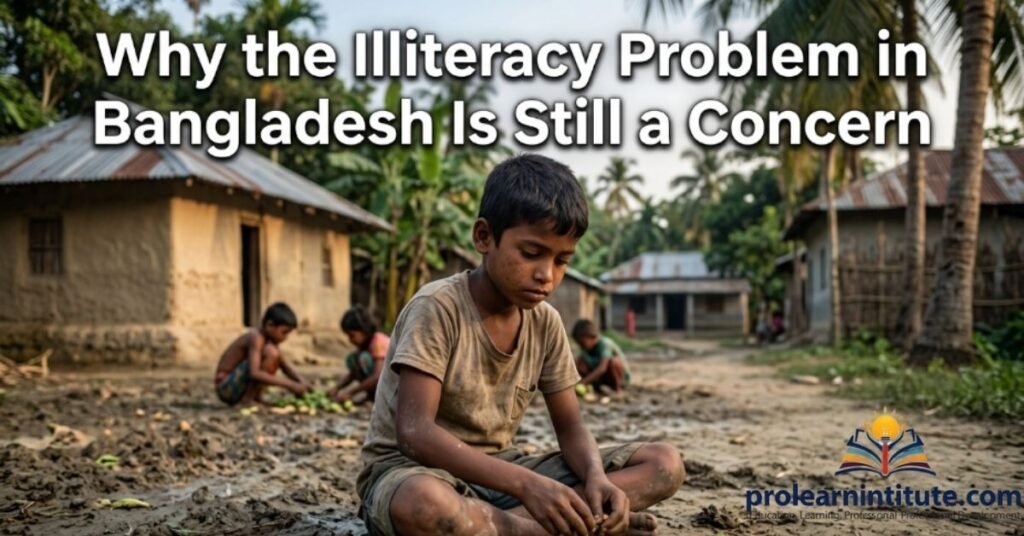
Despite years of government effort, illiteracy continues to affect millions of people across Bangladesh. Rural areas especially struggle with poor school access and low awareness about education.
Many families still cannot afford books, uniforms, or transport, forcing children to leave school early. This directly impacts the country’s literacy rate.
Illiteracy also affects job opportunities and economic growth. When a large part of the population cannot read or write, national development slows down significantly.
This is why the topic remains a common subject for school dialogues, debates, and essays across all classes.
Illiteracy Problem in Bangladesh Dialogue for Classes 6, 7, and 8
Salman: Have you heard how many people in our country still cannot read or write?
Nabil: Yes, I read that illiteracy is still a big problem in Bangladesh, especially in villages.
Salman: Why do you think this is happening even now?
Nabil: Poverty is the main reason. Many parents cannot afford school fees or books.
Salman: That’s sad. Education should be free for everyone.
Nabil: It is free in government schools, but many children still work to support their families instead.
Salman: Do village schools have enough teachers and facilities?
Nabil: Not always. Many rural schools lack proper teachers and basic classroom resources.
Salman: What can students like us do to help?
Nabil: We can teach younger children in our neighborhood or donate old books and stationery.
Salman: I also think we should tell our friends why school is so important.
Nabil: That’s true. Spreading awareness is a small but powerful step, too.
Salman: That’s a great idea. Small efforts can bring big change.
Nabil: Exactly. If every student helps one illiterate person, our country will improve fast.
Illiteracy Problem Dialogue for Class 9-10 (SSC)
Farhana: Illiteracy is still one of Bangladesh’s major social problems, don’t you think?
Sabbir: Absolutely. Reports suggest a large percentage of adults in rural areas still cannot read properly.
Farhana: What do you think are the biggest reasons behind this?
Sabbir: Poverty, child labor, and lack of awareness among parents are the main causes.
Farhana: I also think early marriage affects girls’ education a lot.
Sabbir: True. Many girls are forced to leave school due to early marriage traditions.
Farhana: How does illiteracy affect our country’s progress?
Sabbir: It slows down economic growth and increases unemployment, since uneducated people struggle to find good jobs.
Farhana: Does illiteracy also affect public health awareness?
Sabbir: Yes, illiterate people often lack knowledge about hygiene and proper medical care.
Farhana: What steps do you think the government should take?
Sabbir: More community schools, free scholarships, and awareness campaigns can help reduce illiteracy over time.
Farhana: Do you think NGOs also have a role to play here?
Sabbir: Definitely, many NGOs already run literacy programs in remote areas with good results.
Farhana: I agree. Education is the key to a better future for everyone.
Sabbir: Yes, and every citizen should contribute in some way to this national cause.
Illiteracy Problem Dialogue for Class 11-12 (HSC)
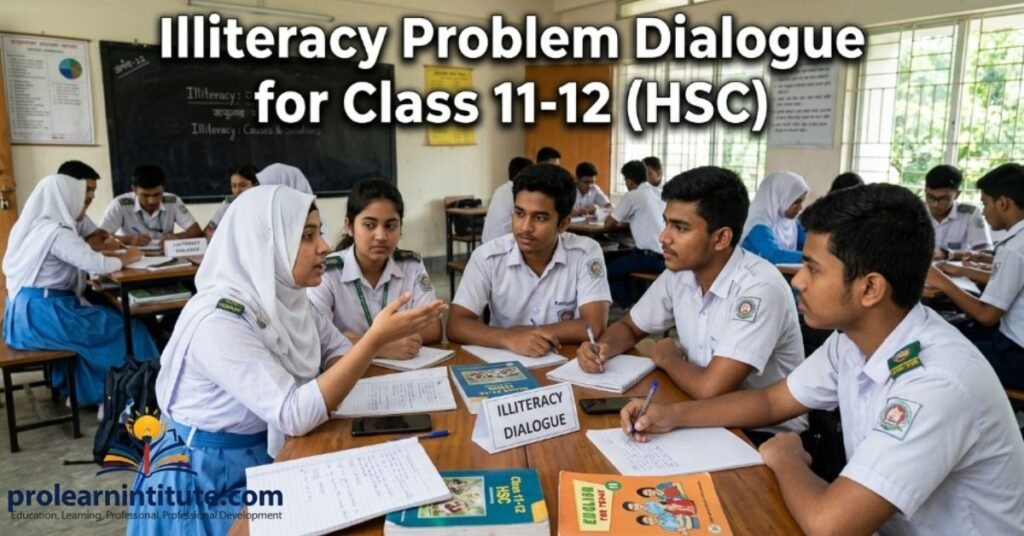
Mahin: Illiteracy continues to be a serious barrier to Bangladesh’s overall development, doesn’t it?
Sadia: Yes, and it’s connected to many other issues like poverty, unemployment, and gender inequality.
Mahin: Do you think the literacy rate has actually improved in recent years?
Sadia: It has improved slightly, but rural and remote areas are still far behind urban regions.
Mahin: What role does government policy play in this?
Sadia: Government programs like free primary education and stipends for girls have helped, but implementation is still weak in many districts.
Mahin: How does illiteracy impact the workforce?
Sadia: Illiterate workers are often limited to low-paying jobs, which affects both personal income and national productivity.
Mahin: Do you think illiteracy also contributes to higher crime rates?
Sadia: In some cases, yes. Lack of education often limits people’s opportunities and awareness of the law.
Mahin: What about the connection between illiteracy and gender inequality?
Sadia: Uneducated women often face fewer rights and opportunities, which affect entire families and future generations.
Mahin: What long-term solution would you suggest?
Sadia: A combination of quality education, vocational training, and strict enforcement of child labor laws could bring lasting change.
Mahin: Should technology also play a role in improving literacy rates?
Sadia: Absolutely, digital learning tools can reach remote areas where traditional schools are not easily accessible.
Mahin: I completely agree. Only structural reform can fully solve this issue.
Sadia: Yes, and it requires cooperation between the government, communities, and every educated citizen.
Key Causes of Illiteracy in Bangladesh
Several important factors contribute to the ongoing illiteracy problem in Bangladesh. Understanding these causes helps in writing a stronger and more informed dialogue.
- Poverty forces children into labor instead of school
- Lack of schools in remote and rural areas
- Early marriage, especially among girls
- Low parental awareness about the importance of education
- High dropout rates due to financial pressure
- Natural disasters disrupting school attendance
- Shortage of trained teachers in villages
These causes are interconnected, meaning solving one issue often requires addressing several others at the same time.
Effects of Illiteracy on Society and National Development
Illiteracy does not just affect individuals; it impacts the entire nation’s growth and stability. The effects are visible across multiple sectors of society.
| Area Affected | Impact of Illiteracy |
| Economy | Slower GDP growth and higher poverty rates |
| Employment | Limited job opportunities, mostly low-wage work |
| Health | Poor awareness of hygiene and medical care |
| Gender Equality | Higher inequality, especially for uneducated women |
| Social Development | Increased crime rates and reduced civic participation |
As shown above, illiteracy creates a cycle that is hard to break without strong educational reform.
Tips to Write an Effective Dialogue on the Illiteracy Problem
Writing a good dialogue requires more than just facts. Structure and clarity matter just as much as content.
- Use simple and natural conversational language
- Include real causes and effects to support arguments
- Keep each speaker’s turn short and clear
- Add a solution-focused ending
- Avoid overly formal or textbook-style sentences
Following these tips will make the dialogue sound realistic and score better in exams.
Conclusion
In simple terms, the Illiteracy Problem in Bangladesh Dialogue for all Classes helps us understand the causes, effects, and possible solutions to illiteracy. At its core, education is the key to creating a more aware, skilled, and developed society.
Now you have a clear understanding of why literacy is important and how everyone can contribute to reducing illiteracy. The next step is yours—support education and encourage others to value learning.
see also: The Life of a Farmer paragraph for Class 6,7,8, SSC, and HSC
FAQs
How can I start a dialogue on illiteracy in Bangladesh?
Start with one speaker asking a question about the current literacy situation in the country. This creates a natural opening for discussion.
What is the current literacy rate in Bangladesh?
Bangladesh’s literacy rate has improved over the years, but it still varies significantly between urban and rural areas. Exact figures should be checked from the latest government reports.
What are the main causes of illiteracy in Bangladesh?
Poverty, child labor, lack of schools, and early marriage are the most common causes. These factors often overlap and reinforce each other.
How does illiteracy affect Bangladesh’s economy?
Illiteracy limits job opportunities and reduces overall productivity, which slows down national economic growth.
Why is illiteracy higher in rural areas of Bangladesh?
Rural areas often lack proper school infrastructure, trained teachers, and family awareness about education’s value.
What solutions can reduce illiteracy in Bangladesh?
Free education, scholarships for girls, awareness campaigns, and stronger law enforcement against child labor can all help reduce illiteracy.
How can students help fight illiteracy in their community?
Students can teach younger children, donate books, or volunteer in local literacy programs to make a small but meaningful impact.
Is illiteracy linked to gender inequality in Bangladesh?
Yes, girls are more likely to face illiteracy due to early marriage and traditional gender roles limiting their access to education.
What government programs exist to reduce illiteracy?
Bangladesh offers free primary education and stipend programs for girls, though implementation still varies by region.
Why is this dialogue topic common in school exams?
Illiteracy is a major national issue, making it a popular topic for testing students’ awareness, language skills, and critical thinking.

I’m Jordan Smith, a content writer with 4 years of experience and AI content expertise, creating clear, engaging, and easy-to-understand educational content.