
Introduction
Reading newspapers is one of the best habits a student can build from an early age. It improves knowledge, vocabulary, and awareness about the world around us.
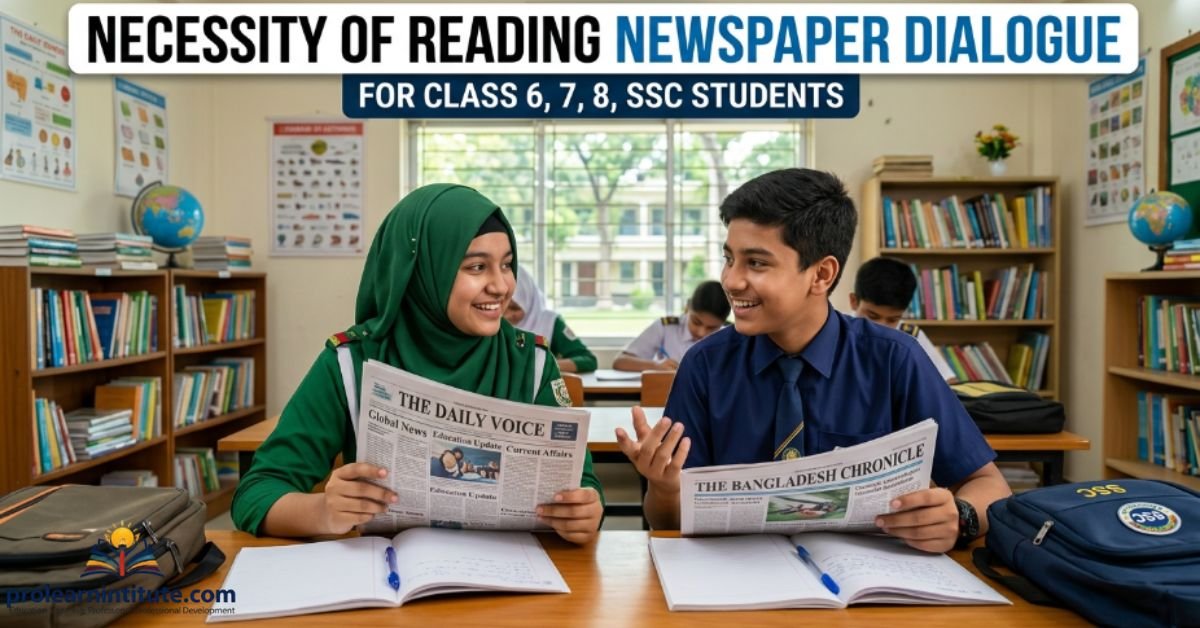
This article gives ready-to-use dialogues on newspaper reading for students from Class 6 to the SSC level. Each dialogue is written according to the student’s level and understanding.
Dialogue for Class 6
Class 6 students need simple and short dialogues with easy vocabulary. The conversation should be natural and easy to memorize for exams or class activities.
Rania: Good morning, Ahmed! What are you reading?
Ahmed: Good morning! I am reading a newspaper.
Rania: Why do you read newspapers so early in the morning?
Ahmed: My father told me it is a good habit. I learn new things every day from it.
Rania: What kind of news do you read?
Ahmed: I read about sports, weather, and important events in our country.
Rania: That sounds interesting. I will also start reading it from tomorrow.
Ahmed: Yes, you should! It will also help us in our English class.
Rania: You are right. We can improve our reading and vocabulary, too.
Ahmed: Exactly! Even ten minutes of newspaper reading is very helpful.
Dialogue for Class 7–8
Students in Classes 7 and 8 should use slightly better vocabulary and share more ideas in their dialogue. The conversation should feel more thoughtful and informative.
Sara: Bilal, I saw you reading a newspaper during the break. Do you do this daily?
Bilal: Yes, Sara. I try to read it every morning before school.
Sara: What do you usually read in it?
Bilal: I mostly read the national news, the education section, and sometimes sports.
Sara: Does it actually help in studies?
Bilal: Definitely! Our teachers often ask questions in class that are related to current events.
Sara: That is true. Last week, our teacher asked about the floods, and I had no idea.
Bilal: See, if you read newspapers, you would have known about it easily.
Sara: Also, I think it helps in writing essays and letters in Urdu and English.
Bilal: Absolutely. My essay writing has improved a lot since I started reading newspapers.
Sara: Which newspaper do you recommend for students like us?
Bilal: I read Dawn and also sometimes check the children’s page in local newspapers.
Sara: I will start from this weekend. Thank you for the suggestion!
Bilal: You are most welcome. Once you start, you will enjoy it every day.
Dialogue for SSC
SSC-level students should write mature and detailed dialogues with confident language. The conversation should include logical points and reflect a deeper understanding of the topic.
Zara: Hamza, you always seem so updated about everything. What is your secret?
Hamza: Honestly, it is just reading newspapers every single day.
Zara: But we have so much to study already. How do you find time for it?
Hamza: It does not take much time. Even twenty minutes a day is enough to stay updated.
Zara: What sections do you focus on most?
Hamza: I focus on national affairs, science and technology, and the editorial page.
Zara: Why the editorial page specifically?
Hamza: Because it has well-written opinion pieces that help me understand both sides of an issue.
Zara: That is actually very useful for our critical thinking, too.
Hamza: Yes, and it also improves English writing skills because the language used is quite formal.
Zara: I have heard that newspaper reading helps in competitive exams as well.
Hamza: Very much so. Many MCQs in board exams and entry tests are based on current affairs.
Zara: I always struggled with those questions. Maybe this is the solution.
Hamza: It truly is. Also, when you read regularly, your comprehension speed increases a lot.
Zara: That would be great for our English paper. We always have unseen passages.
Hamza: Exactly. Practicing with real newspaper articles prepares you better than any textbook.
Zara: Do you think reading online news is the same as reading a printed newspaper?
Hamza: Printed newspapers are better for focus. Online news has too many distractions.
Zara: That makes sense. I will start with the printed version, then.
Hamza: Great decision. Start with just one newspaper and build the habit slowly.
Zara: Thank you, Hamza. I really needed this motivation today.
Hamza: We are students now. If we do not stay informed, who will?
Why Reading Newspapers is Important
Newspapers are one of the oldest and most trusted sources of information in the world. They cover everything from local events to international news in one place.
Reading newspapers helps students become more aware, more confident, and better informed about the society they live in. It also builds a habit of learning something new every day.
- It keeps you updated about national and international events
- It improves your reading speed and comprehension skills
- It builds your vocabulary in both English and Urdu
- It helps you form opinions and think critically about issues
- It prepares you for current affairs questions in exams
- It develops a daily habit of learning and self-improvement
Benefits for Students
Newspapers are not just for adults — they are extremely useful for school and college students as well. They help in almost every subject in a direct or indirect way.
- English Paper: Newspapers improve grammar, sentence structure, and vocabulary
- General Knowledge: Students learn about science, history, and world affairs
- Essay Writing: Reading editorials gives ideas and proper arguments for essays
- Current Affairs: Many board exam questions come from recent news topics
- Urdu Writing: Urdu newspapers improve writing style and formal language use
- Comprehension: Regular reading makes unseen passages in exams much easier
Common Topics Found in Newspapers
Newspapers cover a wide range of topics that are useful for students of all levels. Knowing which section to read saves time and makes reading more productive.
| Section | What It Covers |
| National News | Political events, government policies, and local issues |
| International News | World events, foreign relations, global problems |
| Education | School results, admissions, scholarships, exams |
| Science & Technology | New inventions, space news, and health discoveries |
| Sports | Cricket, football, local and international matches |
| Business | Economy, prices, trade, jobs |
| Weather | Daily forecast, climate changes, and natural disasters |
| Editorial | Opinion pieces, analysis, and social issues |
| Children’s Page | Stories, puzzles, and fun facts for young readers |
Tips for Making a Good Dialogue
Writing a good dialogue is not difficult if you follow a few simple rules. These tips will help students write better dialogues in exams and class assignments.
- Use simple and clear sentences that sound natural in real conversation
- Keep each person’s reply short—avoid writing long speeches
- Make sure both speakers take equal turns in the conversation
- Add useful and meaningful points, not just repeated ideas
- Start with a greeting or question to make the dialogue feel real
- Use proper punctuation like question marks, commas, and full stops
- Avoid using very difficult words that break the natural flow
- Each dialogue should have a clear topic and a proper ending
Conclusion
Newspaper reading is a simple habit that brings great results for students at every level. It improves knowledge, language, and confidence all at the same time.
The dialogues given in this article are ready to use for Class 6 to SSC students. Practice them, learn from them, and build your own habit of reading newspapers every day.
Frequently Asked Questions
1. What is a simple dialogue on newspaper reading for Class 6 students?
A simple dialogue on newspaper reading for Class 6 students involves two friends discussing why they read the newspaper daily, covering topics like current events, vocabulary building, and staying informed about the world around them.
2. How do I write a short dialogue between two students about the importance of reading newspapers?
To write a short dialogue between two students about newspaper reading, have one student ask why newspapers matter, and the other explain benefits like improving English, learning general knowledge, and staying updated—keeping the conversation natural and under 10 exchanges.
3. Why should SSC students make newspaper reading a daily habit?
SSC students should read newspapers daily because it sharpens their English language skills, boosts general knowledge for competitive exams, and helps them write better essays and answers in board examinations.
4. What are the best topics two students can discuss in a dialogue about newspapers?
The best topics for a student dialogue about newspapers include the benefits of reading editorials, how newspapers improve vocabulary, the difference between print and digital news, and how staying informed helps in school debates and exams.
5. How can a Class 6 student explain the benefits of newspaper reading to a friend in a conversation?
A Class 6 student can explain newspaper reading benefits by telling their friend it improves spelling and vocabulary, teaches about sports, politics, and science, and helps them become smarter and more confident speakers in class.
6. What is the easiest way to write a dialogue on newspaper reading for an English assignment?
The easiest way to write this dialogue is to start with a greeting, have one character mention reading the newspaper, let the other ask questions, and close with both agreeing to make it a daily habit—keeping sentences short and conversational.
7. Can you give me an example of a dialogue where a teacher encourages a student to read the newspaper every day?
Yes—a teacher might say, “Do you read the newspaper, Ali?” and when the student says no, the teacher explains that just 15 minutes of daily reading improves language skills, general knowledge, and prepares students for SSC English paper writing sections.
8. How does reading the newspaper help SSC students improve their English writing and grammar?
Reading newspapers helps SSC students improve English writing and grammar by exposing them to correctly structured sentences, formal vocabulary, editorial writing styles, and a wide range of topics they can use as examples in their board exam essays.
9. What dialogue format should Class 6 to SSC students follow when writing about newspaper reading for an exam?
For an exam, students should follow a two-person dialogue format with 8–12 lines, use proper punctuation and speaker labels (e.g., Raza: / Sara:), include at least two clear benefits of newspaper reading, and end with a positive, motivating conclusion.
10. How is reading a physical newspaper different from reading news online, and which is better for students according to a classroom dialogue?
In a classroom dialogue, students might argue that physical newspapers improve focus and reduce screen fatigue, while online news is faster and more accessible—but most teachers recommend newspapers for SSC students because they offer structured, credible, and distraction-free reading.

I’m Jordan Smith, a content writer with 4 years of experience and AI content expertise, creating clear, engaging, and easy-to-understand educational content.