
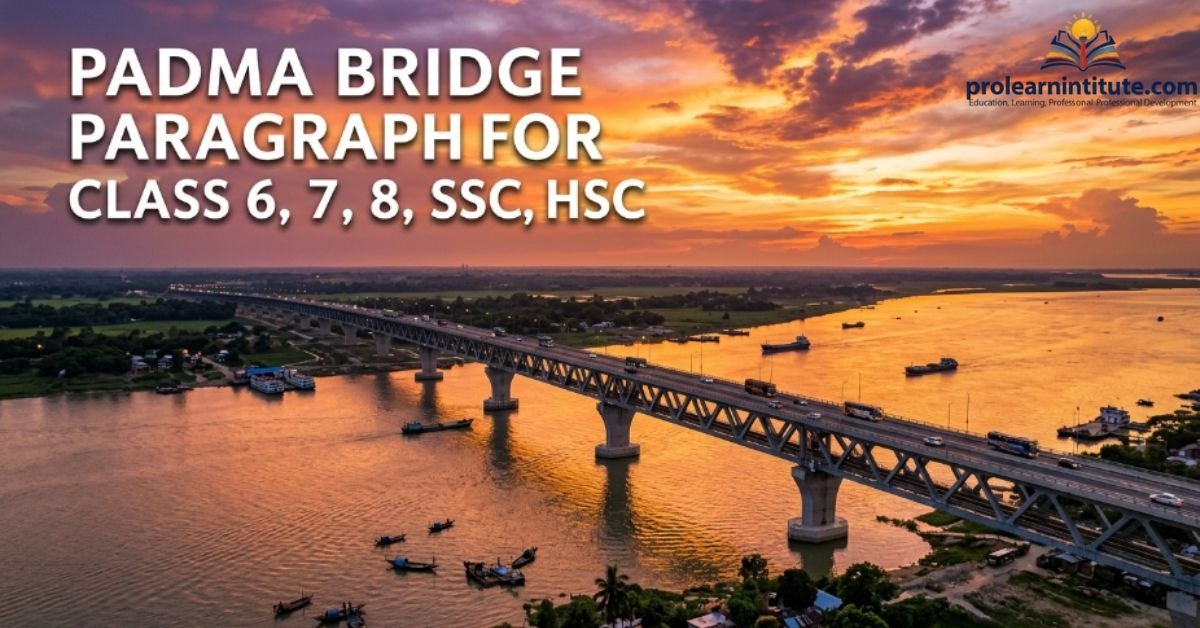
The Padma Bridge Paragraph for Class 6, 7, 8, SSC, HSC is an important topic for students because it highlights one of the biggest achievements in Bangladesh. The Padma Bridge connects different parts of the country and makes travel faster, easier, and more convenient for millions of people.
This bridge has played a major role in improving transportation, trade, and communication. It helps people save time and supports economic growth by connecting businesses and communities across the region.
In this article, you will find a simple and easy-to-understand Padma Bridge Paragraph for classes 6, 7, 8, SSC, and HSC, along with useful information about its importance, benefits, and impact on the country’s development.
see also: A Friend in Need is a Friend Indeed Completing story for all classes | Complete Guide 2026
Introduction to Padma Bridge
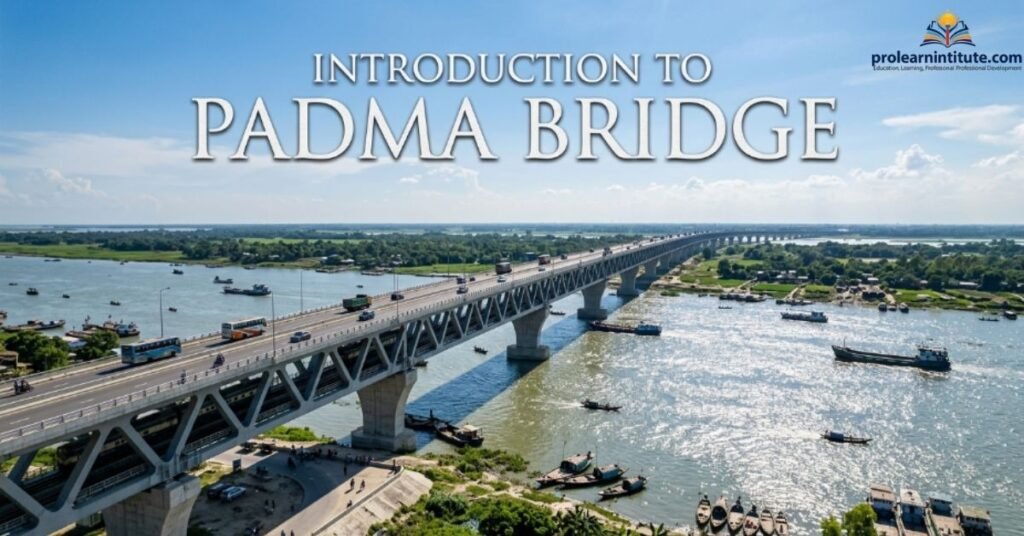
The Padma Bridge is a historic achievement that has changed the face of Bangladesh forever. Built across the Padma River, it has connected millions of people in the southwestern region with the rest of the country. It is a project that took decades of planning, years of construction, and the full financial strength of the Bangladesh government.
This bridge is more than just a road over water. It is a symbol of courage, independence, and the willingness to face great challenges without giving up. For the people of Bangladesh, the Padma Bridge represents a new era of progress.
Padma Bridge Paragraph 150 Words
The Padma Bridge is a multipurpose bridge built over the Padma River in Bangladesh. It connects the Lohajang area of Munshiganj district with Shariatpur and Madaripur districts. The bridge was built using Bangladesh’s own money, which makes every citizen proud of this achievement.
It is the longest bridge in Bangladesh, stretching about 6.15 kilometers. The bridge has two levels. Vehicles like cars and buses run on the upper level, while a railway track is placed on the lower level. Construction began in 2014 and was completed in June 2022.
The Padma Bridge has changed the lives of people living in the southern region. Travel time has been reduced greatly, and trade has improved across the country. This bridge is a shining example of what Bangladesh can achieve with courage and hard work.
Padma Bridge Paragraph 200 Words
The Padma Bridge is one of the most talked-about infrastructure projects in the history of Bangladesh. It stands over the powerful Padma River and connects the southwestern districts of the country with the capital city, Dhaka. This bridge is very special because it was built entirely with money from Bangladesh itself, without any foreign loan or help.
The bridge is approximately 6.15 kilometers long, making it the longest bridge in the country. It was designed with two levels. The top level is used for road traffic, allowing vehicles to cross the river quickly and safely. The bottom level has a railway line, which will allow trains to pass across the river in the future.
Construction started in 2014 and faced many difficulties along the way, including harsh river conditions and complex engineering problems. However, the workers and engineers never gave up. The bridge was finally opened for public use on June 25, 2022.
Since its opening, the Padma Bridge has brought positive changes to millions of lives. People can now travel to Dhaka in a fraction of the time it used to take. Business and trade have grown rapidly in the southern districts. The Padma Bridge is truly a symbol of national pride and modern achievement.
Padma Bridge Paragraph 300 Words
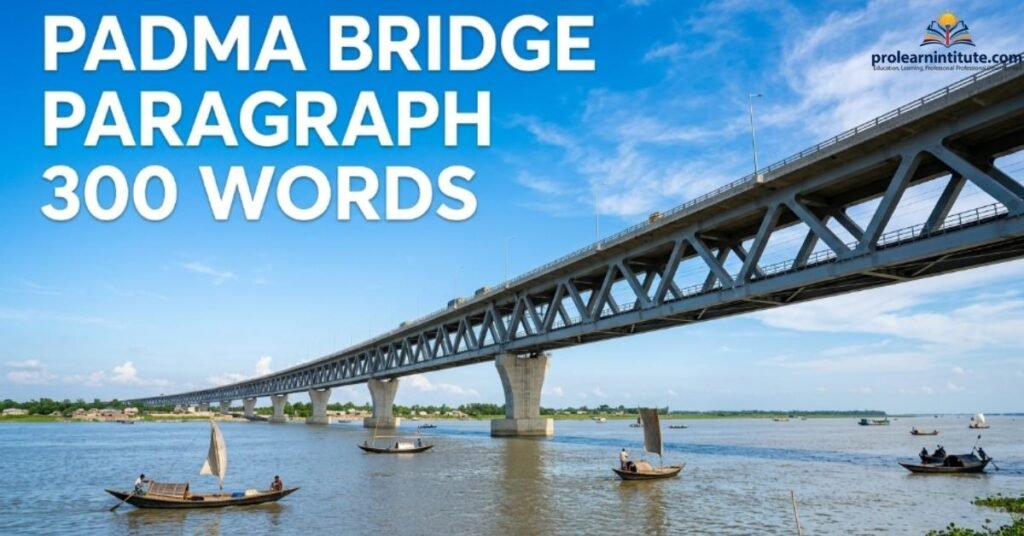
The Padma Bridge is considered one of the most remarkable infrastructure achievements in the entire history of Bangladesh. It was built over the Padma River, one of the mightiest rivers in the country. The bridge connects the Lohajang point of Munshiganj district with the Janjira point of Shariatpur district, linking the southwestern region directly with Dhaka.
What makes this bridge truly unique is the story behind its funding. International donor agencies had initially agreed to fund the project, but they withdrew their support after raising corruption allegations. Instead of accepting failure, the government of Bangladesh made a bold decision to fund the project entirely from its own national budget. This courageous step turned the Padma Bridge into a symbol of self-reliance and national determination.
The bridge stretches approximately 6.15 kilometers in length and is about 18.10 meters wide. It was built with a special two-level structure. The upper deck serves as a road, allowing cars, buses, and trucks to travel across the river. The lower deck carries a railway line that will connect the southern region with the national railway network in the future.
Construction began in December 2014 and required enormous effort. The Padma River is known for its strong currents and shifting riverbeds, which made the engineering work extremely difficult. Thousands of workers and skilled engineers worked day and night to overcome these challenges. The bridge was completed and officially opened on June 25, 2022.
The impact of the Padma Bridge on Bangladesh has been truly life-changing. Travel time between Dhaka and the southern districts has been cut from several hours to just a short drive. Trade, farming, and business activities have increased greatly. Access to hospitals, schools, and markets has improved for people in remote areas.
The Padma Bridge is not just a road over a river. It is a statement of what Bangladesh can achieve when it believes in itself.
Padma Bridge Paragraph for Class 6
The Padma Bridge is very big and important in Bangladesh. It was built over the Padma River. This bridge connects the southern part of Bangladesh with the capital city, Dhaka. Before this bridge was built, people had to travel by ferry to cross the river, which took a very long time.
The Padma Bridge is about 6.15 kilometers long. It is the longest bridge in Bangladesh. The bridge has two floors. Cars and buses go on the top floor. Trains will go on the bottom floor.
The bridge was built using Bangladesh’s own money. It opened on June 25, 2022. The Padma Bridge has made it much easier for people to travel and do business. It is a great source of pride for all Bangladeshi people.
Padma Bridge Paragraph for Class 7
The Padma Bridge is one of the most famous bridges in Bangladesh. It is located over the Padma River and connects Munshiganj district with Shariatpur and Madaripur districts. This bridge has made travelling between the southern districts and Dhaka very easy and fast.
The bridge is 6.15 kilometers long and 18.10 meters wide. It was built on two levels. The upper level is used by vehicles such as cars, buses, and trucks. The lower level has a railway track for trains. This makes it a very special and useful bridge.
Construction of the Padma Bridge began in 2014 and took many years to complete. It was built with Bangladesh’s own funds, without borrowing money from other countries. The bridge was officially opened on June 25, 2022.
The Padma Bridge has helped farmers, traders, and students by making travel easier. It has also helped businesses grow in the southern part of Bangladesh. This bridge is a symbol of national courage and achievement that every Bangladeshi should be proud of.
see also: Tree Plantation Composition – A Complete Guide for Students
Padma Bridge Paragraph for Class 8

The Padma Bridge is a landmark infrastructure project that has transformed transportation in Bangladesh. It spans across the Padma River, connecting Munshiganj in the north with Shariatpur and Madaripur in the south. The bridge provides a direct road and rail link between the capital city, Dhaka, and the southwestern regions of the country.
The bridge measures 6.15 kilometers in length and 18.10 meters in width. It was built on a unique double-deck design. The upper deck is designated for road vehicles, while the lower deck is built to carry railway trains. This dual-purpose design makes the bridge both efficient and economical for the country.
One of the most inspiring aspects of this bridge is how it was funded. After international donors pulled out their support, Bangladesh chose to fund the entire project through its own national budget. This showed remarkable determination and financial strength for a developing nation.
Construction began in December 2014 and was completed after years of hard work and dedication by thousands of engineers, workers, and government officials. The bridge was officially opened to the public on June 25, 2022, by the Prime Minister of Bangladesh.
The Padma Bridge has brought massive improvements to daily life in the southern region. It has reduced travel time, boosted trade, improved access to healthcare and education, and attracted new investment to the area. It stands today as one of the greatest symbols of Bangladesh’s progress and ambition.
Padma Bridge Paragraph for SSC
The Padma Bridge is one of the most significant engineering achievements in the history of Bangladesh. Constructed over the mighty Padma River, it serves as a critical transportation corridor connecting the Lohajang area of Munshiganj district with Shariatpur and Madaripur in the southwest. This bridge has redefined connectivity for more than 30 million people living in the southern region of the country.
The bridge is approximately 6.15 kilometers long and 18.10 meters wide. It is a multipurpose structure built on two separate levels. The upper deck handles road traffic, enabling all types of vehicles to cross the river quickly and safely. The lower deck is designed to accommodate railway operations, which will integrate the southern region into the national railway system.
The funding story of this bridge is particularly inspiring. The World Bank and other international organizations initially agreed to finance the project. However, they withdrew their funding due to allegations of corruption in the procurement process. Rather than yielding to external pressure, the Bangladesh government took the historic decision to fund the entire project from its own treasury. This decision became a defining moment in the country’s modern history.
Construction began officially in December 2014 and was executed by experienced engineers and contractors under strict government supervision. The Padma River posed extraordinary engineering challenges, including extremely deep water levels, strong tidal currents, and an unstable riverbed. Engineers had to design special pile foundations that could go as deep as 128 meters into the ground. Despite all difficulties, the project was completed successfully and inaugurated on June 25, 2022.
The socioeconomic impact of the Padma Bridge on Bangladesh has been enormous. Industries and businesses that were previously limited by poor connectivity have now flourished. The price of goods in southern markets has decreased due to easier transportation. Farmers can now deliver their produce to Dhaka markets faster, reducing waste and increasing income. The bridge has also encouraged tourism and real estate development in the southern districts.
For SSC students, the Padma Bridge is an excellent example to use in essays about national development, engineering achievements, or economic progress in Bangladesh.
Padma Bridge Paragraph for HSC
The Padma Bridge represents a watershed moment in Bangladesh’s development trajectory, standing not only as a physical structure but as a manifestation of national ambition, economic resilience, and engineering excellence. Spanning the formidable Padma River between Louhajang in Munshiganj and Janjira in Shariatpur, this multipurpose infrastructure project is the largest and most complex ever undertaken in Bangladesh’s independent history.
With a total length of 6.15 kilometers and a width of 18.10 meters, the bridge was engineered to serve dual transportation needs through a two-tier structural design. The upper tier operates as a four-lane expressway capable of handling high-volume vehicular traffic, including private cars, commercial trucks, and public buses. The lower tier was purpose-built to accommodate a railway corridor, which, once fully operational, will connect the southwestern region to the national rail network and dramatically improve freight and passenger movement.
The political and financial journey of the Padma Bridge is as remarkable as its technical construction. The World Bank pledged over one billion dollars in financing during the early planning phase, but withdrew in 2012, citing concerns over procurement integrity. Rather than seeking alternative foreign financing, the Sheikh Hasina-led government made a bold policy decision to self-finance the project entirely through domestic funds. This move was widely criticized initially but ultimately became a defining statement of Bangladesh’s economic sovereignty and institutional capability.
Construction commenced in December 2014, led by China Major Bridge Engineering Company under the supervision of Bangladeshi engineers and consultants. The project presented extraordinary geotechnical challenges. The Padma River is one of the most hydraulically complex rivers in the world, with a dynamic riverbed subject to intense scour and seasonal flooding. Engineers developed innovative deep steel pile solutions with each pile requiring driving to depths of up to 128 meters, a technical feat rarely achieved in the region.
The economic implications of the Padma Bridge extend far beyond convenience. Economists estimate that the bridge could add as much as 1.2 to 1.5 percent to Bangladesh’s annual GDP over the long term. It has already catalyzed significant industrial investment in districts like Mongla, Benapole, and Payra, which are now far more accessible to Dhaka-based industries and export terminals. Agricultural supply chains have been streamlined, reducing post-harvest losses and increasing farmer income across Barisal, Khulna, and Faridpur divisions.
The bridge’s social impact is equally profound. Remote communities that were geographically cut off from quality healthcare, higher education, and urban economic opportunities are now connected with the broader national infrastructure. The time cost of crossing the Padma has been reduced from an average of four to six hours by ferry to under ten minutes by road, fundamentally altering the daily calculus for millions of commuters, traders, and students.
The Padma Bridge thus represents a convergence of infrastructure policy, economic nationalism, engineering innovation, and social development. For HSC students, it offers a rich case study in areas ranging from public financing and development economics to environmental engineering and national identity. It is a bridge in every sense of the word, connecting not just two riverbanks, but Bangladesh’s present with its ambitious future.
see also: Early Rising paragraph for Students Class 6,7,8,9,10, SSC, HSC
Location and Overview of Padma Bridge
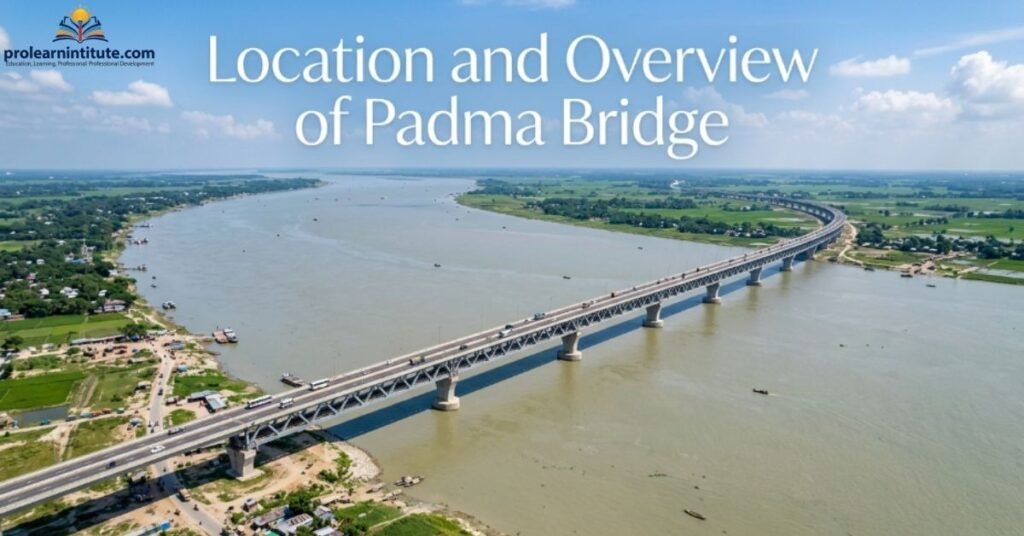
The Padma Bridge is strategically located over the Padma River at one of its widest and most powerful points. It connects the Louhajang upazila of Munshiganj district in the north with the Janjira area of Shariatpur district in the south. This location was selected after extensive surveys because it offered the best route between Dhaka and the southwestern districts.
The bridge spans 6.15 kilometers in length and 18.10 meters in width. It stands as the longest bridge ever constructed in Bangladesh. The structure features a two-level design that allows both road vehicles and trains to use the bridge simultaneously.
| Feature | Details |
| Total Length | 6.15 kilometers |
| Total Width | 18.10 meters |
| Number of Spans | 41 |
| Number of Pillars | 42 |
| Levels | Two (Road above, Rail below) |
| River | Padma River |
| Connects | Munshiganj to Shariatpur/Madaripur |
| Opening Date | June 25, 2022 |
| Funded By | Government of Bangladesh |
| Total Cost | Approx. BDT 30,193 crore |
History and Background of Padma Bridge Project
The concept of building a bridge over the Padma River was first discussed seriously in the 1990s. Studies and surveys began in the early 2000s as the government recognized the desperate need for better connectivity between Dhaka and the southwestern districts. Millions of people were losing time and income every day due to the lack of a direct road link.
International donor agencies, including the World Bank, Asian Development Bank, and Japan International Cooperation Agency, initially agreed to provide funding. The project was officially approved, and preparations were underway when the World Bank suddenly withdrew its loan in 2012. It cited concerns about corruption in the procurement process, a claim the Bangladesh government strongly denied.
This moment became a turning point. Instead of abandoning the project or accepting humiliation, the Prime Minister declared that Bangladesh would build the bridge with its own resources. This decision was bold and historic because it meant the country would take on the financial risk entirely alone. Over time, the decision proved to be right, and the bridge became a proud example of national self-reliance.
Construction Process of Padma Bridge
The construction of the Padma Bridge was an enormous engineering undertaking that required the best technical expertise available. The project was awarded to China Major Bridge Engineering Company, which worked alongside Bangladeshi engineers and consultants throughout the process.
The Padma River presented some of the hardest engineering challenges in the world. The river has extremely deep and shifting waters, which made it very difficult to build stable foundations. Engineers designed special steel pile foundations that had to be drilled as deep as 128 meters into the riverbed. This was a new record for pile depth in this region.
Key stages in the construction process:
- Conducting hydrological and geotechnical surveys of the Padma River
- Designing customized pile foundations suitable for deep and shifting riverbeds
- Driving 264 steel piles into the riverbed across 42 pillar locations
- Casting and placing 41 steel spans on top of the completed pillars
- Constructing the upper road deck and lower railway deck separately
- Installing approach roads, toll plazas, and service facilities on both sides
- Conducting safety tests and inspections before the official opening
Construction officially began in December 2014 and concluded with the bridge’s inauguration on June 25, 2022, a journey of nearly eight years.
Importance of Padma Bridge for Bangladesh
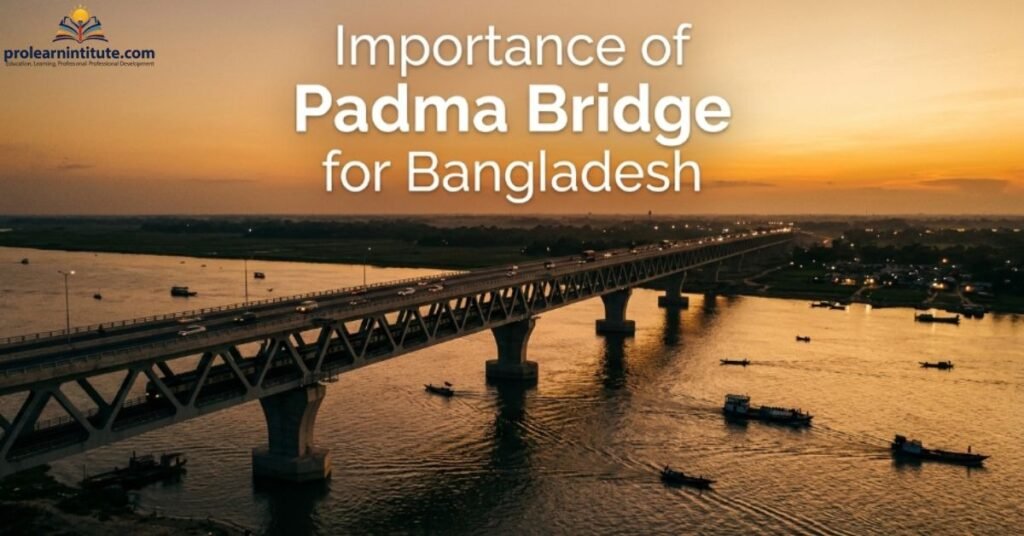
The Padma Bridge carries enormous importance for Bangladesh at every level — social, economic, regional, and national. It has broken down one of the biggest geographical barriers in the country and opened up new possibilities for growth and development.
For ordinary citizens, the bridge has meant faster access to hospitals, markets, offices, and schools. People who used to spend four to six hours crossing the river by ferry can now cross it in under ten minutes. This has genuinely improved the quality of life for millions of families.
For the nation, the bridge represents something even bigger. It is proof that Bangladesh has the capability, the resources, and the determination to complete world-class infrastructure projects on its own. It has raised Bangladesh’s profile internationally and shown that the country is moving forward confidently.
Economic Impact of Padma Bridge
The economic benefits of the Padma Bridge are already visible and are expected to grow significantly over the coming decades. The bridge has acted as a catalyst for investment, trade, and industrial development in the previously underdeveloped southwestern region of Bangladesh.
Goods and agricultural products from districts like Barisal, Khulna, Faridpur, and Jessore can now reach Dhaka in a fraction of the previous time. This has reduced transportation costs, lowered product prices, and increased the profit margins of farmers and small business owners.
Major economic benefits include:
- Reduction in transportation costs for goods and services
- Increase in trade volume between Dhaka and the southern districts
- Growth in industrial investment near Mongla and Payra ports
- A rise in real estate and commercial property values in the southern districts
- Expansion of tourism in areas like the Sundarbans and river-side towns
- Improved access to export facilities for garments and other industries
Economists have estimated that the Padma Bridge has the potential to contribute 1.2 to 1.5 percent to Bangladesh’s overall GDP growth annually. This makes it one of the most valuable single infrastructure investments in the country’s history.
Transportation and Connectivity Benefits
Before the Padma Bridge existed, the only way to cross the Padma River was by ferry. Ferry crossings were slow, unreliable, and often dangerous during the monsoon season. Long queues of vehicles waiting to board ferries were a common sight, causing massive delays for travelers and businesses alike.
The Padma Bridge has completely changed this picture. Now, vehicles can cross the river in under ten minutes at any time of day or night, regardless of weather conditions. This reliability and speed have transformed the daily lives of millions of commuters, traders, and travelers.
Key transportation and connectivity benefits:
- Travel time from Dhaka to Faridpur has been reduced from 5-6 hours to under 2 hours
- Continuous 24-hour road access across the river in all weather conditions
- Improved connectivity for Mongla and Payra seaports to Dhaka
- Better access to the Benapole land port for export and import trade
- Reduced pressure on existing ferry services along the river
- The future railway link will connect the southern rail network with the national grid
The bridge has also opened up the region for tourism. More visitors are now traveling to the Sundarbans, the coastal areas of Barisal, and the river towns of Madaripur and Shariatpur than ever before.
Challenges Faced During Construction

The construction of the Padma Bridge was not smooth or easy. The project faced challenges at almost every stage, from funding and planning to actual engineering and construction. Overcoming these challenges made the final achievement even more meaningful.
The Padma River is one of the most hydraulically unpredictable rivers in the world. Its strong currents, deep water, and constantly shifting riverbed made it extremely difficult to set the foundations for the bridge’s pillars. Standard engineering techniques were not enough, and new approaches had to be developed specifically for this project.
Major challenges faced during the project:
- Withdrawal of international donor funding midway through planning
- Extremely strong and unpredictable currents of the Padma River
- Shifting riverbed requiring unprecedented pile depth of up to 128 meters
- Scour protection work to prevent erosion around bridge foundations
- Managing construction logistics on a major active river
- Ensuring worker safety in difficult river conditions
- Delays caused by weather, flooding, and technical complications
Despite all of these obstacles, the engineering teams and government remained committed. Their perseverance produced a bridge that is now one of the most celebrated infrastructure achievements in South Asia.
Key Facts About Padma Bridge
Students often need quick facts about the Padma Bridge for exams, quizzes, and short-answer questions. The table below summarizes the most important facts in an easy-to-remember format.
| Fact | Detail |
| Full Name | Padma Multipurpose Bridge |
| Total Length | 6.15 kilometers |
| Total Width | 18.10 meters |
| Number of Spans | 41 |
| Number of Pillars | 42 |
| Maximum Pile Depth | 128 meters |
| Construction Started | December 2014 |
| Officially Opened | June 25, 2022 |
| Funded By | Government of Bangladesh |
| Total Cost | Approx. BDT 30,193 crore |
| Main Contractor | China Major Bridge Engineering Co. |
| River | Padma River |
| Connects | Munshiganj ↔ Shariatpur/Madaripur |
| Bridge Type | Multipurpose road and rail |
| Longest Bridge in | Bangladesh |
These facts are commonly tested in Class 6 to HSC level exams and are essential for any student writing about the Padma Bridge.
Conclusion
The Padma Bridge is far more than a structure of steel and concrete. It is the result of national courage, financial discipline, and outstanding engineering skill. Built entirely with Bangladesh’s own money, it proves that the country can take on and complete world-class projects without depending on others.
For students of every class, from Class 6 to HSC, the Padma Bridge is an important topic to understand well. Whether you are writing a short paragraph or a long essay, the information provided in this article will help you express your ideas clearly and confidently in any exam.
see also: Duties of a Student Composition for Class 6–10, SSC & HSC (Easy)
FAQs
How long is the Padma Bridge in kilometers?
The Padma Bridge is approximately 6.15 kilometers long, making it the longest bridge ever built in Bangladesh.
When was the Padma Bridge officially opened to the public?
The Padma Bridge was officially inaugurated and opened to the public on June 25, 2022.
Who funded the construction of the Padma Bridge?
The entire construction cost was funded by the Government of Bangladesh using its own national budget, without any foreign loans.
Which river does the Padma Bridge cross?
The Padma Bridge crosses the Padma River, one of the largest and most powerful rivers in Bangladesh.
Why is the Padma Bridge important for Bangladesh’s economy?
The bridge has boosted trade, reduced transport costs, attracted industrial investment, and is expected to contribute 1.2 to 1.5 percent to Bangladesh’s annual GDP growth.
How many pillars support the Padma Bridge?
The Padma Bridge stands on 42 concrete pillars that were constructed directly in the Padma River.
What type of bridge is the Padma Bridge?
The Padma Bridge is a multipurpose road-and-rail bridge with a vehicle road on the upper level and a railway track on the lower level.
When did construction of the Padma Bridge officially begin?
Construction began officially in December 2014 and continued for nearly eight years before completion.
What were the biggest challenges during the construction of the Padma Bridge?
The biggest challenges included the loss of international funding, the strong currents of the Padma River, an unstable riverbed, and the need for extremely deep pile foundations reaching 128 meters.
How has the Padma Bridge improved daily life for people in southern Bangladesh?
The bridge has cut travel time from several hours to under ten minutes, improved access to markets, hospitals, and schools, and created new economic opportunities for millions of people in the region.

I’m Jordan Smith, a content writer with 4 years of experience and AI content expertise, creating clear, engaging, and easy-to-understand educational content.