

Introduction to Early Rising
Early rising means waking up before or at sunrise, usually before 6 AM. It is a habit that gives people extra time in the morning to plan, study, and prepare for the day. Many successful people in the world follow this habit every day.
Early rising is one of the most important good habits a student can build. It gives extra study time, keeps the body healthy, and trains the mind to stay focused. Students who wake up early tend to perform better in school and live a more organized life.
| What is early rising? | Why is it important? |
| Waking up before or at sunrise | Gives more time for study and work |
| A healthy daily habit | Keeps body and mind fresh |
| Part of a disciplined routine | Builds strong character in students |
Early Rising Paragraph for Class 6 & 7

Simple Paragraph for Young Students
Early rising means waking up early in the morning. It is a very good habit for students. The morning air is fresh and clean, which makes us feel healthy and happy. When we wake up early, we get more time to study, eat breakfast, and get ready for school without any rush.
Early birds can also enjoy the quiet morning time, which helps them read and remember lessons better. Birds singing and the bright morning sky make the mood peaceful. Students who rise early are always more active and cheerful during the day than those who sleep late.
Benefits of Early Rising for Kids
- Better Health
- Morning fresh air and exercise keep the body fit and strong.
- More Energy for School
- A good early start fills kids with energy all day long.
- Time for Study
- Extra morning hours mean more time for reading lessons.
- Study and Play Balance
- Early risers finish work on time and get free play time too.
Early Rising Paragraph in 100 & 150 Words (Quick Versions)

100-Word Version
Early rising means waking up early in the morning, usually before sunrise, in tune with the body’s natural circadian rhythm. This simple habit gives students extra time to study, exercise, and get ready for school without rushing. The morning air is calm and fresh, which helps the mind stay alert and focused.
Early risers usually finish their homework on time and feel more energetic throughout the day. This habit also builds discipline, since it trains a fixed sleep schedule and a consistent daily routine. Doctors and teachers often recommend early rising because it supports both physical health and academic success.
150-Word Version
Early rising is the habit of waking up before or at sunrise instead of sleeping late into the morning. For students, this habit plays an important role in daily life because it creates extra time for study, breakfast, and light exercise before school begins. The quiet, pollution-free morning atmosphere makes it easier to concentrate on lessons, which is why many toppers credit their success to a fixed morning routine.
Beyond academics, early rising also supports better physical health, since a stable sleep cycle and a calm mind reduce stress levels. Students who wake up early are rarely in a rush, arriving at school prepared and confident. Over time, this habit resets a person’s internal biological clock, or chronotype, toward better morning productivity. Building this discipline early — alongside other good habits like completing your duties as a student — shapes a stronger, more organized life overall.
Early Rising Paragraph for Class 8

Medium-Level Paragraph (Class 8 Standard)
Early rising is the habit of waking up early in the morning, usually at or before sunrise. This habit has great importance in the life of a student. The morning time is quiet and distraction-free, which makes it perfect for studying difficult subjects. Students who follow this habit start their day with a fresh and calm mind.
Waking up early also allows students to exercise, have a healthy breakfast, and review their lessons before going to school. This routine keeps the body active and the brain sharp throughout the day. Over time, this simple habit helps build confidence, discipline, and better results in exams.
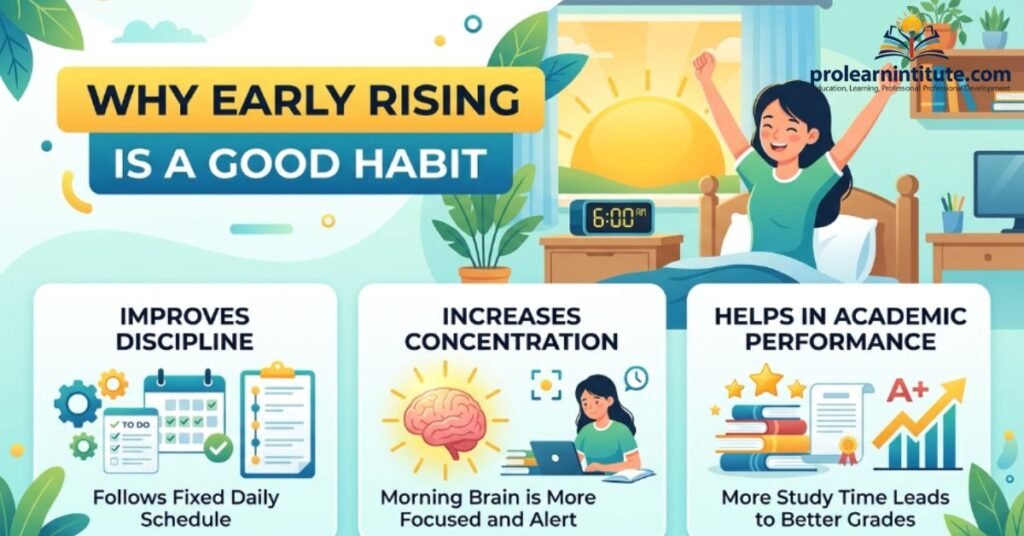
Why Early Rising is a Good Habit
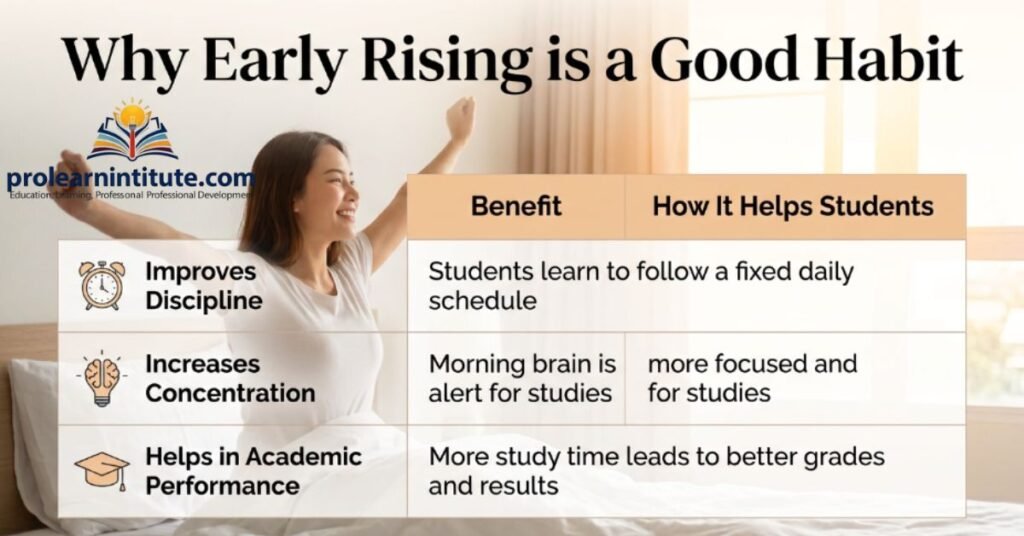
| Benefit | How It Helps Students |
| Improves Discipline | Students learn to follow a fixed daily schedule |
| Increases Concentration | Morning brain is more focused and alert for studies |
| Helps in Academic Performance | More study time leads to better grades and results |
Early Rising Paragraph for Class 9 & 10 (SSC Level)

Detailed Paragraph for SSC Students
Early rising is one of the most praised and valuable habits a student can develop. It refers to the practice of waking up early in the morning, ideally before or at sunrise. Students who follow this habit gain a significant advantage over others in terms of time, focus, and health. The peaceful morning environment helps them concentrate better on their studies without any noise or disturbance.
Waking up early provides students with extra hours that most people waste sleeping. These hours can be used for revision, exercise, or personal reflection. Studies show that the brain retains information more effectively in the early morning. SSC students who build this habit are often more prepared for exams and better at managing their daily academic workload.
Importance of Early Rising in Student Life
- Builds Strong Routine
- A daily early schedule trains the mind to stay organized and on track.
- Improves Productivity
- More hours in the morning means more tasks completed on time.
- Encourages Physical Exercise
- Morning time is ideal for a walk, jog, or light workout for fitness.
- Better Academic Results
- Focused morning study consistently improves exam performance.
Effects of Not Waking Up Early
| Problem | Impact on Students |
| Laziness and Delay in Work | Assignments and revisions keep getting postponed |
| Poor Academic Performance | Less study time leads to weak results and low grades |
| Health Issues | Late sleeping disturbs the body clock and weakens immunity |
Early Rising Paragraph for HSC Students

Advanced Paragraph (College Level)
Early rising is a habit widely recognized as a cornerstone of success in academic and professional life. For HSC students who face intense syllabus pressure and competitive exams, this habit can be a game-changer. The early morning hours, free from distractions and noise, provide an ideal environment for deep study, critical thinking, and focused revision. Scientific research supports the idea that the human brain functions at its sharpest in the early morning hours after a full night’s rest.
Beyond academics, early rising develops a mindset of discipline and self-control. A student who wakes up before others naturally gains extra hours to read, plan, and reflect. This consistent practice over months builds mental stamina and emotional strength. Colleges and universities also value students who demonstrate time management skills, and early rising is the first step toward mastering that skill in real life.
Early Rising and Academic Success
| Skill / Benefit | How It Supports HSC Success |
| Time Management Skills | Structured mornings help manage a large HSC syllabus efficiently |
| Better Exam Preparation | Extra revision hours in the morning improve recall and accuracy |
| The rested |
Role of Early Rising in Personality Development
- Self-Discipline
- Rising early daily trains the will to follow rules and stay committed.
- Leadership Qualities
- Leaders who manage time well often credit their early morning habits.
- Positive Lifestyle Habits
- Early risers eat better, exercise more, and stress less every day.
- Confident Mindset
- A productive morning builds confidence that lasts the whole day.
What Science Says About Early Rising

Early rising is not just traditional advice — research backs it up too. A 2009 study by biologist Christoph Randler, published in the Journal of Applied Social Psychology, found that people whose natural chronotype leans toward mornings tend to be more proactive than those who peak later in the day. Randler’s research showed that early risers were better at anticipating problems and planning ahead, a trait linked to stronger academic and professional outcomes. This scientific finding supports what teachers and parents have always said — a disciplined sleep schedule and morning routine can shape a more focused, successful life.
How to Become an Early Riser: 5 Simple Steps
- Fix your sleep schedule — Going to bed at the same hour every night resets your circadian rhythm, since the body cannot wake up early without enough rest.
- Shift gradually — Instead of jumping two hours earlier suddenly, move your wake-up time by 10–15 minutes every few days until your biological clock adjusts.
- Keep the phone away at night — Late-night screen time disrupts the sleep cycle and is one of the biggest reasons students struggle to rise early.
- Create a reason to wake up — Planning something useful for the morning, like study time or exercise, builds a stronger morning routine and makes it easier to leave the bed.
- Stay consistent on weekends too — Waking up at the same time daily, including holidays, trains your chronotype faster than an irregular schedule — much like staying consistent with seasonal routines helps build discipline in other areas of life.
Moral Value of Early Rising
- “The early bird catches the worm”—this old saying perfectly describes the value of waking up early in life.
- Early rising is the key to success because it gives more time, more focus, and more control over your own life.
- It helps in building a disciplined life by training a person to respect time, follow routines, and avoid wasting precious hours.
- Every great person in history — from scientists to leaders — has believed in the power of an early start to the day.
- Students who practice this habit from a young age grow into responsible, healthy, and successful individuals in society.
Famous Early Risers Around the World

Many well-known personalities credit part of their success to a fixed morning routine. Apple CEO Tim Cook is known for starting his day around 4 a.m. to review emails before the world wakes up, while former First Lady Michelle Obama has spoken about beginning her mornings with exercise around 4:30 a.m. These examples show that early rising, paired with a healthy sleep cycle, is not just a school-time habit — it remains a practice followed by highly successful adults, reinforcing why students should start building this routine early, much like they build steady habits around seasons and daily life covered in related classroom topics.
Conclusion
Early rising paragrph is not just a habit — it is a way of life that opens the door to success, health, and happiness. Students who wake up early every day gain more time, stay focused, and build a strong character that helps them throughout life.
Every student should make a firm decision to wake up early and stick to it. Small changes in the morning routine can lead to big changes in results, health, and personality. The earlier you start this habit, the better your future will be.
Frequently Asked Questions
1. What is the best way to write an early rising essay for class 6 students?
The best way is to start with a short introduction about the habit of waking up early, followed by its benefits like better health and focus, and end with a motivating conclusion encouraging students to adopt this habit.
2. Why is early rising considered an important topic for SSC and HSC paragraph writing?
Early rising is a common SSC and HSC paragraph topic because it teaches students to write about healthy habits, moral values, and discipline—all of which are frequently tested in board examinations.
3. How do I start an early rising paragraph for class 8 or class 9 students?
You can start with a proverb like “Early to bed and early to rise makes a man healthy, wealthy, and wise,” then briefly define early rising and move into its physical, mental, and academic benefits.
4. What are the main points to include in an early rising essay for higher secondary students?
Key points include the definition of early rising, its health benefits, improved productivity, connection with nature, mental peace, time management advantages, and a call-to-action conclusion urging students to build this habit.
5. Can you give me a short, early-rising paragraph suitable for class 6 and class 7 students?
Yes—a suitable short paragraph covers what early rising means, 2–3 simple benefits like fresh air and study time, and ends with one sentence encouraging the habit, keeping total length around 100–150 words for younger students.
6. What is the difference between an early-rising essay and an early-rising paragraph for SSC exams?
An essay is longer (300–500 words) with multiple paragraphs covering introduction, body, and conclusion, while an SSC paragraph is a single focused block of 150–200 words answering who, what, why, and how about the topic.
7. How does writing about early rising help students improve their English writing skills for board exams?
Practicing the early-rising essay helps students master paragraph structure, use transition words, apply descriptive vocabulary, and organize ideas clearly—all essential skills tested in SSC and HSC English writing sections.
8. What proverbs and quotes can students use in an early-rising essay to impress examiners?
Students can use quotes like “The early bird catches the worm,” Benjamin Franklin’s famous proverb about early rising, or lines from great poets about the beauty of dawn to make their essay more impressive and memorable.
9. Is early rising a common paragraph topic in the HSC English exam in Bangladesh or on similar boards?
Yes, early rising is a frequently asked paragraph and essay topic in HSC English exams across South Asian boards, including Bangladesh, as it covers moral science, healthy lifestyle, and general knowledge themes valued by examiners.
10. What are three powerful benefits of early rising that students should always mention in their essays?
The three most powerful benefits to always include are improved physical health through morning exercise and fresh air, better academic performance due to a calm and focused mind, and stronger time management skills that build lifelong discipline.

I’m Jordan Smith, a content writer with 4 years of experience and AI content expertise, creating clear, engaging, and easy-to-understand educational content.