
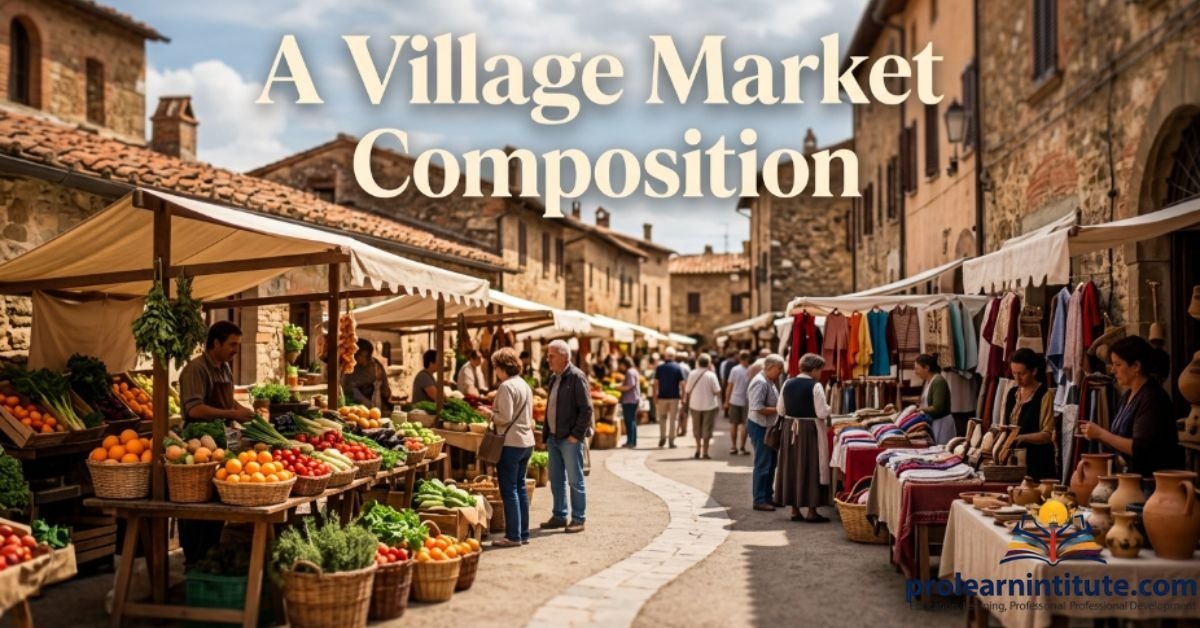
A village market composition gives us a clear picture of the simple and lively life of rural areas. It describes the busy scenes, colorful shops, and daily activities that make a village market an interesting place to visit.
A village market is not only a place for buying and selling goods but also a center of social interaction. Farmers, shopkeepers, and local people come together, making the market full of energy and movement.
In this composition, we will explore the beauty, importance, and common features of a village market. It helps us understand how these markets play an important role in the daily lives of village communities.
see also: Duties of a Student Composition for Class 6–10, SSC & HSC (Easy)
A Village Market Composition – 200 Words
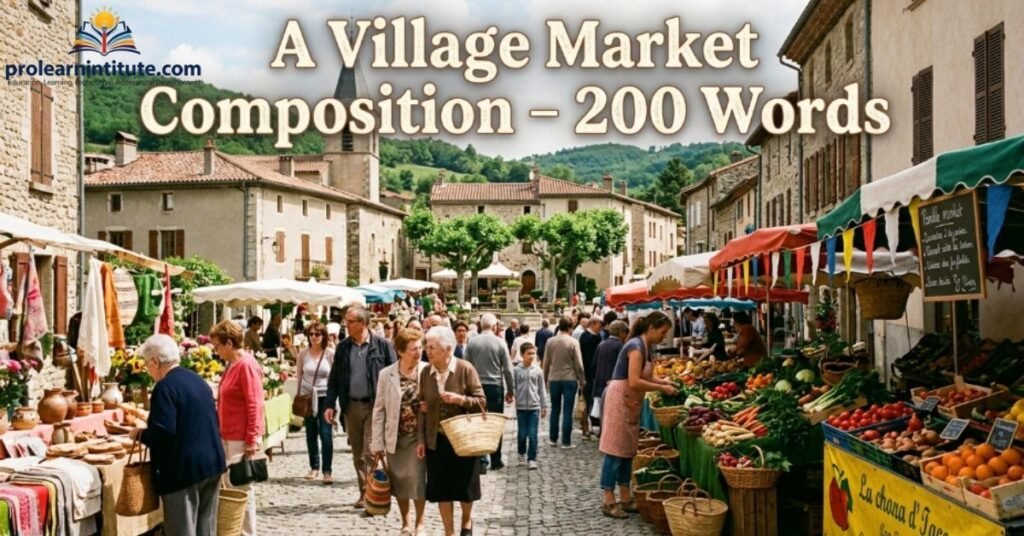
A village market is a small but busy place where villagers come to buy and sell things. It is usually held once or twice a week in an open ground or near the main road of the village.
Farmers bring fresh vegetables, fruits, and grains to sell. Other sellers bring clothes, shoes, pots, and household items. The market becomes crowded with buyers and sellers from morning till evening.
People walk from stall to stall, checking prices and bargaining with sellers. Children vocalnewsmedia com enjoy sweets and toys sold at small stalls. The sound of shouting sellers and bargaining buyers fills the air.
A village market is important because it connects farmers directly with buyers. It saves time and money since people do not need to travel to the city for daily needs.
It also brings the whole village together. Neighbors meet, share news, and enjoy each other’s company while shopping.
In short, a village market is the heart of rural life. It supports local farmers, provides daily necessities, and keeps traditions alive simply and joyfully.
A Village Market Composition – 250 Words
A village market is one of the most important parts of rural life. It is usually set up once or twice a week in an open space, near a crossroad, or in the center of the village.
Early in the morning, farmers and traders arrive with their goods. Vegetables, fruits, grains, milk, and eggs are neatly arranged on the ground or on small wooden stalls. Some sellers also bring clothes, shoes, bangles, and kitchen items.
As the day begins, the market slowly fills with people. Women come to buy fresh vegetables for cooking. Men gather to discuss farming and daily news. Children run around, eager to buy sweets, toys, or snacks from small vendors.
The market is full of sound and movement. Sellers call out to attract buyers, while buyers bargain to get the best price. This bargaining is a common and enjoyable part of village shopping.
A village market plays a big role in the local economy. It gives farmers a direct place to sell their crops without depending on middlemen. This helps them earn better prices for their hard work.
It also saves villagers from traveling long distances to the city for basic needs. Everything required for daily life can be found in one place.
Beyond buying and selling, the market is a place of social connection. Friends meet, families catch up, and villagers strengthen their community bonds.
In conclusion, a village market is not just a place of trade. It represents the simplicity, unity, and self-sufficiency of rural life.
Introduction to a Village Market
A village market is a traditional trading place found in almost every rural area. It is where villagers come together to buy daily necessities and sell their own produce.
This market usually opens on fixed days of the week. It is simple in structure but full of life, colour, and activity.
Location and Importance of a Village Market
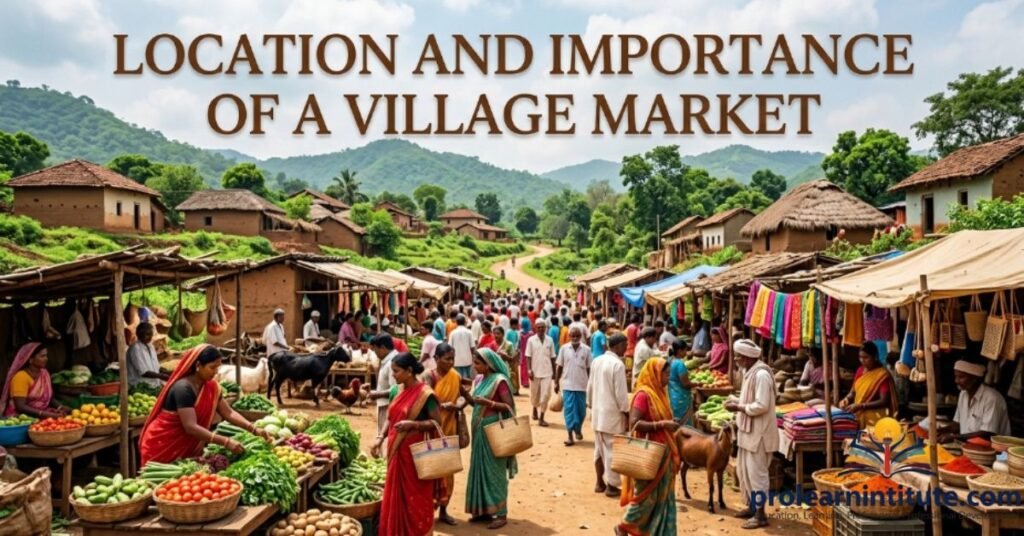
A village market is often located in an open field, near a main road, or at the center of the village. This location allows people from nearby villages to reach it easily.
It plays an important role in connecting farmers with buyers directly. Without a market, villagers would need to travel far to sell or purchase goods.
- Easily accessible for nearby villages
- Reduces travel time and cost
- Encourages local trade and self-reliance
Description of a Village Market Scene
The village market scene is full of energy from early morning. Rows of small stalls zavalio com and mats are set up, each displaying different goods.
The air is filled with the mixed smell of fresh vegetables, spices, and street food. Sellers call out prices while buyers move around, comparing quality and cost.
People and Activities in a Village Market
Many types of people can be seen in a village market, each with their own purpose. Farmers, shopkeepers, buyers, and even children add life to the scene.
Some common activities include buying, selling, bargaining, and simply socializing with neighbors.
| People | Common Activity |
| Farmers | Selling fresh crops and vegetables |
| Shopkeepers | Selling clothes, utensils, and daily items |
| Women | Buying groceries and household goods |
| Children | Buying sweets, toys, and snacks |
| Elders | Meeting friends and sharing news |
Types of Goods Available in a Village Market
A village market offers a wide range of products that meet the daily needs of villagers. From fresh food to household items, almost everything is available.
- Fresh vegetables and fruits
- Grains, pulses, and spices
- Milk, eggs, and dairy products
- Clothes, shoes, and bangles
- Pots, baskets, and kitchen tools
- Toys and sweets for children
Importance of a Village Market in Rural Life
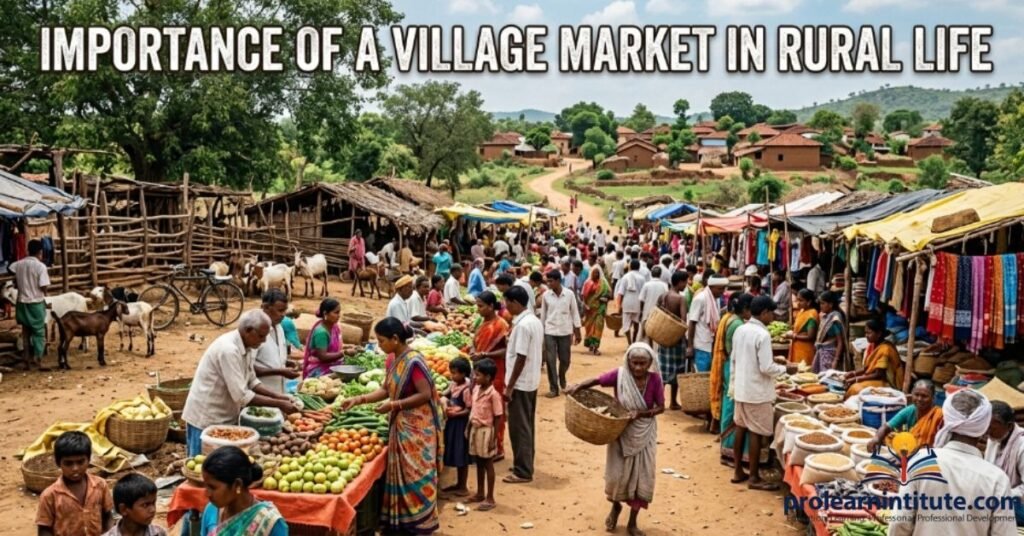
A village market is much more than a place to shop. It supports the local economy by giving farmers a direct platform to sell their goods.
It also strengthens community bonds, as people meet, talk, and share news while shopping. In many ways, the market reflects the true culture of village life.
Conclusion: A Village Market Composition
At its core, a village market shows the simple lifestyle, daily activities, and social importance of rural communities. In simple terms, understanding A Village Market Composition helps students describe village life and improve their writing skills with better ideas.
Now you have a clear understanding of how a village market reflects culture, business, and community relationships. The next step is yours—use these ideas to write confidently and present your thoughts in a meaningful way.
see also: Best Dialogue Early Rising for Students Class 6, 7, 8, SSC and HSC
FAQs
What is a village market?
A village market is a place where villagers gather on fixed days to buy and sell goods like vegetables, grains, and household items.
Why is a village market important in rural areas?
It allows farmers to sell their produce directly and gives villagers easy access to daily necessities without traveling to the city.
What can you buy at a village market?
You can buy fresh vegetables, fruits, grains, dairy products, clothes, kitchen items, and toys at a village market.
How often does a village market open?
Most village markets open once or twice a week on fixed days decided by local tradition.
Who usually sells goods in a village market?
Farmers, local shopkeepers, and small traders usually sell goods in a village market.
What makes a village market different from a city market?
A village market is smaller, simpler, and more personal, with direct interaction between farmers and buyers, unlike large city markets.
Why do people bargain in a village market?
Bargaining is a common tradition that helps buyers get fair prices and adds a friendly, interactive shopping experience.
How does a village market help farmers?
It gives farmers a direct selling point, helping them earn better prices without depending on middlemen.
What role does a village market play in community life?
It brings villagers together, allowing them to socialize, share news, and strengthen relationships while shopping.
Can a village market composition be written for different classes?
Yes, it can be written in different lengths and complexities, from simple 200-word versions for younger students to detailed descriptions for higher classes.

I’m Jordan Smith, a content writer with 4 years of experience and AI content expertise, creating clear, engaging, and easy-to-understand educational content.