
A Clever Fox and A Foolish Crow: The Complete Story, Lessons, and Meaning is one of the most popular fables loved by children and adults alike. It tells an interesting story about a smart fox who uses clever words to trick a crow.
This classic tale is not only entertaining but also teaches an important lesson about avoiding flattery and thinking wisely before making decisions. Its message remains relevant even in today’s world.
In this article, we will explore A Clever Fox and A Foolish Crow: The Complete Story, Lessons, and Meaning, understand its deeper message, and learn why this timeless story continues to be shared across generations.
see also: Physical Exercise Composition for Classes 6,7,8, SSC & HSC
A Clever Fox and A Foolish Crow Story – Part 1

Once upon a time, in a green forest, there lived a crow. The crow was lazy and always looked for food the easy way.
One day, the crow found a piece of cheese lying near a window. She picked it up happily and flew to a tree branch to eat it in peace.
A hungry fox was passing by. He saw the crow sitting with the cheese, and his mouth started watering instantly.
The fox knew he could not climb the tree. So he decided to use his brain instead of his legs to get the cheese.
He walked slowly toward the tree and looked up at the crow with a big smile. He started praising her beauty in a soft, sweet voice.
A Clever Fox and A Foolish Crow Story – Part 2
The fox said the crow had the shiniest feathers in the whole forest. He told her she looked like a queen sitting on her throne.
The crow felt very proud hearing these words. She had never received such compliments before in her life.
The fox then said one thing was missing. He said if her voice was as beautiful as her feathers, she would be the best bird alive.
The crow wanted to prove her voice was lovely, too. She opened her beak wide and began to sing loudly.
As soon as she opened her mouth, the cheese fell straight down. The fox caught it quickly and ran away laughing.
A Clever Fox and A Foolish Crow Story – Part 3 (For Younger Readers)
After the fox ran away, the crow sat alone on the branch. She felt sad and a little silly about what had happened.
She looked down at the space where her cheese used to be. There was nothing left to eat for the rest of the day.
A wise old owl who lived nearby had seen everything. He flew over and gently told the crow what had really happened.
The owl explained that the fox had only said nice words to trick her. He reminded her that not everyone who praises us is being honest.
The crow felt embarrassed at first, but she also learned something important. She promised herself she would think more carefully next time someone gave her compliments.
From that day, the crow became more careful with strangers. She still enjoyed kind words, but she no longer believed everything she heard right away.
see also: Grasp All Lose All Completing Story for Class 6,7,8,SSC & HSC with Moral
Introduction to the Story

This fable comes from ancient storytelling traditions and has been passed down through generations. Many believe it originally came from Aesop’s Fables, a famous collection from ancient Greece.
It is often used to teach children about flattery and false praise. Teachers use it in classrooms because the lesson is easy to understand and remember.
The story is simple yet powerful in its message. It shows how cleverness can sometimes be used in tricky ways to fool others.
Many versions of this story exist in different cultures. Some versions use different animals or different food items, but the lesson always stays the same.
This makes the story useful for readers of every age group. A five-year-old can enjoy the simple plot, while an adult can think about the deeper meaning.
Characters and Setting of the Story
The story has two main characters who represent very different personalities. Understanding them helps readers connect better with the story.
| Character | Personality Traits | Role in the Story |
| The Crow | Lazy, vain, easily flattered | Holds the cheese and falls for the trick |
| The Fox | Smart, patient, clever talker | Plans and carries out the trick |
| The Owl (Part 3) | Wise, honest, observant | Teaches the crow the real lesson |
The setting is a quiet forest with tall trees and open spaces. This calm environment makes the surprising twist of the story even more interesting.
Forest settings are common in fables because they allow animals to interact naturally. They also remind readers that lessons from nature apply to human life, too.
The simplicity of the setting also helps younger readers picture the scene easily. A tree, a branch, and a piece of cheese are all that the story needs.
The Crow’s Discovery of Food
The crow’s day started like any other ordinary day in the forest. She was searching for something to eat near a small house.
Luck was on her side when she spotted a piece of cheese. It had fallen near an open window and looked fresh and tasty.
She quickly grabbed the cheese with her beak. Feeling proud of her catch, she flew straight to a tall tree branch.
Sitting comfortably, she planned to enjoy her meal in peace. Little did she know, trouble was about to arrive.
This part of the story shows that the crow was happy and satisfied at first. Her happiness, however, made her less alert to danger around her.
see also: A Rainy Day Paragraph for Students Class 6, 7, 8, SSC and HSC
The Fox’s Clever Plan
The fox had been hungry for hours and was searching for food everywhere. When he saw the crow with cheese, an idea formed in his mind.
He knew direct force would not work since crows can fly away easily. So he chose a smarter, more patient approach instead.
Flattery became his main weapon in this situation. He understood that praise often makes others lower their guard completely.
- He complimented her feathers first to build trust
- He compared her to a queen to boost her ego
- He questioned her voice to trigger her pride
This step-by-step plan was designed carefully. Each compliment pushed the crow closer to making a mistake.
The fox’s plan also shows good patience and observation skills. He did not rush the trick, and he watched the crow’s reactions closely before making his next move.
Why Flattery Works So Well
This part of the story helps older readers and adults understand the psychology behind the trick. Flattery works because it appeals to natural human and animal desires for approval.
Everyone enjoys being praised, and praise can feel especially good when it comes from someone unexpected. The crow had likely never been told she was beautiful before.
When someone receives unexpected praise, their guard often drops quickly. This is exactly what happened to the crow in this classic tale.
- Flattery feels personal, so it builds quick trust
- Compliments distract the mind from logical thinking
- Pride often grows faster than caution
Recognizing these patterns can help both children and adults avoid similar traps in real life. Salespeople, scammers, and even friends sometimes use flattery for selfish reasons.
The Crow’s Mistake and Lesson
The crow’s biggest mistake was believing the fox’s words without thinking twice. She let pride control her actions completely.
She forgot that she was holding food in her beak. Excitement and ego made her ignore basic common sense.
The moment she opened her mouth to sing, the cheese fell. The fox grabbed it instantly and disappeared into the bushes.
This is a perfect example of how flattery can cloud good judgment. It shows that vanity often leads to loss in real-life situations.
For younger children, this part simply teaches that bragging or showing off can lead to losing something valuable. For older readers, it teaches a deeper lesson about emotional control.
Moral of the Story
Every classic fable carries a meaningful lesson for its readers. This story is no different and teaches something valuable about human behavior.
- Never trust flattery without thinking about the real intention
- Pride can blind a person from seeing obvious danger
- Smart thinking often wins over brute strength
The core moral is simple: think before you act on someone’s praise. Not everyone who compliments you has good intentions.
This lesson applies to daily life situations, too. People often use flattery to gain an advantage in business, relationships, and friendships.
How This Story Applies to Different Age Groups
This fable carries different layers of meaning depending on who is reading it. The table below shows how the lesson can be explained at different levels.
| Age Group | Key Takeaway | Simple Explanation |
| Ages 4-7 | Don’t show off | Showing off can make you lose things |
| Ages 8-12 | Think before trusting | Not everyone who is nice means well |
| Teens and Adults | Recognize manipulation | Flattery can hide selfish motives |
This flexibility is one reason the story has survived for thousands of years. It grows along with the reader’s understanding of the world.
Teachers often use this story across multiple grade levels because it can be retaught with new depth each time. A child who hears it at age five can revisit it at age fifteen and learn something new.
Lessons for the Classroom
Teachers and parents can use this story to start meaningful conversations with children. It works well as both a reading exercise and a discussion starter.
- Ask children why the crow believed the fox so easily
- Discuss real-life examples of flattery they may have experienced
- Encourage children to think about honest versus dishonest compliments
These simple discussion points help children apply the story’s lesson to their own lives. They also build early critical thinking skills.
Many schools include this fable in early reading textbooks because of its short length and clear structure. It is also a popular choice for moral education classes and value-based learning.
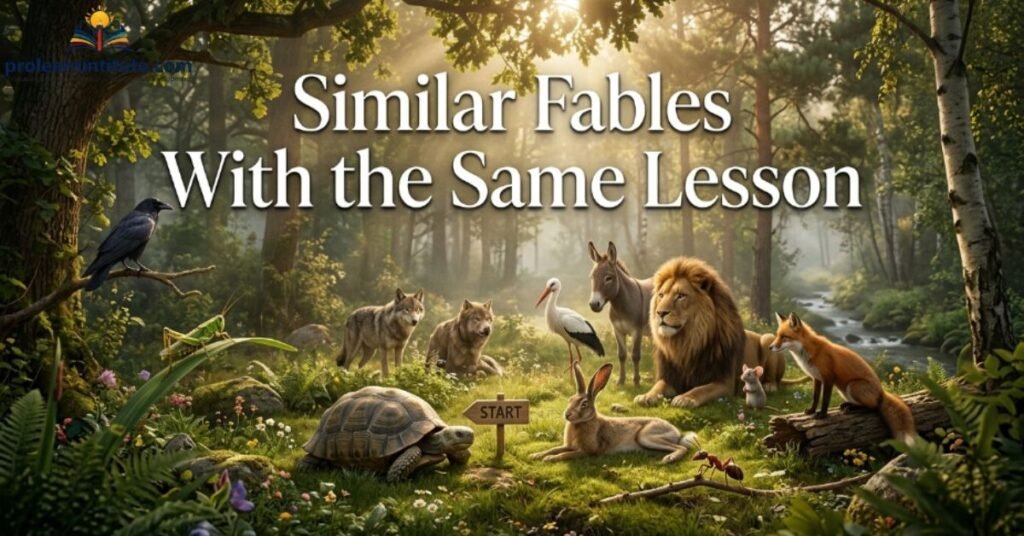
Similar Fables With the Same Lesson
This is not the only story that warns against flattery and pride. Several other fables share a similar message using different characters and settings.
- The Vain Crow and the Peacock Feathers
- The Wolf in Sheep’s Clothing
- The Boy Who Cried Wolf
Reading similar stories together can help children understand that this lesson appears in many cultures. It shows that honesty and humility are valued almost everywhere in the world.
Conclusion
At its core, A Clever Fox and A Foolish Crow: The Complete Story, Lessons, and Meaning teaches us the value of wisdom, self-awareness, and careful thinking. In simple terms, the story reminds us not to be easily influenced by praise and to make decisions with a clear mind.
Now you have a clear understanding of the story’s message and why it has remained popular for generations. The next step is yours—apply these lessons in everyday life and remember that good judgment is often the key to avoiding mistakes.
see also: Robert Bruce completing story for Class Lesson 6,7,8,9, SSC and HSC
FAQs
How does the story of the clever fox and the crow end?
The fox tricks the crow into singing, causing her to drop the cheese, which the fox quickly grabs and runs away with.
What is the moral lesson of the fox and crow story?
The story teaches that flattery often hides selfish intentions, so people should think carefully before trusting sweet words.
Why did the crow lose her cheese in the story?
The crow lost her cheese because she got too proud after hearing the fox’s compliments and opened her mouth to sing.
What lesson can children learn from this fable?
Children learn that pride and vanity can lead to mistakes, and they should not believe everyone who praises them.
Who are the main characters in the fox and crow story?
The main characters are a clever, hungry fox and a lazy crow who find a piece of cheese.
Where does the fox and crow story usually take place?
The story usually takes place in a quiet forest with tall trees, where the crow sits with her food.
How does the fox manage to trick the crow?
The fox uses flattery, praising the crow’s feathers and asking about her voice, to make her open her mouth and drop the food.
What does the cheese symbolize in the story?
The cheese symbolizes something valuable that can be lost easily when a person lets pride control their decisions.
Is the fox and crow story based on a real event?
No, it is a fictional fable used to teach moral lessons about trust, pride, and flattery through animal characters.
Why is this fable still popular today?
This fable remains popular because its lesson about flattery and pride is timeless and applies to real human behavior even now.

I’m Jordan Smith, a content writer with 4 years of experience and AI content expertise, creating clear, engaging, and easy-to-understand educational content.
1 Comment
Pingback: A Scholar and a Boatman Story With Moral | বাংলা অর্থসহ - ProLearnIntitute