
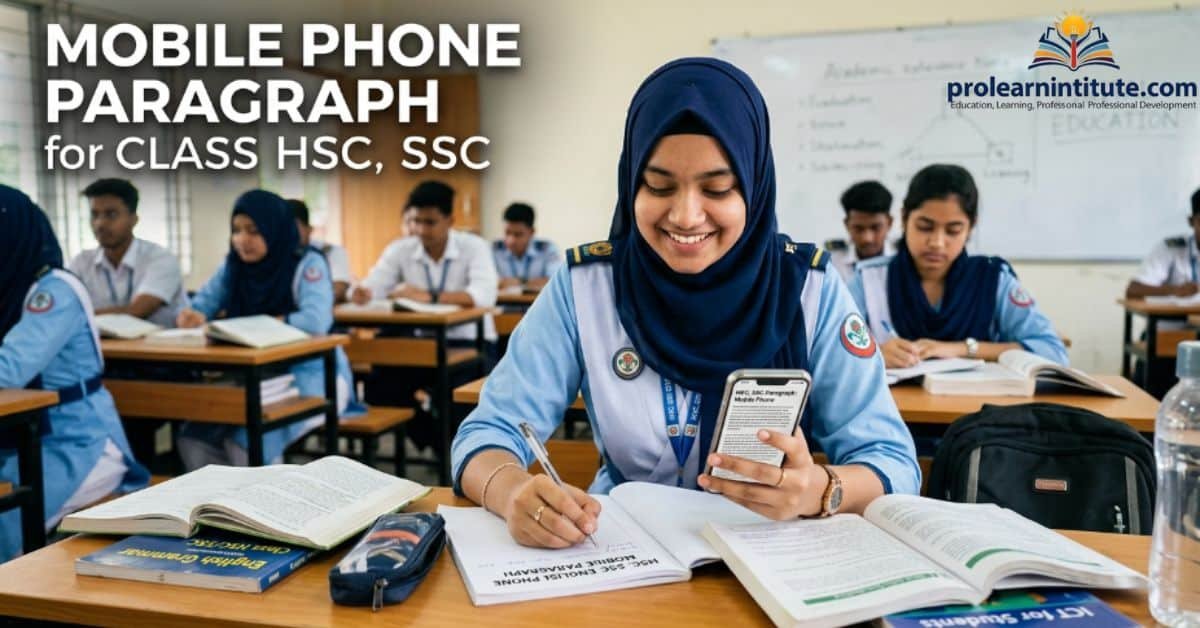
Mobile phones have become one of the most important inventions of the modern world. Every student, teacher, businessman, and common person uses a mobile phone in daily life. This guide gives you paragraphs, lines, and facts about mobile phones for all class levels.
This article covers everything from short paragraphs to detailed analysis. Whether you are in class 5 or class 12, you will find the right content here. Read carefully and use it for your assignments, essays, and exams.
Introduction to Mobile Phones
What is a Mobile Phone?
A mobile phone is a small electronic device that allows people to call, message, and use the internet from anywhere. It works through wireless signals and does not need any wires or a fixed connection. Today, mobile phones can do almost everything a computer can do.
Modern mobile phones are also called smartphones because they are very smart and powerful. They have cameras, apps, games, maps, and thousands of other features built inside. A mobile phone fits in your pocket but holds the whole world inside it.
Why It Is Important in Daily Life
Mobile phones are important because they connect people across the world in seconds. Whether you want to talk to a friend, watch a video, or check the news, your phone does it all instantly. Life without a mobile phone today feels very difficult and incomplete.
Students use phones for studying, parents use them for work, and elders use them for staying in touch with family. It has made daily tasks like shopping, banking, and booking tickets very easy. A mobile phone saves both time and energy in everyday life.
Mobile Phone Paragraph

Short, Balanced Paragraph for Quick Learning
A mobile phone is a wireless electronic device used for communication and many other purposes. It was first invented for simple phone calls, but today it does much more than that. People use mobile phones to send messages, browse the internet, take photos, and watch videos.
For students, mobile phones are very useful tools for learning and research. They can download study apps, join online classes, and find information on any topic within seconds. Mobile phones have truly changed the way students learn and grow.
However, mobile phones also have some negative effects. Too much phone use can cause eye problems, poor sleep, and less focus on studies. Students should use their phones wisely and set limits on screen time. A mobile phone is a powerful tool, and like all powerful tools, it must be used with care and responsibility. Balance is the key to using it well.
Mobile Phone Paragraph for SSC
Slightly Detailed with Simple Vocabulary and Clear Examples
A mobile phone is an electronic communication device that connects people through calls, messages, and the internet. SSC students need to understand both its uses and its effects on society. It is one of the greatest inventions of the 20th century that changed human life completely.
For example, a student living in a village can now attend online classes and access study material just like a student in a big city. Mobile phones have reduced the gap between the rich and the poor in terms of education and information. Apps like YouTube, Google, and Khan Academy are free and available to everyone.
On the other hand, many SSC students get distracted by social media and games on their phones. They spend hours on TikTok or Instagram instead of focusing on their studies. This habit leads to poor grades, lack of sleep, and weak concentration in class.
Mobile phones also help in emergencies. If a student is in trouble or far from home, they can call for help immediately. This safety feature is one of the most important reasons why parents allow their children to carry phones.
SSC students should remember that a mobile phone is a tool, not a toy. Using it for productive purposes like learning, research, and communication is the right approach. Wasting time on useless content is a bad habit that affects future success.
Mobile Phone Paragraph for HSC
More Analytical — Includes Advantages, Disadvantages, and Impact
Mobile phones have revolutionized the way humans communicate, learn, and conduct business in the 21st century. What began as a simple device for making calls has now transformed into a powerful mini-computer that fits in one’s hand. HSC students must analyze both the positive and negative dimensions of this technology to form a balanced opinion.
From an educational perspective, mobile phones offer enormous advantages. Students can access millions of books, research papers, and video lectures from top universities across the world. Platforms like Coursera, edX, and YouTube Education have made quality learning free and accessible to everyone, regardless of their location or financial background.
However, the negative impact of mobile phones on young students cannot be ignored. Research shows that excessive screen time reduces attention span, disrupts sleep patterns, and increases anxiety among teenagers. Social media addiction is a serious mental health concern that affects millions of students globally.
From a social perspective, mobile phones have both connected and divided people at the same time. While families separated by distance can now video call daily, people sitting together in the same room often ignore each other due to their screens. This behavior shows how technology can weaken real human relationships.
The impact of mobile phones on the economy is also significant. Mobile banking, e-commerce, and remote work have created millions of new jobs and business opportunities. In developing countries like Pakistan, mobile phones have helped small businesses grow by reaching customers online.
HSC students should approach mobile phone usage with critical thinking and self-discipline. The device itself is neutral — it can be used for building a future or wasting one. The choice lies entirely in the hands of the user, and that user is you.
Short Paragraph on Mobile Phone (For Beginners)
Easy Version for Lower Classes
A mobile phone is a small machine that we use to talk to people far away. It also helps us watch videos, take pictures, and use the internet. Almost every person in the world uses a mobile phone today.
Mobile phones are very useful for students too. We can use them to search for answers, watch educational videos, and learn new things easily. They make learning fun and simple for young students.
But we should not use phones too much. Using phones for long hours can hurt our eyes and make us lazy. We should use phones for good things and spend more time studying and playing outside.
Importance of Mobile Phones in Modern Life
Communication
Communication is the most basic and important use of mobile phones. Before mobile phones, people had to write letters or find a landline to talk to someone far away. Now, a single tap connects you to anyone in the world within seconds.
Mobile phones support calls, video calls, messages, and emails all in one place. Apps like WhatsApp, Zoom, and Google Meet have made group communication very easy. Families, friends, and work teams all stay connected through mobile phones every day.
| Communication Type | Example App | Purpose |
| Text Messaging | WhatsApp, SMS | Quick text updates |
| Voice Calls | Phone, WhatsApp | Real-time conversation |
| Video Calls | Zoom, Google Meet | Face-to-face online meetings |
| Gmail, Outlook | Formal communication | |
| Social Media | Instagram, Facebook | Public and social sharing |
Education
Mobile phones have opened a whole new world of learning for students everywhere. With a smartphone and internet connection, any student can access the best teachers, books, and courses in the world. This has made education more equal and available to all.
Apps like Khan Academy, Duolingo, and Quizlet help students practice and learn at their own speed. Teachers also use mobile phones to share notes, assignments, and announcements with students instantly. Online learning through mobile phones became especially important during COVID-19 when schools were closed.
- Access to free online courses and lectures
- Instant sharing of notes and study material
- Learning new languages through apps
- Watching educational videos on any subject
- Taking online exams and quizzes
Entertainment
Mobile phones are the top source of entertainment for people of all ages today. From movies and music to games and social media, phones provide endless fun in your pocket. Entertainment through phones is available 24 hours a day, 7 days a week.
Students enjoy watching videos on YouTube, playing mobile games, and scrolling through social media during their free time. Streaming apps like Netflix, Spotify, and TikTok have completely changed how we enjoy entertainment. However, too much entertainment on phones can waste important study time.
Business Use
Businesses of all sizes now depend heavily on mobile phones to run their daily operations. Shop owners, freelancers, and big companies all use mobile phones to manage orders, payments, and customer service. Mobile phones have made starting and running a business much cheaper and faster.
Apps like Daraz, Amazon, and Shopify allow sellers to reach millions of customers without a physical store. Mobile banking apps make financial transactions quick, safe, and paperless. In Pakistan and other developing countries, mobile phones have helped millions of small business owners grow their income.
| Business Activity | Mobile Tool | Benefit |
| Online Selling | Daraz, Amazon App | Reach more customers |
| Payment & Banking | JazzCash, Easypaisa | Fast and safe transactions |
| Marketing | Instagram, Facebook Ads | Low-cost promotion |
| Communication | WhatsApp Business | Easy customer support |
| Freelancing | Fiverr, Upwork App | Earn money from home |
Advantages of Mobile Phones
Instant Communication
One of the biggest advantages of mobile phones is instant communication. You can call or message anyone in the world within seconds at a very low cost. This feature has made the world a smaller and more connected place.
In emergencies, instant communication can even save lives. If there is an accident or someone falls ill, a quick phone call can bring help immediately. Mobile phones have made personal safety much stronger for everyone.
Access to Information
Mobile phones give us access to the largest library in human history — the internet. Any question, any topic, any fact can be found in seconds through a simple search. This access to information has made people smarter, more aware, and better prepared.
Students benefit the most from this advantage. Instead of waiting for a library book, they can find answers to their homework questions instantly. This saves time and encourages a habit of self-learning and curiosity.
Online Learning
Online learning through mobile phones has completely changed education around the world. Students can now take courses from top universities, watch tutorials, and practice skills without leaving their homes. This has made quality education available even in remote areas.
- Free courses on platforms like Coursera and edX
- Language learning apps like Duolingo
- Math and science tutorials on YouTube
- Coding lessons on SoloLearn and Grasshopper
- Test preparation apps for SSC, HSC, and university exams
Social Connectivity
Mobile phones help people stay socially connected with family, friends, and the world. Social media apps allow users to share their lives, thoughts, and experiences with others easily. This social connectivity reduces loneliness and keeps relationships strong.
For students studying abroad or living away from family, social connectivity through mobile phones is a great comfort. Video calls with parents and friends make the distance feel shorter. Social media also helps students join study groups and learning communities online.
Disadvantages of Mobile Phones
Addiction
Mobile phone addiction is one of the most serious problems among young people today. Many students find it impossible to put their phone down, even during meals, study time, or sleep. This addiction reduces productivity and destroys healthy daily routines.
Studies show that social media apps are designed to keep users scrolling for as long as possible. The more time you spend on your phone, the harder it becomes to focus on real-life tasks. Phone addiction is now being treated by doctors as a real mental health issue.
| Sign of Phone Addiction | Effect on Students |
| Checking phone every few minutes | Poor concentration in class |
| Using phone during meals | Less family interaction |
| Sleeping with phone | Poor sleep quality |
| Feeling anxious without phone | Increased stress and anxiety |
| Ignoring studies for phone | Low grades and poor performance |
Health Issues
Excessive mobile phone use causes many serious health problems. Staring at a screen for hours leads to eye strain, headaches, and blurred vision. Poor posture while using phones also causes neck and back pain over time.
The blue light emitted from phone screens disrupts the body’s natural sleep cycle. Students who use phones late at night often feel tired, sleepy, and unfocused the next day. Long-term effects include weakened eyesight, chronic headaches, and reduced physical fitness.
- Eye strain and vision problems
- Neck and back pain from poor posture
- Sleep disorders due to blue light exposure
- Headaches from long screen time
- Reduced physical activity leading to obesity
Time Wastage
Time wastage is one of the most common disadvantages of mobile phones for students. Hours pass quickly while scrolling through social media, watching videos, or playing games. Students often realize too late that they have wasted the time they should have spent studying.
A student who spends three hours daily on useless phone activity wastes over 1,000 hours in a year. That is time that could have been used for studying, developing skills, or pursuing hobbies. Time once lost can never be recovered, and phone addiction steals time silently every day.
Privacy Concerns
Mobile phones carry enormous amounts of personal data, which creates serious privacy risks. Photos, messages, location data, and financial information stored on phones can be stolen by hackers. Many users do not realize how much of their private information is being collected by apps every day.
Students are especially at risk because they often use public Wi-Fi and download apps without checking permissions. Cyberbullying, online scams, and identity theft are serious threats that come with mobile phone use. Every user must learn basic digital safety rules to protect their privacy online.
Uses of Mobile Phones for Students
Study Apps
There are hundreds of powerful study apps that help students learn more effectively. These apps make studying more organized, interactive, and enjoyable. Every student should know and use the best study apps available for their level.
| Study App | Subject | What It Does |
| Khan Academy | All Subjects | Free video lessons and practice |
| Duolingo | Languages | Daily language learning exercises |
| Quizlet | All Subjects | Flashcards and memory games |
| Photomath | Mathematics | Solves math problems step by step |
| Google Scholar | Research | Finds academic papers and articles |
| Grammarly | English Writing | Checks and improves writing |
Online Classes
Online classes through mobile phones have made education very flexible and accessible. Students can join live classes, watch recorded lectures, and submit assignments all through their phones. This is especially helpful for students who live far from good schools or coaching centers.
During the COVID-19 pandemic, millions of students around the world continued their education through online classes on mobile phones. Platforms like Zoom, Google Classroom, and Microsoft Teams became essential tools for both teachers and students. Online classes proved that learning can continue anywhere, anytime, with just a mobile phone.
- Joining live video lectures from home
- Watching recorded lessons at your own pace
- Submitting homework and assignments digitally
- Getting instant feedback from teachers online
- Attending webinars and educational workshops
Research
Mobile phones have made research faster and easier than ever before. Students can search for information, read articles, download books, and find references within minutes. This has improved the quality of assignments, projects, and presentations for students at all levels.
Google, Wikipedia, Google Scholar, and library apps give students access to a world of knowledge in their hands. A student with a smartphone can do the same level of research as someone sitting in a university library. This equal access to information is one of the greatest benefits of mobile phones in education.
Impact of Mobile Phones on Society
Positive and Negative Effects
Mobile phones have brought both positive and negative changes to society at a large scale. On the positive side, they have connected communities, improved communication, and boosted economies worldwide. Information now spreads faster than ever, which helps people stay informed and aware.
On the negative side, mobile phones have also spread misinformation, increased social isolation, and created digital addiction across all age groups. Many people now prefer texting over face-to-face conversation, which weakens real human bonds. Society must learn to enjoy the benefits of mobile phones while managing their harmful effects wisely.
| Positive Impact | Negative Impact |
| Better communication | Increased addiction |
| Access to education | Spread of misinformation |
| Economic growth | Privacy and security risks |
| Emergency safety | Social isolation |
| Global awareness | Decline in physical activity |
| Online business growth | Cyberbullying and online harassment |
Social Behavior Changes
Mobile phones have deeply changed the way people behave in social situations. People now check their phones constantly, even during conversations, meals, and family gatherings. This behavior shows how mobile phones have become the center of social life for many people.
Younger generations, especially teenagers, form friendships, express opinions, and build identity largely through social media on their phones. This has created new kinds of social pressures like comparison, fear of missing out (FOMO), and seeking online validation. Understanding these behavioral changes is important for using mobile phones in a healthy and balanced way.
The attention span of the average person has decreased significantly due to constant phone use. People find it harder to focus on one thing for a long time because phones train the brain to jump from one piece of content to another rapidly. Schools and families must teach mindful phone use to help the next generation stay focused and mentally healthy.
10 Lines on Mobile Phone
Quick Revision Section
- A mobile phone is a wireless electronic device used for communication and internet access.
- It was first introduced in the 1970s and has improved greatly over the decades.
- Modern smartphones can do almost everything a computer can do.
- Mobile phones are very useful for students in learning and research.
- They help people communicate instantly with anyone around the world.
- Mobile phones have positive effects like education access and business growth.
- They also have negative effects like addiction, health issues, and privacy risks.
- Students should use mobile phones wisely and limit unnecessary screen time.
- Mobile phones have changed society, communication, and the economy forever.
- The right use of a mobile phone can help a student build a successful future.
Conclusion
Mobile phones are powerful tools that have changed education, communication, and business in amazing ways. Students who use mobile phones wisely can gain knowledge, stay connected, and prepare better for the future. The key is to make smart choices about how and when to use this technology.
Every student should understand both the benefits and the risks of mobile phone use. Too much time on the phone leads to addiction, health problems, and poor studies. Use your phone as a tool for growth, not a source of distraction, and it will always work in your favor.
Frequently Asked Questions
1. What is a good mobile phone paragraph for students in simple English?
A mobile phone paragraph for students explains how smartphones help in learning, communication, and research. It highlights both benefits like online study access and drawbacks like distraction, written in simple, class-appropriate language.
2. How do I write a short mobile phone paragraph for Class 5 students?
For Class 5, write 4–5 simple sentences explaining what a mobile phone is, how students use it for learning, and why balanced use is important. Keep the vocabulary easy and the tone informative yet age-appropriate.
3. What should I include in a mobile phone paragraph for Class 10 students?
A Class 10 mobile phone paragraph should cover the role of smartphones in education, social media impact, cybersecurity risks, and the importance of responsible usage—all supported with clear examples and written in formal academic English.
4. Why are mobile phones both useful and harmful for students?
Mobile phones are useful for students because they provide instant access to educational apps, e-books, and online classes. However, they are harmful when overused, causing distraction, poor sleep, reduced attention span, and academic decline.
5. How can I write a mobile phone paragraph for all classes in one guide?
An all-classes guide adjusts vocabulary, sentence length, and content depth by grade level—simple and fun for primary classes, analytical and structured for secondary, and critical and research-based for higher secondary students.
6. What are the benefits of mobile phones for students in a paragraph?
Mobile phones benefit students by enabling 24/7 access to study material, virtual classrooms, educational YouTube videos, dictionary apps, and instant teacher communication — making self-paced and remote learning more effective and flexible.
7. How do mobile phones affect student academic performance in a paragraph?
Mobile phones can both improve and hurt academic performance. Used wisely, they boost research and learning skills. Used carelessly — especially for social media or gaming — they reduce focus, lower grades, and increase procrastination.
8. Can you give me a 100-word mobile phone paragraph for students?
A 100-word paragraph introduces mobile phones as powerful educational tools, mentions key uses like online learning and communication, briefly notes the disadvantages like addiction and distraction, and ends with a call for disciplined, purpose-driven usage by students of all ages.
9. What is the best way to end a mobile phone paragraph for a school essay?
The best way to end a mobile phone paragraph is with a strong concluding sentence that calls for balanced and responsible use—for example, “Mobile phones are a blessing for students only when used with discipline, purpose, and parental guidance.”
10. How do voice search users look for mobile phone paragraphs for students online?
Voice search users typically ask conversational questions like “Give me a mobile phone paragraph for Class 8” or “What are the advantages of mobile phones for students?”—so content should use natural language, direct answers, and structured headings to match these queries.

I’m Jordan Smith, a content writer with 4 years of experience and AI content expertise, creating clear, engaging, and easy-to-understand educational content.