
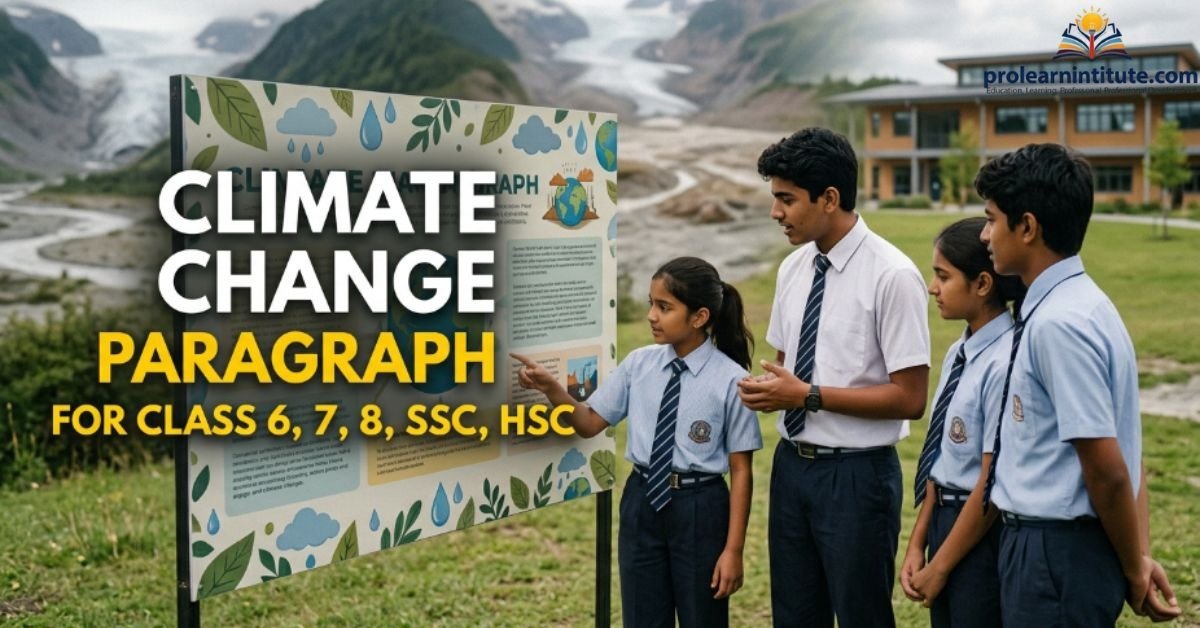
Climate Change Paragraph for Class 6, 7, 8, SSC, HSC is an important topic that helps students understand one of the biggest environmental challenges in the world today. Learning about climate change helps us become more aware of its causes and effects on our planet.
Climate change happens when the Earth’s temperature rises due to increased greenhouse gases in the atmosphere. This can lead to problems such as extreme weather, melting ice caps, rising sea levels, and changes in ecosystems that affect both people and animals.
In this article, you will find a simple and easy-to-understand Climate Change Paragraph for Class 6, 7, 8, SSC, and HSC, along with useful information about its importance, causes, effects, and possible solutions. These paragraphs are designed to help students improve their knowledge and writing skills.
see also: Dialogue Physical Exercise writing school students Class 6, 7, 8, 9-10, 11-12
Introduction to Climate Change
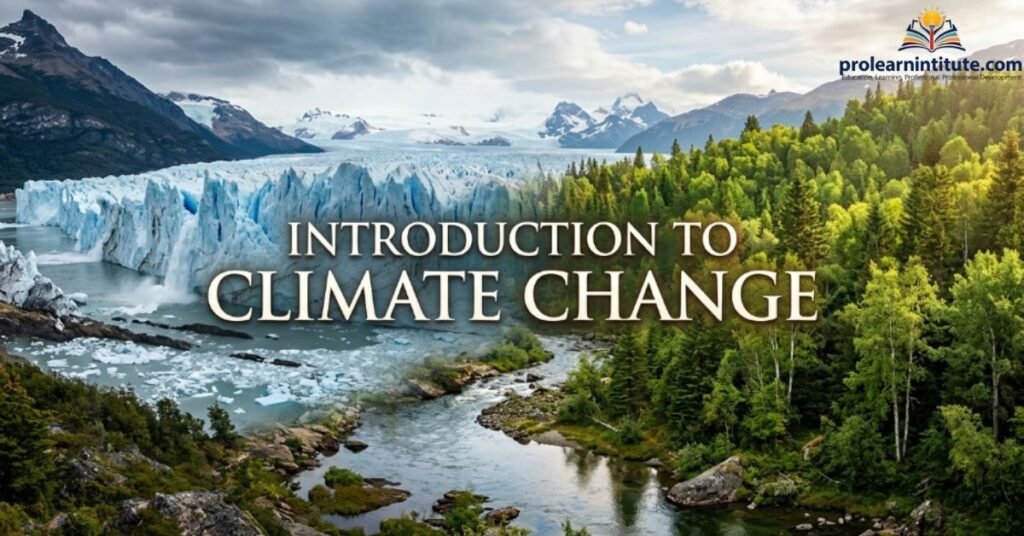
Climate change means a significant and lasting change in the Earth’s weather and temperature patterns over a long period of time. It includes shifts in rainfall, wind patterns, seasonal cycles, and average global temperatures across the entire planet.
This phenomenon is mainly caused by human activities, though natural factors also play a role. Scientists have observed that climate change is now happening faster and more severely than at any other point in recorded human history.
- Climate change affects every country, every ocean, and every living creature on Earth.
- It is not just about temperature rising, but about the entire global weather system changing.
- Natural events like volcanic eruptions can cause temporary climate shifts
- Human-made pollution is the single biggest driver of modern climate change
- The effects of climate change are already visible in our daily weather and environment
- Without serious global action, the situation will continue to get significantly worse
Climate change is no longer a distant future threat but a present and urgent reality. Every generation alive today has a shared responsibility to understand it, take it seriously, and act to slow it down before permanent damage is done.
- Rising sea levels are already threatening low-lying coastal countries and islands.
- Extreme weather events like floods, droughts, and storms are becoming more frequent.
- Food and water security are being directly threatened in many parts of the world.
- Wildlife species are going extinct at a much faster rate than ever before
- Millions of people are being displaced from their homes because of climate-related disasters
- The economic cost of climate change is growing every single year without exception
Causes of Climate Change
There are many causes behind climate change that scientists have studied and documented carefully. Some are natural processes, while the vast majority in the modern era are directly caused by human actions and industrial development.
The burning of fossil fuels is the single largest contributor to climate change in the world today. When coal, oil, and natural gas are burned for energy, they release enormous amounts of carbon dioxide and other harmful greenhouse gases into the atmosphere.
- Fossil fuels are burned in power plants, factories, cars, and aircraft every single day
- Carbon dioxide from burning fuels traps heat inside the Earth’s atmosphere
- Global energy demand continues to rise, meaning more fossil fuels are burned every year
- Coal is the most polluting fossil fuel and is still widely used around the world
- Oil and gas transportation also causes accidental leaks that release harmful methane gas
- Even everyday household energy use from electricity contributes to fossil fuel burning
| Main Cause | How It Contributes to Climate Change |
| Burning Fossil Fuels | Releases CO2 and other greenhouse gases into the atmosphere |
| Deforestation | Removes trees that absorb carbon dioxide from the air |
| Industrial Pollution | Factories emit large quantities of harmful greenhouse gases |
| Vehicle Emissions | Cars and trucks release carbon monoxide and carbon dioxide |
| Agricultural Practices | Livestock farming releases large amounts of methane gas |
| Waste and Landfills | Decomposing waste releases methane into the atmosphere |
| Plastic Overuse | Non-biodegradable plastic pollutes land, water, and air |
Deforestation is another critical cause of climate change that is rapidly making the situation worse worldwide. When forests are cleared for farming, construction, or timber, millions of trees that once absorbed carbon dioxide are permanently lost.
- The Amazon rainforest alone absorbs billions of tons of carbon dioxide every single year.
- When trees are cut and burned, they release all their stored carbon back into the atmosphere.
- Forest loss also destroys animal habitats and reduces biodiversity on a massive scale.
- Urban expansion is destroying forests and green spaces in cities and rural areas alike.
- Reforestation programs around the world are trying to reverse some of this damage.
- Protecting existing forests is far more effective than planting new ones after the damage is done.
Effects of Climate Change on Earth
Climate change has serious, wide-ranging, and increasingly severe effects on our planet and every living thing on it. These effects are now visible and measurable in nature, in weather patterns, and in the daily lives of people everywhere.
Rising global temperatures are the most direct and well-documented effect of climate change happening right now. The Earth’s average temperature has already risen by more than one degree Celsius since the Industrial Revolution and continues to climb every decade.
- Hotter temperatures cause more frequent and more deadly heatwaves across the world
- Extreme heat damages crops, increases wildfires, and causes serious public health problems
- Urban areas experience a heat island effect that makes cities significantly hotter than surrounding areas
- Heat stress affects animals, insects, fish, and plant life in ways that disrupt entire ecosystems
- Increased temperatures accelerate the melting of ice caps, glaciers, and permafrost worldwide
- Human mortality from heat-related illness is rising year after year in many countries
| Effect of Climate Change | Impact on Earth and Human Life |
| Rising Temperatures | More heatwaves, crop failure, and wildlife stress |
| Melting Glaciers | Rising sea levels and freshwater shortages |
| Rising Sea Levels | Flooding of coastal cities and displacement of populations |
| Extreme Weather | More powerful storms, floods, and long droughts |
| Loss of Biodiversity | Species extinction and ecosystem collapse |
| Food Insecurity | Damaged harvests and reduced agricultural productivity |
| Water Scarcity | Reduced rainfall and drying of rivers and lakes |
Melting glaciers and rising sea levels are among the most alarming and visible consequences of climate change that scientists are tracking closely. As mountain glaciers and polar ice caps melt at record speeds, the water flows into the oceans and raises sea levels around the entire world.
- Sea levels have already risen by more than 20 centimeters over the past one hundred years.
- Low-lying countries like Bangladesh, the Maldives, and Tuvalu face the threat of being partially submerged.
- Melting glaciers reduce the freshwater supply that billions of people depend on for drinking and farming.
- Arctic and Antarctic ice loss is happening at a rate far faster than scientists originally predicted
- Coastal erosion is destroying beaches, cliffs, and vital coastal ecosystems around the world.
- Flooding of coastal cities would displace hundreds of millions of people in the coming decades.
see also: A Thirsty Crow completing story For Class 6,7,8, SSC and HSC Students
Climate Change Paragraph for Class 6
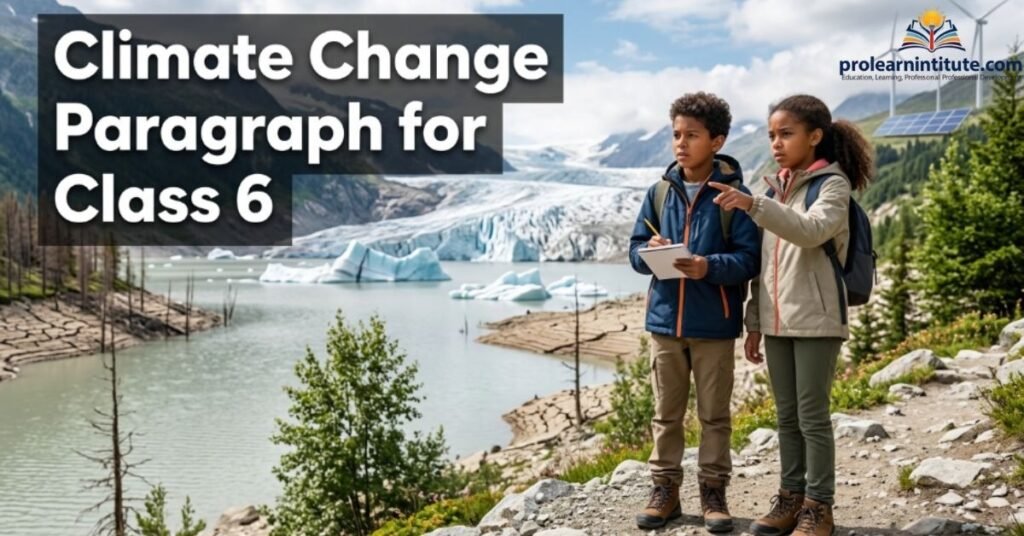
Climate change means that the weather and temperature all over the world are slowly but steadily changing over time. It happens mostly because of pollution made by humans, such as burning petrol, coal, and gas, and also because people are cutting down too many trees.
Because of climate change, our planet is getting hotter every year, and the weather is becoming stranger and more unpredictable. Glaciers in the mountains are melting very fast, and the water from them is causing sea levels to rise slowly but dangerously.
- Climate change causes very hot summers and very unusual winters in many countries.
- Strong storms and heavy floods are happening more often because of climate change.
- Many animals and plants are losing their natural homes because of the changing weather.
- Farmers are finding it harder to grow food because rain no longer comes at the right time.
- We can help by planting more trees, saving electricity, and not wasting water every day.
- Walking or cycling instead of using cars also helps reduce pollution and fight climate change.
We must all learn about climate change and do our small part to help protect the Earth. Even young students can make a real difference by making better choices every single day at home and at school.
Climate Change Paragraph for Class 7
Climate change refers to the significant and long-term changes in Earth’s temperature and weather patterns that are affecting every part of the world. It is mainly caused by human activities like burning fossil fuels, cutting down forests, and releasing harmful gases through factories and vehicles.
The effects of climate change are clearly visible all around us and are becoming more serious with every passing year. Glaciers are melting at alarming rates, sea levels are rising, and extreme weather events like floods and droughts are happening far more frequently than before.
- Global temperatures have been rising consistently for the past one hundred years.
- The increase in greenhouse gases like carbon dioxide is the main reason for this warming.
- Coastal areas and small island nations face the very real danger of being flooded by rising seas.
- Many species of animals and birds are facing extinction because their habitats are being destroyed.
- Agriculture is suffering from unpredictable rainfall and extreme heat damage crops worldwide.
- Human health is being affected through the spread of diseases linked to warmer temperatures.
- Reducing plastic use, saving energy, and planting trees are practical ways students can help.
Climate change is a challenge that affects every country and every person on this planet equally. As young students, we have both the responsibility and the power to learn about it and take meaningful action to protect our shared home.
Climate Change Paragraph for Class 8
Climate change refers to the long-term and large-scale changes in temperature, rainfall, wind, and other weather patterns that occur across the entire Earth over extended periods of time. While natural factors can cause climate shifts, the rapid and dangerous climate change happening today is overwhelmingly driven by human activities, especially the burning of fossil fuels since the Industrial Revolution.
Factories, power plants, and millions of vehicles release enormous amounts of carbon dioxide and other greenhouse gases into the atmosphere every single day. These gases form a kind of invisible blanket around the Earth that traps the sun’s heat and prevents it from escaping into space, causing the planet to warm steadily over time.
- Rising temperatures are causing more intense heatwaves, droughts, and wildfires across the world.
- Melting polar ice and mountain glaciers are directly contributing to rising sea levels globally.
- Unpredictable and extreme weather events like flooding and severe storms are increasing in frequency.
- Biodiversity is declining rapidly as animal and plant species lose their natural habitats and food sources.
- Agriculture and global food production are being seriously threatened by changing rainfall and heat patterns.
- The health of millions of people is at risk due to air pollution, heat stress, and new disease patterns.
- Recycling, reducing energy consumption, and supporting green initiatives are important student contributions.
Tackling climate change requires both individual responsibility and strong collective action from governments, businesses, and communities worldwide. Every positive choice we make today, no matter how small, contributes to a better and more sustainable future for all life on Earth.
Climate Change Paragraph for SSC
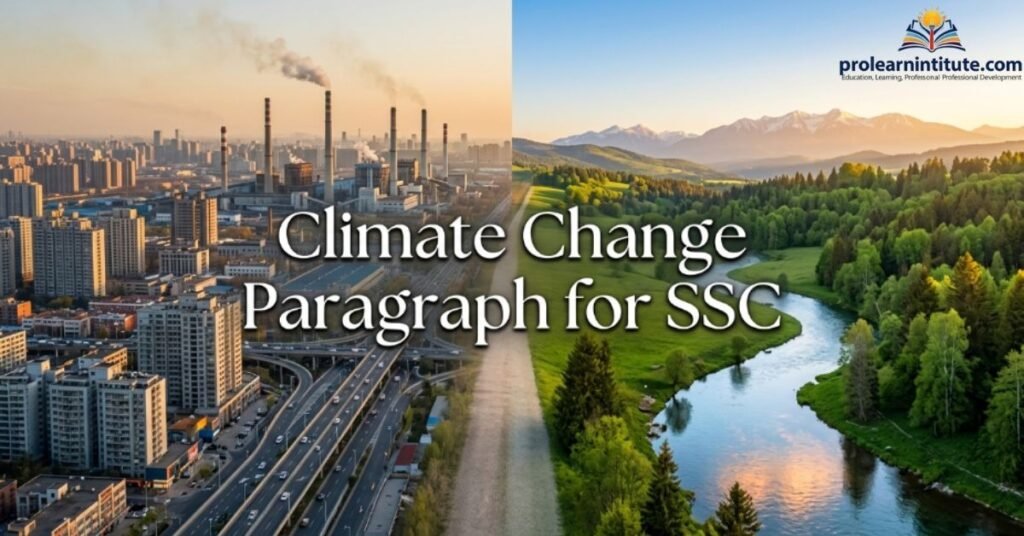
Climate change is widely recognized as the most urgent and complex environmental challenge of the twenty-first century, threatening the stability of natural systems and human civilizations across the entire globe. It is caused by a dangerous and growing combination of natural processes and, more significantly, extensive human industrial and agricultural activities that release massive quantities of greenhouse gases into the atmosphere every single year.
The excessive and continuous burning of fossil fuels for electricity, transportation, and industrial production has increased atmospheric carbon dioxide levels to their highest point in over three million years of Earth’s history. This dramatic rise in greenhouse gas concentrations has intensified the natural greenhouse effect, resulting in steadily rising global temperatures, disrupted weather systems, and increasingly unpredictable and destructive climate events worldwide.
- The global average temperature has already risen by approximately 1.1 degrees Celsius above pre-industrial levels.
- This seemingly small rise has triggered devastating consequences, including record droughts, floods, and wildfires.
- Developing countries like Bangladesh are among the most severely affected despite contributing the least to global emissions.
- Climate change threatens food and water security for billions of people in the most vulnerable regions of the world.
- Ocean acidification caused by absorbed carbon dioxide is destroying coral reefs and marine ecosystems at alarming rates.
- Mass displacement of populations due to sea level rise and extreme weather is already beginning in coastal regions.
- Investment in renewable energy, electric vehicles, and sustainable agriculture is urgently needed on a global scale.
As responsible citizens of a shared planet, every individual, community, and government must urgently reduce greenhouse gas emissions and adopt sustainable ways of living and producing. Climate justice demands that wealthy, high-emission nations take the greatest responsibility for funding solutions and supporting the countries most severely impacted by this global crisis.
see also: Necessity of Reading Newspaper Dialogue for class 6,7,8, SSC Students
| Climate Action | Expected Benefit |
| Switching to Renewable Energy | Reduces greenhouse gas emissions significantly |
| Reforestation Programs | Restores carbon sinks and protects biodiversity |
| Sustainable Agriculture | Lowers methane emissions and protects soil health |
| Electric Public Transport | Reduces urban air pollution and carbon output |
| International Climate Agreements | Coordinates global emission reduction targets |
Climate Change Paragraph for HSC
Climate change represents one of the most defining and consequential challenges in the entire history of human civilization, encompassing far-reaching alterations in global temperature, precipitation patterns, ocean chemistry, and atmospheric composition that collectively threaten the very foundations of ecological and societal stability worldwide. Driven overwhelmingly by anthropogenic activities — most critically the large-scale combustion of fossil fuels, industrial deforestation, and intensive agricultural practices — the accelerating pace of climate change demands immediate, coordinated, and transformative responses at every level of human society and governance.
The continuous and exponentially growing emission of greenhouse gases, particularly carbon dioxide and methane, has disrupted the finely balanced energy exchange between the Earth’s surface and its atmosphere in ways that are now producing measurable and increasingly catastrophic consequences across every continent and ocean on the planet. Scientific consensus, supported by decades of rigorous empirical research and observation, confirms unequivocally that the current rate of warming is unprecedented in at least the past eight hundred thousand years of Earth’s climatic history, and that without radical systemic changes to global energy and land-use systems, the consequences for both human and non-human life will be irreversible.
- Global sea levels are projected to rise by between 0.3 and 1.0 meters by the end of this century under various emissions scenarios.
- The Arctic is warming at more than twice the global average rate, accelerating ice loss and permafrost thaw with global feedback effects.
- Extreme weather events, including hurricanes, heatwaves, and flash floods, have increased dramatically in both frequency and intensity.
- Climate change disproportionately affects the world’s poorest and most vulnerable populations, who bear the least responsibility for causing it.
- The concept of climate justice demands that the moral dimension of unequal impact be central to all international climate negotiations and policy decisions.
- Biodiversity loss driven by climate change threatens to collapse entire ecosystems upon which both human food systems and natural cycles depend
- The transition to a low-carbon economy requires not only technological innovation but fundamental shifts in consumption, governance, and global economic structures.
- Education, scientific literacy, and civic engagement are essential tools for building the political will necessary to achieve meaningful climate action at scale.
Addressing climate change with the urgency and ambition the science demands requires nothing less than a fundamental transformation of the way human societies produce energy, grow food, manage land, and organize economic life at every scale from the local to the global. Only through the combination of bold political leadership, equitable international cooperation, technological innovation, and an informed and engaged global citizenry can humanity hope to navigate this crisis and preserve a livable and just world for the generations that follow us.
Climate Change and Its Impact on Weather Patterns
Climate change has a direct, measurable, and increasingly severe impact on weather patterns across every region of the world. It is making the weather far more unpredictable, extreme, and more dangerous than at any previous point in modern human experience.
Scientists who study weather and climate have clearly documented that the frequency and intensity of extreme weather events have both increased significantly in recent decades. These changes are directly linked to the rising levels of greenhouse gases and the warming temperatures they cause.
- More frequent and longer-lasting heatwaves are being recorded across every continent.
- Heavy and unpredictable rainfall is causing flash floods in areas that have rarely experienced them before
- Tropical storms and hurricanes are becoming stronger and more destructive due to warmer ocean temperatures.
- Dry seasons are growing longer and more severe, leading to widespread drought and water scarcity.
- Winter snowfall patterns are changing dramatically, with some regions getting more and others getting far less.
- Wildfire seasons are becoming longer and more intense as heat and drought dry out forests and vegetation.
- Monsoon seasons in South Asia are becoming increasingly unpredictable, threatening agriculture across the region.
These dramatic weather changes are making life significantly harder for farmers, city planners, and ordinary families around the world. The need for stronger climate adaptation strategies and better weather forecasting systems has never been more urgent or more critical than it is today.
Human Activities Responsible for Climate Change
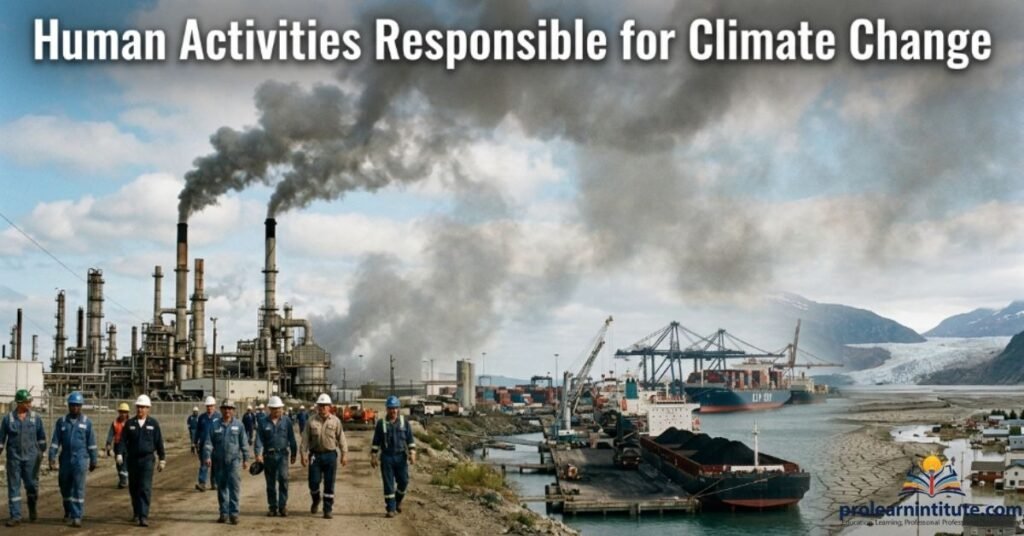
Human activities are now the dominant driver of climate change, and the connection between our daily choices and the global climate crisis is very well established by science. Every aspect of modern industrial society contributes in some way to the greenhouse gas emissions that are warming the planet.
The transportation sector is one of the largest sources of carbon emissions in the world today. Billions of cars, trucks, ships, and aircraft burn fossil fuels every single day, releasing vast quantities of carbon dioxide and other pollutants into the atmosphere.
- Passenger cars alone account for a significant portion of global carbon dioxide emissions every year
- Aviation and shipping are among the fastest-growing sources of greenhouse gas emissions worldwide
- Switching to electric vehicles and improving public transport systems can make a major difference
- Urban design that encourages walking, cycling, and public transit reduces transportation emissions significantly
- Fuel efficiency standards and emission regulations are important policy tools for reducing transport pollution
| Human Activity | Greenhouse Gas Released | Environmental Impact |
| Burning Fossil Fuels | Carbon Dioxide | Global warming and ocean acidification |
| Livestock Farming | Methane | Accelerated short-term warming |
| Rice Paddy Cultivation | Methane | Contributes to agricultural emissions |
| Industrial Manufacturing | Carbon Dioxide and Nitrous Oxide | Air and atmospheric pollution |
| Landfill Waste Decomposition | Methane | Significant source of greenhouse gas |
| Air Conditioning and Refrigerants | Hydrofluorocarbons | Extremely potent warming agents |
Deforestation for agricultural land remains one of the most destructive and impactful human activities driving climate change today. Every year, millions of hectares of forest are cleared to make room for cattle ranching, palm oil, soy, and other agricultural products in high demand around the world.
- Tropical forests like the Amazon store enormous quantities of carbon built up over thousands of years
- When these forests are cleared and burned, all that stored carbon is released back into the atmosphere immediately.
- Forest destruction also eliminates vital ecosystems and drives thousands of species toward extinction every year.
- Sustainable farming practices and dietary shifts away from meat-heavy diets can significantly reduce deforestation pressure.
- International agreements and financial incentives are needed to make forest protection more economically attractive for developing nations.
How to Control Climate Change
Controlling climate change requires genuine and sustained collective effort from individuals, communities, businesses, and governments working together at every level. The solutions already exist, and the technology is available, but the political will, the public awareness, and the financial investment must all be urgently scaled up.
Transitioning to clean and renewable sources of energy is the single most powerful step that can be taken to reduce greenhouse gas emissions globally. Solar, wind, hydropower, and geothermal energy all produce electricity without releasing carbon dioxide or other harmful gases.
- Solar energy costs have fallen by more than eighty percent in the last decade, making it increasingly affordable
- Wind power is now the cheapest source of new electricity generation in many countries around the world
- Government subsidies and policies are needed to accelerate the transition away from coal and gas
- Energy storage technology, like batteries, is improving rapidly and making renewable energy more reliable
- Communities, schools, and businesses can all install solar panels and reduce their dependence on fossil fuels
- Improving the energy efficiency of buildings, appliances, and industrial processes also reduces emissions significantly
| Solution | How It Helps Fight Climate Change |
| Renewable Energy Adoption | Replaces fossil fuels and dramatically cuts carbon emissions |
| Reforestation and Forest Protection | Restores natural carbon sinks and protects biodiversity |
| Sustainable Agriculture | Reduces methane and nitrous oxide from farming systems |
| Electric and Public Transport | Cuts transportation-related carbon emissions significantly |
| Recycling and Waste Reduction | Reduces landfill methane and industrial resource demand |
| Climate Education and Awareness | Builds the public knowledge needed for collective action |
| International Policy Agreements | Coordinates global emission reduction targets and timelines |
Individual lifestyle changes also play a meaningful and important role in addressing climate change, even if systemic and policy-level changes are ultimately more powerful. When millions of people change their habits and consumption patterns together, the cumulative effect on emissions and demand is genuinely significant.
- Reducing meat and dairy consumption is one of the highest-impact individual climate actions available.
- Buying less, buying local, and buying sustainably produced goods reduces carbon footprints significantly.
- Conserving water and electricity at home directly reduces the demand for energy from fossil fuel plants.
- Supporting environmentally responsible businesses and political leaders amplifies individual impact enormously.
- Educating friends, family, and community members about climate change multiplies the effect of personal awareness.
- Choosing to walk, cycle, or use public transport instead of driving makes a consistent daily difference.
Importance of Environmental Protection
Environmental protection is essential for maintaining the delicate natural balance that sustains all life on Earth, including human civilization itself. Every healthy forest, river, ocean, and soil system plays a critical role in regulating the climate, purifying air and water, and providing food and resources for billions of people.
A well-protected environment acts as a natural buffer against the worst effects of climate change by absorbing carbon, regulating temperatures, and providing resilience against extreme weather. When natural systems are destroyed or degraded, humanity loses these vital services and becomes far more vulnerable to the consequences of a changing climate.
- Healthy forests absorb roughly one-third of all human carbon dioxide emissions every year.
- Wetlands and mangroves protect coastlines from storm surges and provide critical wildlife habitats.
- Healthy soil stores more carbon than all the world’s forests and atmosphere combined.
- Clean rivers and oceans provide food and livelihoods for hundreds of millions of people worldwide.
- Biodiversity in natural ecosystems creates the resilience needed to adapt to changing conditions.
- Environmental destruction is almost always irreversible on any human timescale once it occurs.
- Protecting nature is not just an ethical responsibility but a fundamental requirement for human survival.
Climate Change Awareness in Schools and Society
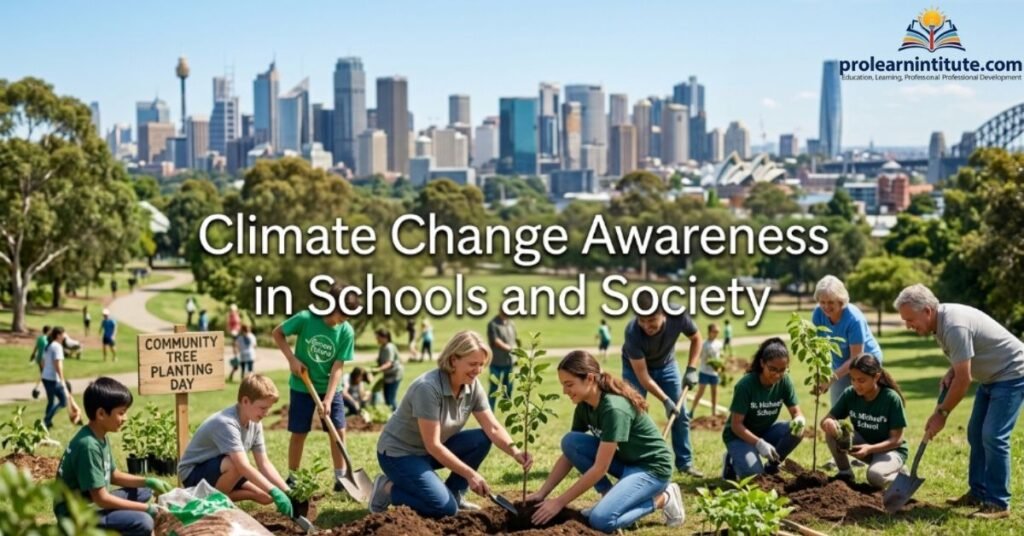
Raising awareness about climate change is one of the most important and powerful tools available for creating the global response that this crisis demands. Schools, universities, media organizations, and community groups all have a vital role to play in spreading understanding and inspiring action.
Young people are among the most important and most motivated advocates for climate action in the world today. Students who understand the science of climate change and feel empowered to act are far more likely to make sustainable choices and demand better policies from their leaders throughout their lives.
- Climate education should be a required and meaningful part of every school curriculum worldwide.
- Practical activities like school gardens, recycling programs, and energy audits bring climate lessons to life.
- Student-led climate clubs and campaigns give young people a real voice and a sense of agency.
- Science fairs, essay competitions, and debates on environmental topics build climate literacy effectively.
- Teachers who are well-trained in climate science can inspire lasting change in their students’ attitudes.
- Parents and communities play an equally important role in reinforcing climate-conscious values at home.
- Social media campaigns by young climate activists have successfully influenced public opinion and policy globally.
Society as a whole must build a culture of environmental responsibility and climate consciousness that extends into every area of life and every institution. This means embedding sustainability into business practices, government policy, community planning, and everyday cultural norms in ways that make sustainable living the easy and obvious choice for everyone.
Conclusion
Climate change is a serious, urgent, and genuinely complex global issue that affects every living being on Earth without exception. It is primarily caused by human activities like burning fossil fuels, industrial pollution, and widespread deforestation that have been accelerating since the Industrial Revolution.
We must take immediate, ambitious, and sustained action to control climate change through sustainable practices, clean energy investment, and responsible environmental stewardship at every level of society. By working together with determination, knowledge, and genuine shared commitment, every generation alive today can play a meaningful role in protecting this planet for all the generations that will come after us.
see also: Dialogue Importance of Learning English for All Class 6-SSC, HSC
FAQs
How would you explain climate change to a child?
Climate change is when the Earth’s weather and temperature slowly change over a long time, mostly because of the pollution humans create every day. It makes the planet warmer and causes serious problems like melting ice, rising oceans, and unusual and dangerous weather events.
What is the main cause of climate change today?
The main cause of climate change today is the burning of fossil fuels like coal, oil, and gas for energy, transportation, and industry. This releases large amounts of carbon dioxide and other greenhouse gases that trap heat inside the Earth’s atmosphere and cause global warming.
How does climate change affect our lives?
Climate change affects daily life through more extreme weather, higher temperatures, unpredictable rainfall, and growing food and water shortages. It also raises the cost of living, increases health risks, and forces millions of people to abandon their homes due to flooding and drought.
What are some simple ways students can help fight climate change?
Students can help fight climate change by saving electricity, reducing plastic use, planting trees, and choosing to walk or cycle instead of using petrol vehicles. They can also raise awareness in their schools and communities and support leaders who take strong climate action.
Why is climate change considered a global problem?
Climate change is a global problem because greenhouse gases spread across the entire atmosphere regardless of which country releases them. Rising temperatures, melting ice, and extreme weather affect every nation, every ocean, and every ecosystem on Earth without exception.
What is the difference between global warming and climate change?
Global warming refers specifically to the measurable rise in the Earth’s average surface temperature caused by greenhouse gas emissions. Climate change is a broader term that includes global warming as well as all the other related changes in weather patterns, sea levels, rainfall, and ecosystems that result from that warming.
How can renewable energy help reduce climate change?
Renewable energy sources like solar, wind, and hydropower generate electricity without releasing greenhouse gases into the atmosphere. Replacing fossil fuels with these clean energy sources is the single most effective technological solution available for reducing climate change on a large scale.
What are the most visible signs of climate change today?
The most visible and well-documented signs of climate change include melting glaciers, rising sea levels, more frequent and intense heatwaves, stronger storms and hurricanes, prolonged droughts, and the increasingly early arrival of spring seasons in the northern hemisphere.
How does deforestation contribute to climate change?
Deforestation contributes to climate change in two major ways: it removes trees that would otherwise absorb and store carbon dioxide from the atmosphere, and it releases all the carbon already stored in those trees back into the air when they are cut, burned, or left to decay.
What can governments do to control climate change effectively?
Governments can control climate change by setting strong emission reduction targets, investing heavily in renewable energy infrastructure, enforcing strict environmental regulations on industry, protecting forests and natural ecosystems, and actively participating in binding international climate agreements that hold all nations accountable.

I’m Jordan Smith, a content writer with 4 years of experience and AI content expertise, creating clear, engaging, and easy-to-understand educational content.