
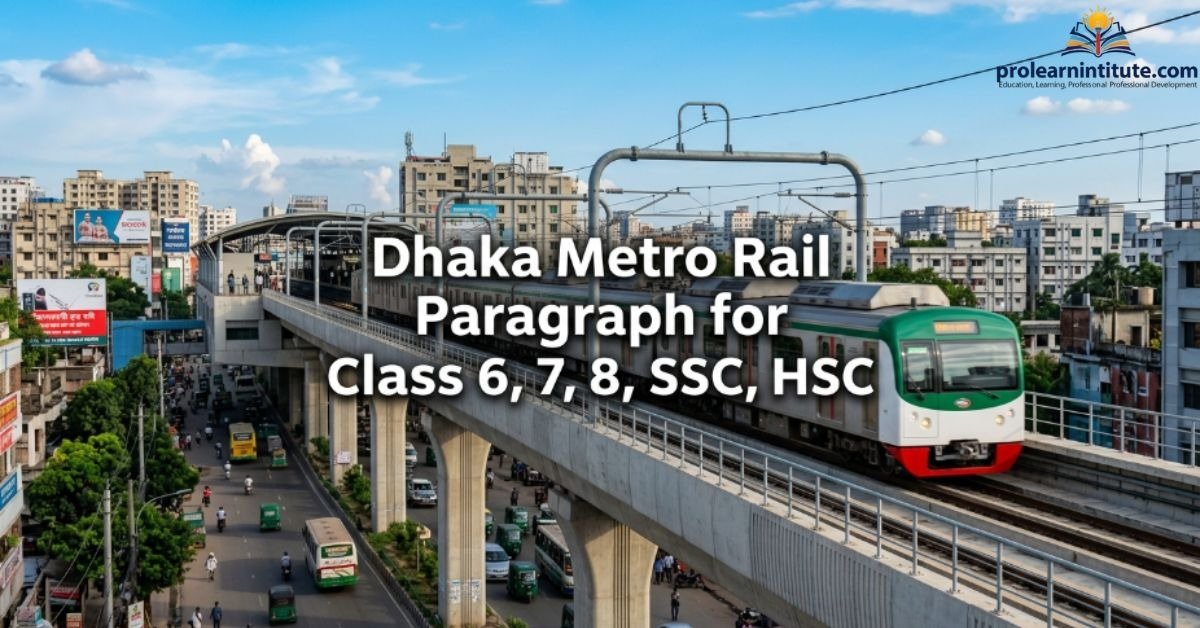
The Dhaka Metro Rail Paragraph for Class 6, 7, 8, SSC, HSC is a useful topic that helps students learn about one of the most important transportation projects in Bangladesh. It has made daily travel easier, faster, and more comfortable for thousands of people.
Dhaka is a busy city with heavy traffic, and the metro rail system helps reduce congestion on the roads. It allows passengers to reach their destinations in less time while enjoying a safe and modern travel experience.
In this Dhaka Metro Rail Paragraph for Class 6, 7, 8, SSC, HSC, you will learn about the importance, benefits, and impact of the metro rail on the lives of people in Dhaka. It is a significant step toward improving the country’s transportation system and urban development.
see also: School Library Paragraph for Class 5 to HSC Students
Introduction to Dhaka Metro Rail
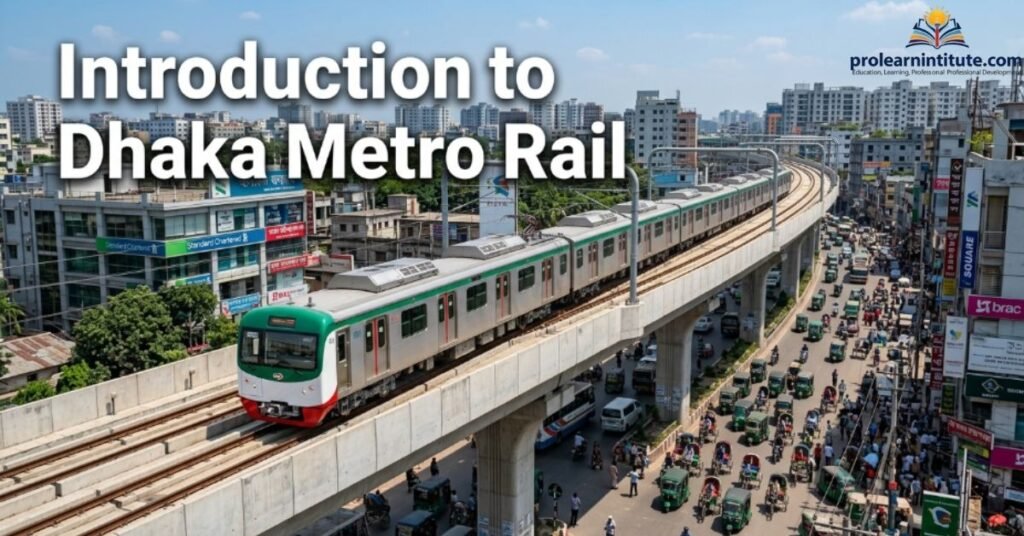
The Dhaka Metro Rail is the first rapid transit system in Bangladesh. It started its journey in December 2022 and quickly became a symbol of modern development. This rail connects different important areas of Dhaka city in a fast and comfortable way.
- First metro rail in Bangladesh
- Launched in December 2022
- Operated by Dhaka Mass Transit Company Limited (DMTCL)
- Built with financial support from Japan (JICA)
Importance of Dhaka Metro Rail in Modern Transport
Dhaka is one of the most crowded cities in the world. The metro rail plays a key role in solving the city’s transport problems. It gives people a fast, safe, and reliable way to travel every day.
| Factor | Before Metro Rail | After Metro Rail |
| Travel Time (Uttara to Motijheel) | 2–3 hours | 35–40 minutes |
| Traffic Congestion | Very High | Reduced on major routes |
| Air Pollution | High | Lower due to electric trains |
| Public Transport Option | Buses, CNG, Rickshaw | Metro has been added as a fast option |
The metro rail has made daily commuting much easier for working people and students in Dhaka.
Dhaka Metro Rail Paragraph 100 Words for Class 6, 7, 8
The Dhaka Metro Rail is a modern train system in Bangladesh’s capital city, Dhaka. It was opened in December 2022 and is the first metro rail in the country. The metro runs on an elevated track above the road, so it does not get stuck in traffic. It connects Uttara in the north to Motijheel in the south. A journey that used to take two to three hours by road now takes only about forty minutes by metro. It runs on electricity, so it does not pollute the air. The metro rail has made life easier for millions of people living in Dhaka.
see also: Sheikh Saadi Completing Story for class 6, 7, 8, SSC and HSC with Moral
Dhaka Metro Rail Paragraph 150 Words for SSC
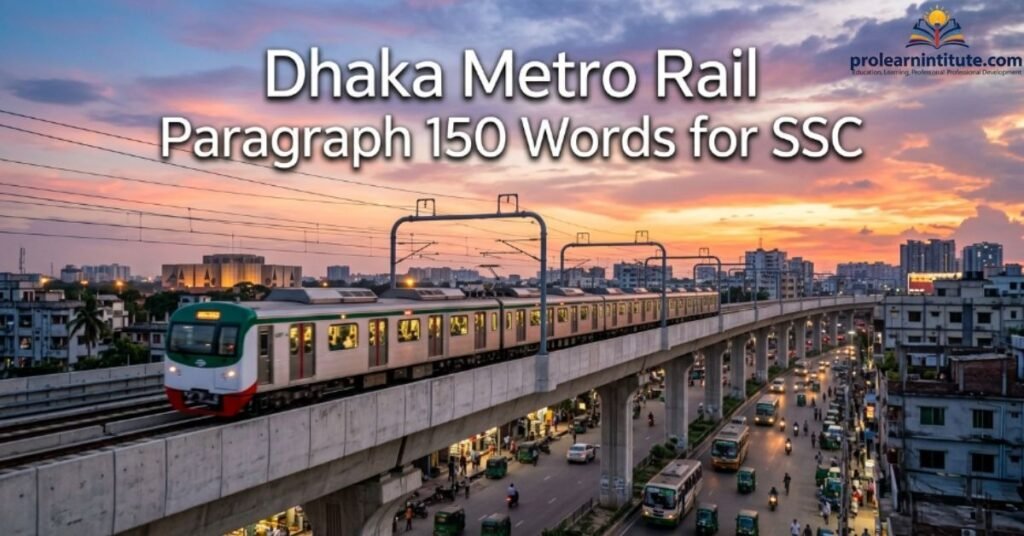
The Dhaka Metro Rail is a landmark project in Bangladesh that has transformed public transportation in the capital city. It was inaugurated in December 2022 and became fully operational on the MRT Line 6, connecting Uttara to Motijheel. The project was built with financial and technical support from the Japan International Cooperation Agency, commonly known as JICA. The metro trains run on elevated tracks and use electric power, which helps reduce both traffic jams and air pollution in the city.
Before the metro rail, commuters had to spend hours in heavy traffic just to cross the city. Now, the same journey takes less than forty minutes. The metro offers air-conditioned coaches, digital ticketing systems, and dedicated spaces for women passengers. It is safe, punctual, and comfortable. The Dhaka Metro Rail is not just a transport project — it is a step toward a smarter and more modern Bangladesh.
Dhaka Metro Rail Paragraph 200 Words for HSC
The Dhaka Metro Rail, officially known as MRT Line 6, is a groundbreaking infrastructure project that marks a new era in Bangladesh’s urban transportation. Inaugurated on December 28, 2022, it is the first mass rapid transit system in the country. The metro line stretches from Uttara North in the north to Motijheel in the south, covering a total distance of approximately 21.26 kilometers with 17 stations along the route. The project was built under the supervision of the Dhaka Mass Transit Company Limited and received major financial and technical assistance from the Japan International Cooperation Agency (JICA).
The metro rail operates on elevated tracks using electric power, making it environmentally friendly compared to fuel-based road transport. It can carry thousands of passengers every hour, significantly reducing pressure on the city’s roads. Air-conditioned coaches, automated ticketing systems, and special compartments for women passengers make it a world-class transit experience. The journey from Uttara to Motijheel, which previously took two to three hours due to traffic, now takes only around 35 to 40 minutes.
Beyond convenience, the metro rail has reduced fuel consumption, lowered carbon emissions, and boosted the economy by saving working hours. It stands as a symbol of modern development and represents Bangladesh’s vision for a sustainable and progressive urban future.
Benefits of Dhaka Metro Rail for Students and Daily Commuters
The metro rail brings countless benefits to the people of Dhaka, especially students and office workers. It saves time, money, and energy every single day.
Benefits for Students:
- Reaches schools and colleges faster without traffic delays
- Affordable ticket prices make it budget-friendly for students
- Safe and comfortable environment, especially for female students
- Special rush-hour schedules help students reach class on time
Benefits for Daily Commuters:
- Cuts travel time from hours to minutes
- Reduces stress caused by sitting in long traffic jams
- Air-conditioned coaches provide comfort in hot weather
- Digital ticketing makes boarding quick and easy
- A reliable schedule means no waiting for long periods
The metro rail has genuinely improved the quality of life for working people and students who travel across Dhaka every day.
Features of the Dhaka Metro Rail System
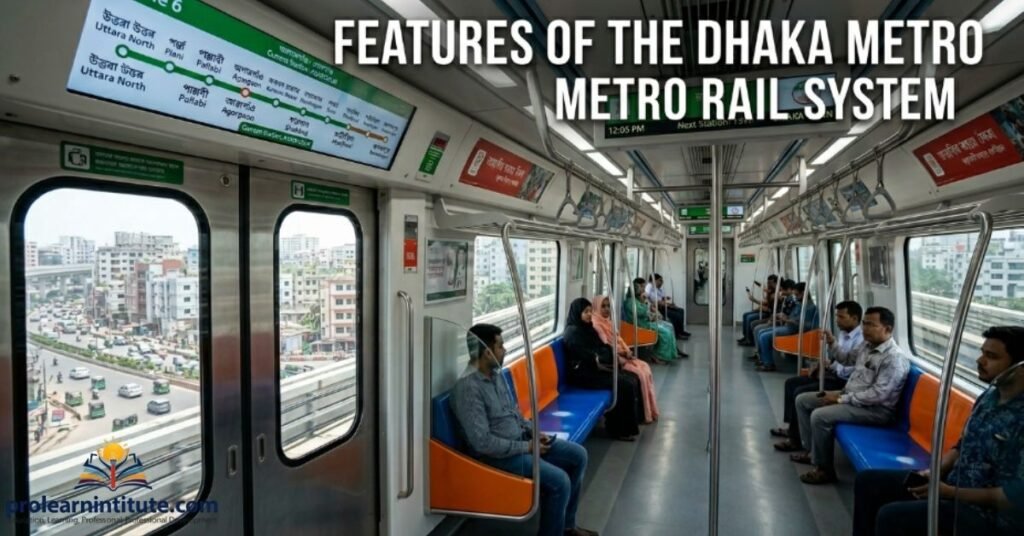
The Dhaka Metro Rail is built with modern technology and passenger-friendly features. It is designed to handle large crowds safely and efficiently.
| Feature | Details |
| Total Length | 21.26 km (MRT Line 6) |
| Number of Stations | 17 stations |
| Route | Uttara North to Motijheel |
| Train Speed | Maximum 100 km/h |
| Capacity per Train | Around 1,900 passengers |
| Operating Hours | 7:00 AM to 9:00 PM |
| Ticketing System | Automated (MRT Pass & Single Journey Token) |
| Power Source | Electric (overhead catenary system) |
| Special Feature | Dedicated women’s compartment |
- Trains are fully air-conditioned for passenger comfort
- Stations have elevators and escalators for easy access
- CCTV cameras are installed at every station for safety
- Stations are equipped with modern waiting areas and signage
Role of Dhaka Metro Rail in Reducing Traffic Problems
Dhaka is famous for some of the worst traffic jams in the world. The metro rail was introduced as a direct solution to this major problem. By taking thousands of cars and buses off the road, it has already started to reduce congestion in key areas.
Before the metro rail, roads like Mirpur Road and Airport Road were blocked with traffic for most of the day. After the metro started operating, a noticeable number of commuters shifted from private cars and buses to the metro train. This shift reduced the number of vehicles on those roads.
- Removes approximately 220,000 vehicle trips from Dhaka roads daily
- Reduces travel time on major routes by up to 75%
- Lowers the number of buses and private cars during peak hours
- Helps emergency vehicles move more freely through less-crowded roads
The metro rail is not a complete solution to Dhaka’s traffic problem, but it is a major and important step in the right direction.
see also: An Honest Woodcutter Story For all Classes 6,7,8,9,10, SSC, HSC
Environmental Impact of Dhaka Metro Rail
One of the greatest advantages of the metro rail is its positive impact on the environment. Since it runs on electricity instead of diesel or petrol, it produces no direct carbon emissions during operation.
Positive Environmental Impacts:
- Reduces carbon dioxide emissions by replacing fuel-based vehicles
- Lowers air pollution levels in major corridors of Dhaka
- Decreases noise pollution compared to heavy buses and trucks
- Saves thousands of liters of fuel that would have been burned daily
| Environmental Factor | Impact of Metro Rail |
| CO2 Emissions | Significantly reduced per passenger km |
| Air Quality | Improved along metro corridors |
| Noise Levels | Lower than road traffic |
| Fuel Consumption | Thousands of liters saved daily |
The metro rail supports Bangladesh’s goal of reducing greenhouse gas emissions and building a cleaner, greener city for the future.
Future Development Plans of Dhaka Metro Rail
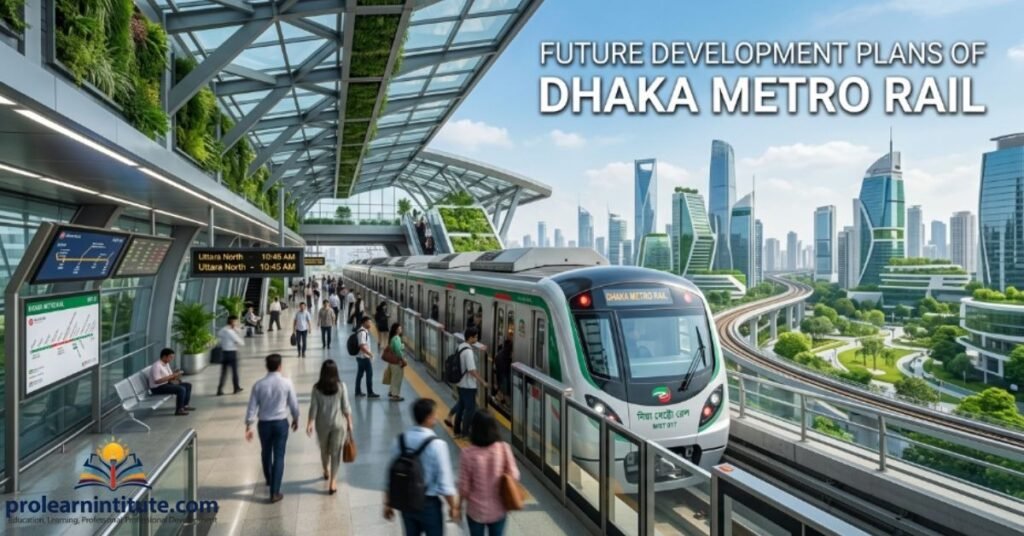
The government of Bangladesh has big plans for expanding the metro rail network across Dhaka. The current MRT Line 6 is just the beginning of a much larger system.
Upcoming Metro Lines:
- MRT Line 1 — Will run underground and connect Hazrat Shahjalal Airport to Kamalapur
- MRT Line 2 — Planned to connect Gabtoli to Char Kanai
- MRT Line 4 — Will link Kamalapur to Narayanganj
- MRT Line 5 (North) — Will connect Hemayetpur to Vatara
- MRT Line 5 (South) — Underground section across the south of the city
These new lines will create a network that covers the entire city. Once complete, Dhaka’s metro system will be one of the most extensive transit networks in South Asia. The government aims to complete major portions of this expansion by 2030, transforming how Dhaka moves.
Challenges Faced During Metro Rail Construction
Building a metro rail in a densely populated city like Dhaka was not easy. The construction team faced many serious challenges throughout the project.
Major Challenges:
- Land Acquisition — Thousands of people had to relocate as buildings and shops were removed along the route
- Utility Relocation — Gas lines, water pipes, and electricity cables had to be moved safely.
- Traffic Disruption — Construction caused massive traffic jams for several years
- Heavy Population Density — Working in narrow, crowded streets made construction extremely difficult.
- Coordination Issues — Managing multiple government agencies, local authorities, and Japanese teams required careful coordination.
- Weather Delays — Heavy monsoon rains slowed down construction work significantly
- Public Protests — Some communities resisted relocation and delayed certain portions of work.
Despite all these challenges, the construction was completed successfully. The project showed that Bangladesh is capable of handling large-scale, complex infrastructure work. These challenges also taught valuable lessons for building future metro lines in the country.
Conclusion
At its core, the Dhaka Metro Rail Paragraph for Class 6, 7, 8, SSC, and HSC explains how the metro rail system has improved transportation in Dhaka by making travel faster, safer, and more convenient. In simple terms, it is an important development that helps reduce traffic congestion and saves valuable time for thousands of people every day.
Now you have a clear understanding of why the Dhaka Metro Rail is a significant part of modern Bangladesh. The next step is yours—use this knowledge in your studies and appreciate how smart transportation systems can make city life better for everyone.
see also: Dialogue Merits and Demerits of Mobile Phones for Students Class 6-12
FAQs
What is the Dhaka Metro Rail, and why is it important for students in Bangladesh?
The Dhaka Metro Rail is the first rapid transit system in Bangladesh, launched in December 2022. It helps students reach schools and colleges faster by cutting travel time from hours to just 35–40 minutes.
How long is the Dhaka Metro Rail and how many stations does it have?
The Dhaka Metro Rail MRT Line 6 is approximately 21.26 kilometers long and has 17 stations running from Uttara North to Motijheel.
When was the Dhaka Metro Rail opened, and who built it?
The Dhaka Metro Rail was officially inaugurated on December 28, 2022. It was built by the Dhaka Mass Transit Company Limited with financial and technical support from Japan’s JICA.
How does the Dhaka Metro Rail help reduce traffic problems in Dhaka city?
The metro rail removes around 220,000 vehicle trips from Dhaka roads every day, reducing congestion on major routes and cutting travel time by up to 75%.
Can you give me a short paragraph on the Dhaka Metro Rail for Class 6 or Class 7 students?
The Dhaka Metro Rail is Bangladesh’s first metro train that connects Uttara to Motijheel in about 40 minutes. It runs on electricity above the road, saves time for students and workers, and reduces air pollution in the city.
What are the main features of the Dhaka Metro Rail system in Bangladesh?
The Dhaka Metro Rail offers air-conditioned coaches, automated ticketing, a women’s dedicated compartment, CCTV cameras, and can carry up to 1,900 passengers per train at a top speed of 100 km/h.
How does the Dhaka Metro Rail help protect the environment?
The Dhaka Metro Rail runs on electricity, producing no direct carbon emissions. It replaces thousands of fuel-burning vehicles daily, which lowers air pollution and reduces greenhouse gas emissions significantly.
What are the plans for expanding the Dhaka Metro Rail network?
Bangladesh plans to build five more metro lines, including MRT Lines 1, 2, 4, and 5, which will cover underground and surface routes across the entire city, with major completion targeted by 2030.
What challenges were faced during the construction of the Dhaka Metro Rail?
The biggest challenges included land acquisition, relocating utility lines, massive traffic disruptions during construction, coordination between multiple agencies, and delays caused by seasonal monsoon rains.
How much time does it take to travel from Uttara to Motijheel by the Dhaka Metro Rail?
By Dhaka Metro Rail, the journey from Uttara to Motijheel takes approximately 35 to 40 minutes, compared to 2 to 3 hours by road during peak traffic hours.

I’m Jordan Smith, a content writer with 4 years of experience and AI content expertise, creating clear, engaging, and easy-to-understand educational content.
1 Comment
Pingback: A dialogue about Tree Plantation for class 6,7,8, 9-10, SSC with Examples